

UGC Ads Performance11 min read
UGC clips: formats, pricing, rights, and how to choose
A practical buyer guide to clip formats, licensing, pricing, delivery, real examples, and the right next step for your campaign.
Read the guideA practical buyer guide to clip formats, licensing, pricing, delivery, real examples, and the right next step for your campaign.
Read the guide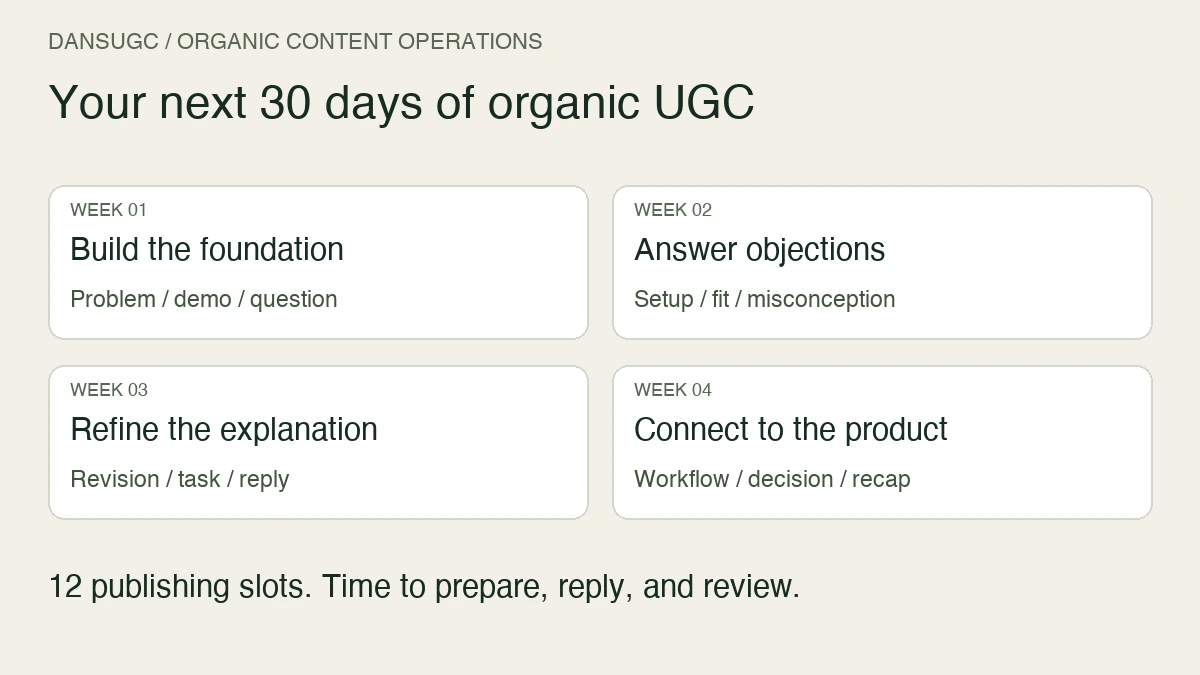
Plan 30 days of organic UGC with 12 publishing slots, production tasks, evidence checks, and a practical review process. Includes a reusable calendar entry.

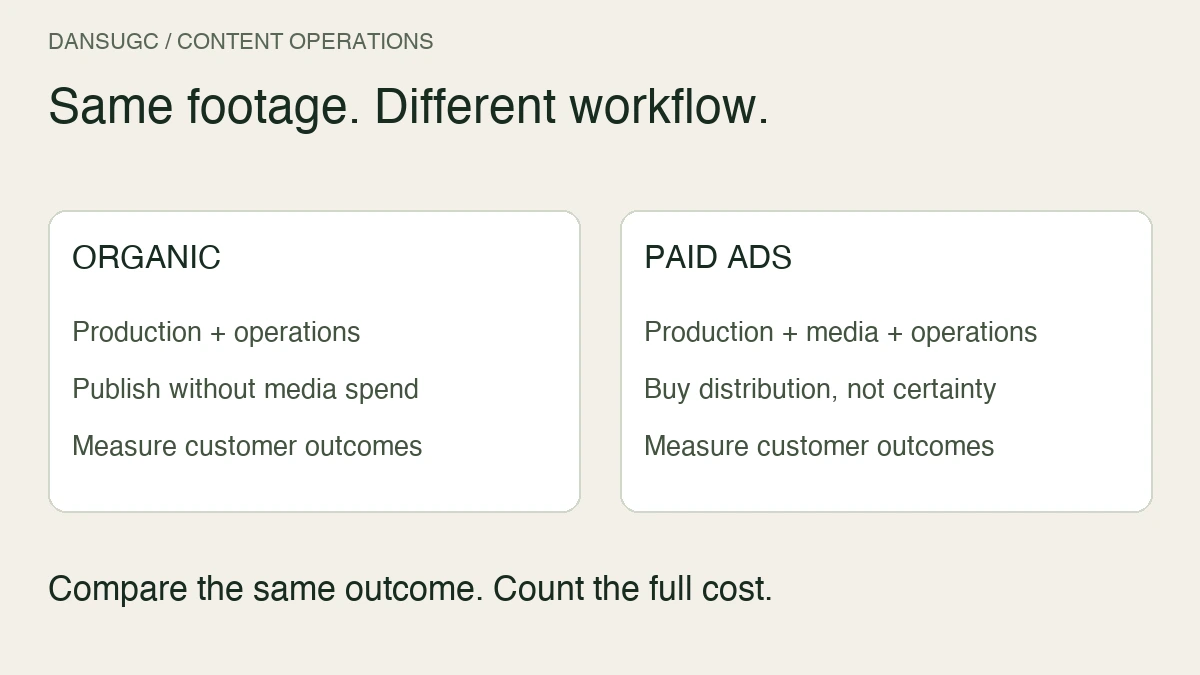
Compare organic and paid UGC by distribution, total cost, evidence, and customer outcomes. Includes a sourced ProspectHalo example and a practical readiness checklist.
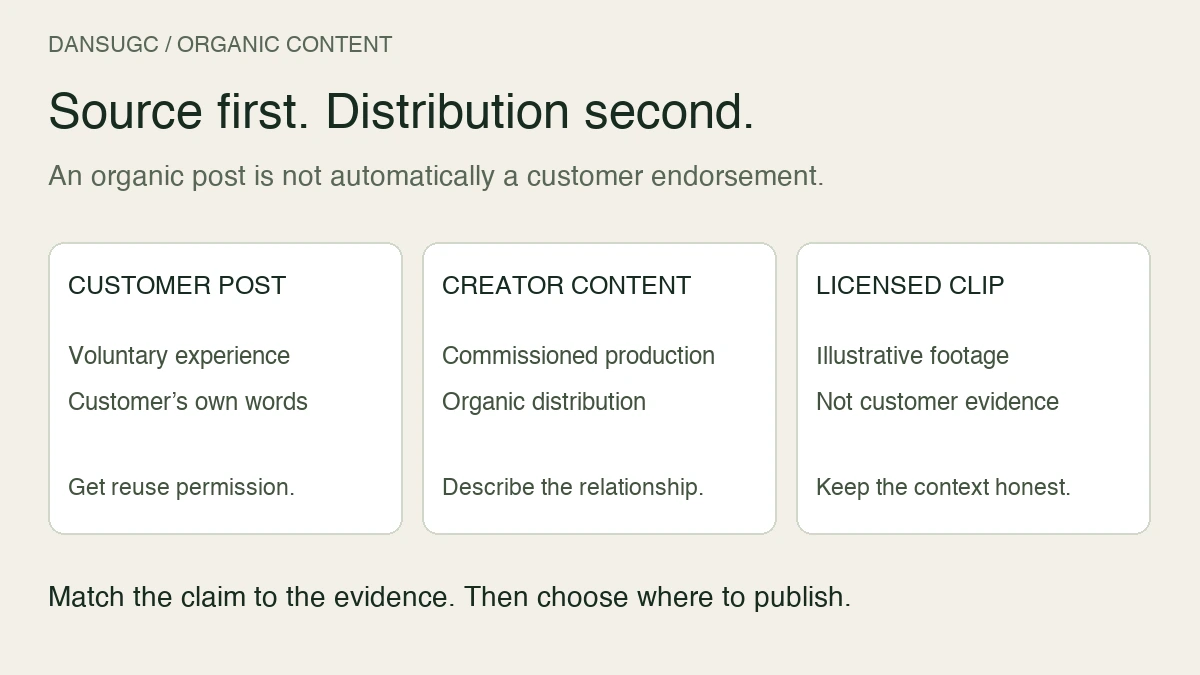
Separate voluntary customer posts from paid creator content distributed organically. A practical sourcing, evidence, permissions, and measurement workflow.
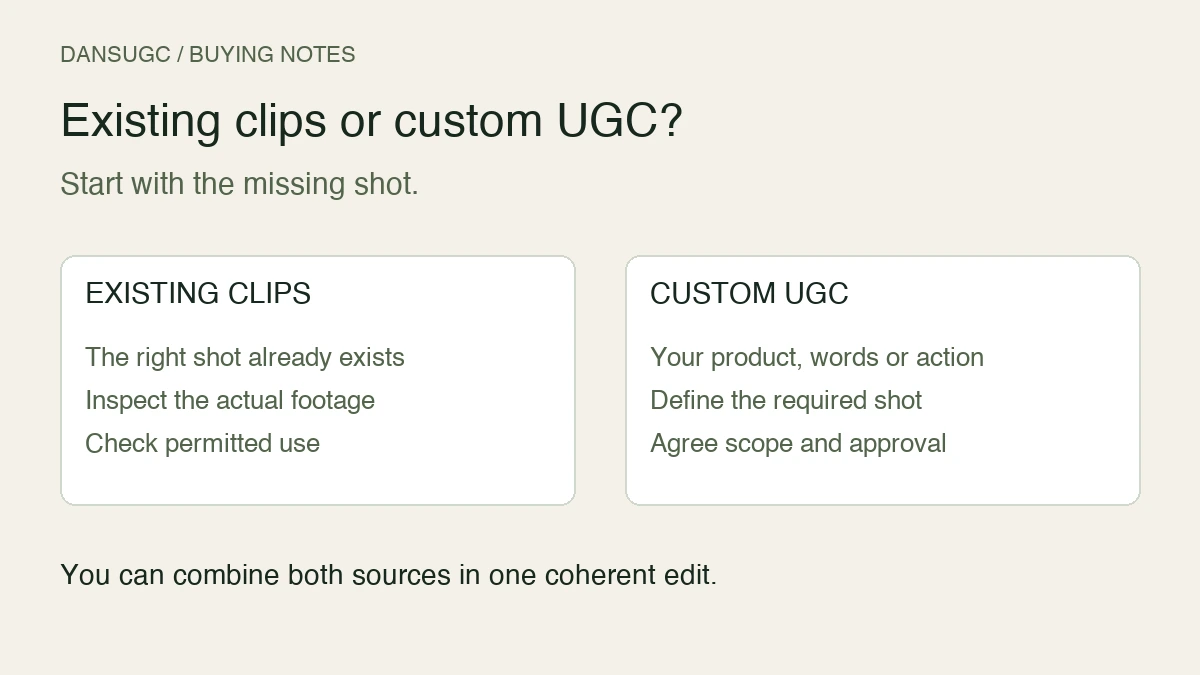
Choose existing clips for suitable recorded moments, custom filming for your product or script, or a hybrid. Compare scope, editing, rights, and approved output.
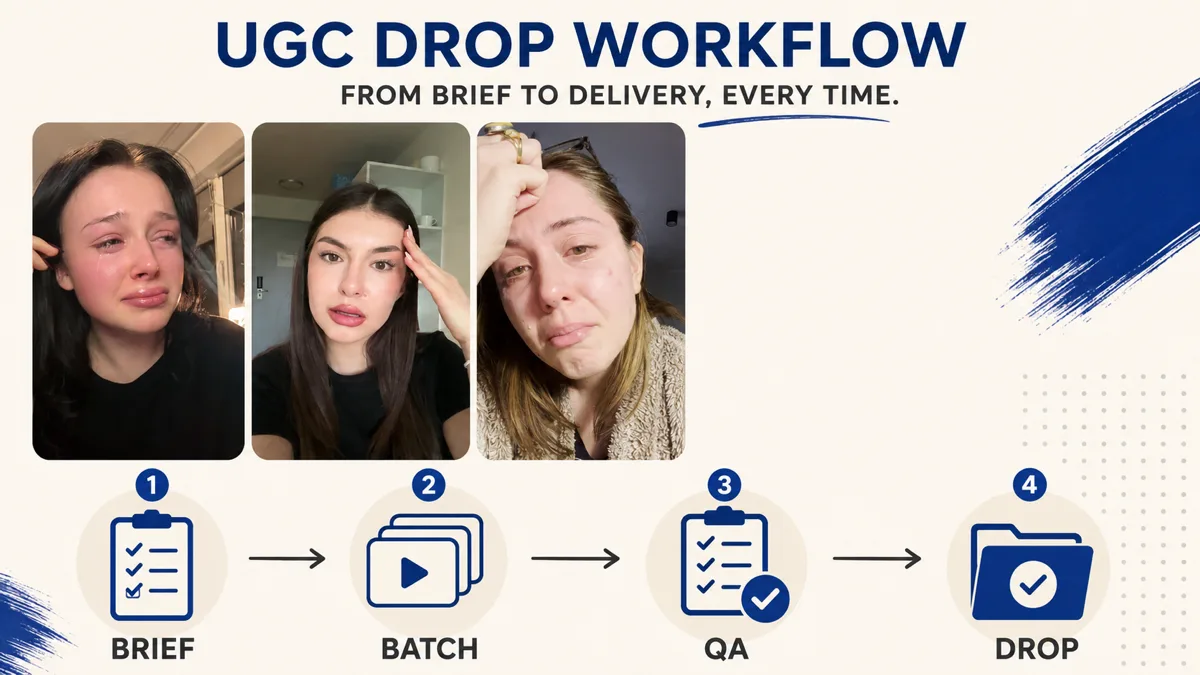
A UGC drop is a defined batch of creator assets delivered together. Learn how to scope the brief, deliverables, workflow, pricing, usage rights, QA, and measurement.
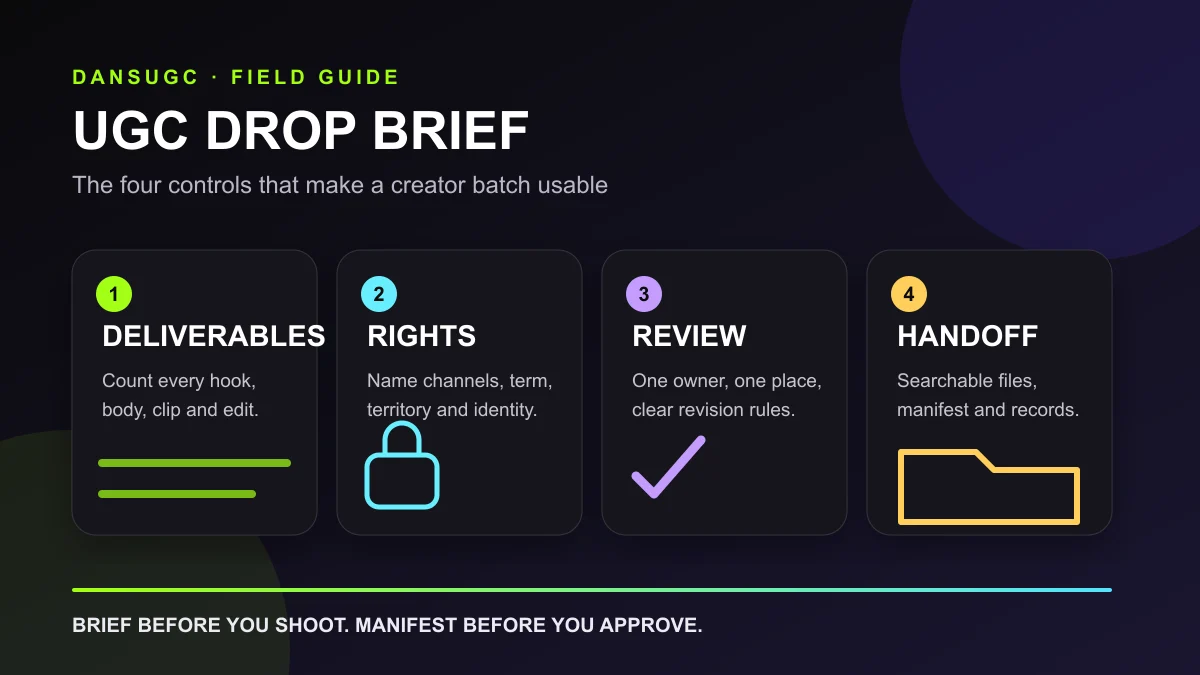
Copy this practical UGC drop brief template to define creator deliverables, usage rights, review rules, technical requirements, and final handoff.
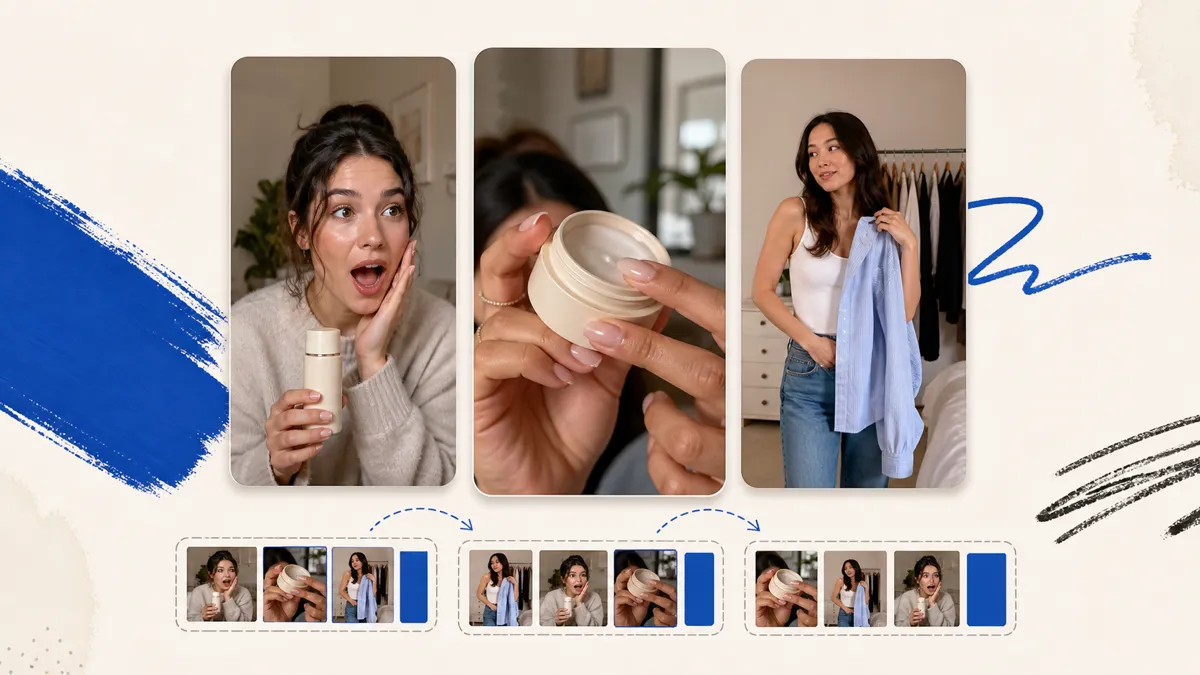
UGC clips are short creator videos used as modular building blocks inside ads and organic posts. Here is how formats, pricing, usage rights, and creative testing fit together.
we used to say the billo pricing listings contradict each other by a factor of five. we were wrong about that, and this is the correction. $99 is a per video price and $500 is a pack. same model, different units. here is what the live results page says billo costs on 29 august 2026, and the number that actually decides your campaign once you know it.
nobody searching "ugc agency" needs the definition. they are holding a quote. this is the pricing structure behind it, the questions that expose it, and the honest version of when an agency is the right buy and when it is not.
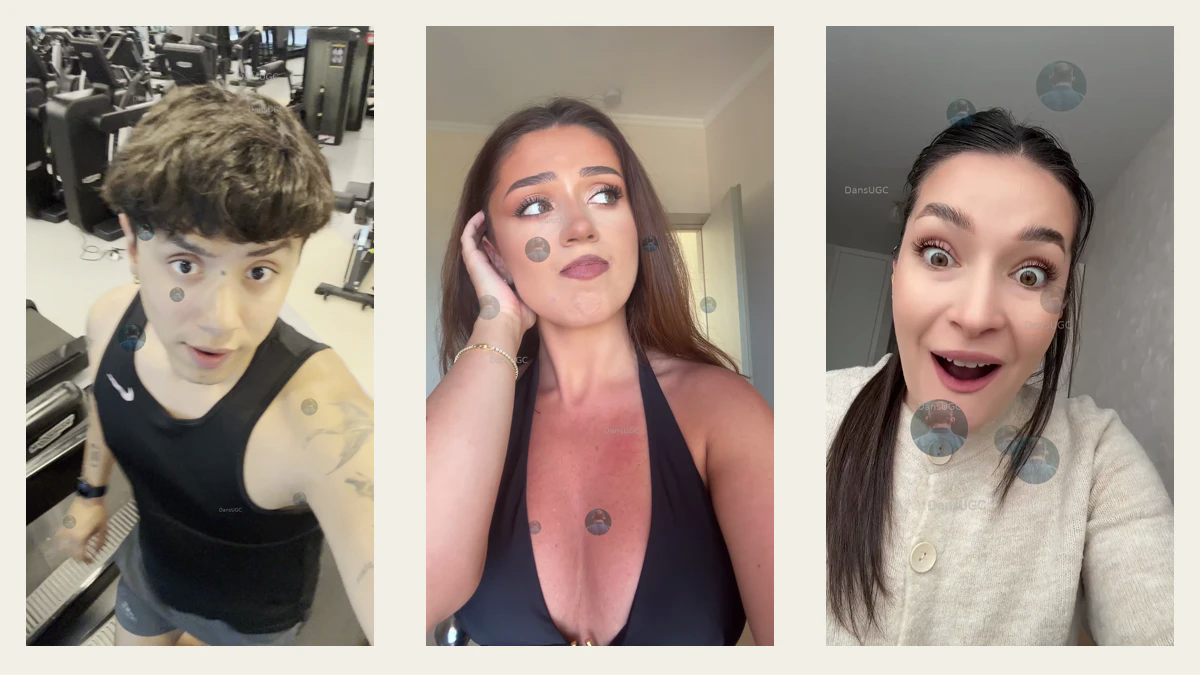
Compare three real UGC reaction previews with frame-by-frame observations, verified preview durations, editing ideas, and a practical clip-selection checklist.