How to Find and Hire TikTok UGC Creators Without Getting Scammed
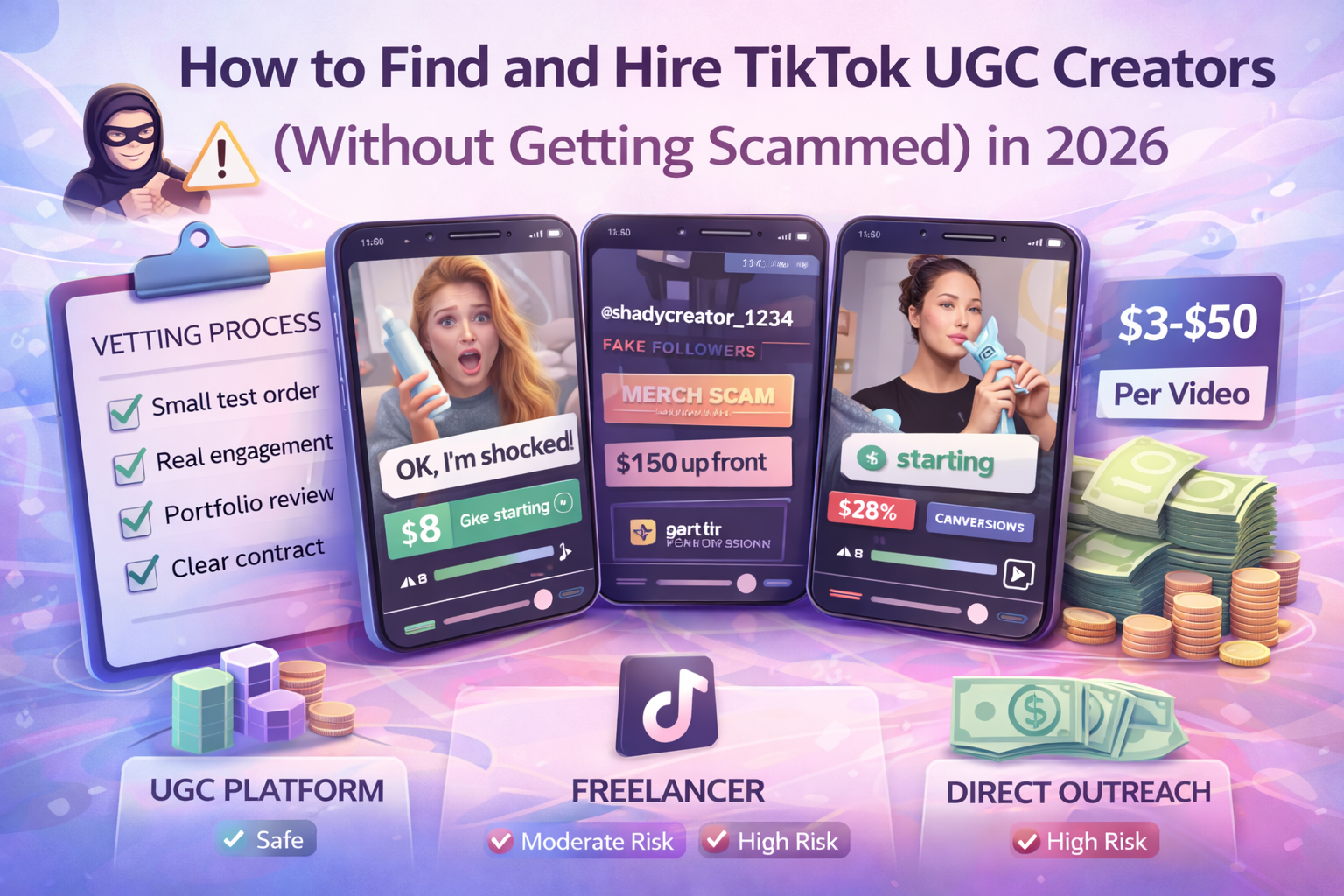
Use established UGC platforms for fastest, lowest-risk access to quality creators. If sourcing directly, start with small test orders, verify engagement authenticity, check portfolio relevance, and always use contracts specifying deliverables, timelines, revisions, and usage rights. Expect to pay $3-$50 per video depending on complexity and creator experience, with sweet spot being $8-$20 for most commercial UGC needs.

Your TikTok ads need fresh content. Again. The creative you launched three weeks ago is already fatigued, and your cost per acquisition is creeping up. You need 8-10 new UGC videos this month to maintain performance.
You've heard that hiring TikTok creators is the solution, but every time you try, something goes wrong. The last creator you found on Fiverr delivered content five days late and it looked nothing like their portfolio examples. The one before that ghosted completely after you paid 50% upfront. The one before that delivered content so obviously scripted and overproduced that it performed worse than your in-house videos.
You're not alone. The TikTok UGC creator marketplace is filled with opportunity and landmines in equal measure. But after helping over 800 brands source and manage TikTok creators over the past three years, I can tell you exactly how to find quality creators, vet them properly, and structure engagements that protect you from scams while getting the authentic content that actually performs.
Let me show you the complete framework for hiring TikTok UGC creators without wasting time, money, or patience on creators who can't or won't deliver.
Understanding What You're Actually Hiring For
Before finding creators, you need clarity on what you're actually buying. "TikTok UGC content" means different things to different people, and misaligned expectations cause most hiring problems.
The Three Types of TikTok UGC
Type 1: B-roll and Reaction Content
This is the simplest, fastest, and cheapest UGC format. The creator receives your product, films genuine reactions and usage footage, and delivers raw clips you can edit however you want.
Typical deliverables:
- Unboxing reaction footage
- Product demonstration clips
- Before/after footage
- Genuine first impression reactions
- Usage in realistic settings
Use cases: Compiling into ads with voiceover, creating variety through multiple angles, building content libraries for future use.
Cost range: $3-$8 per video Turnaround: 3-5 days Where to find: UGC platforms like DansUGC specializing in high-volume b-roll production
Type 2: Scripted Custom UGC
The creator follows your detailed brief, delivering finished videos ready to use as ads. This includes specific hooks, talking points, demonstrations, and calls-to-action executed in the creator's authentic style.
Typical deliverables:
- Complete 15-30 second videos
- Multiple takes of the same script
- Variations testing different hooks or CTAs
- Content following detailed creative briefs
Use cases: Direct response ads, product-specific messaging, testing creative variations systematically.
Cost range: $8-$30 per video Turnaround: 5-10 days Where to find: UGC platforms, vetted freelancers, creator communities
Type 3: Creator Partnership Content
The creator not only produces content but also posts to their own TikTok account, providing both the content asset and access to their audience. This combines UGC creation with influencer marketing.
Typical deliverables:
- Content posted to creator's account
- Usage rights for that content in your ads
- Authentic endorsement from recognized creator
Use cases: Building awareness, leveraging creator audiences, establishing social proof through recognized voices.
Cost range: $50-$500+ depending on creator following Turnaround: 10-20 days including negotiation Where to find: Influencer marketplaces, direct creator outreach, agencies
Most brands need Type 2 (scripted custom UGC) for performance advertising. Understanding this upfront prevents hiring creators who specialize in different content types.
What Makes Quality TikTok UGC Actually Work
Quality UGC for advertising has specific characteristics that distinguish it from general creator content:
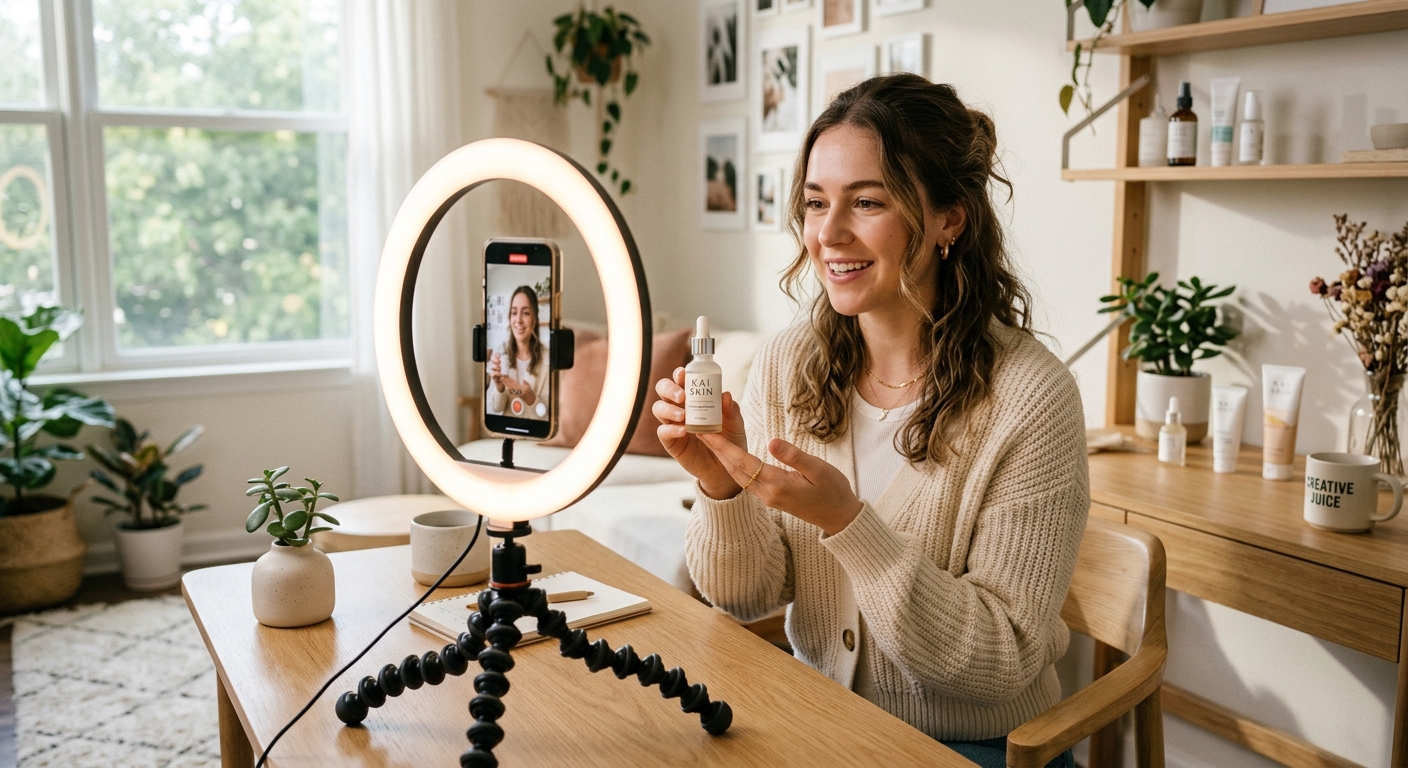
Authentic aesthetic: Looks like organic TikTok content, not advertisements. Shot on smartphones with natural lighting and real environments.
Clear value communication: Demonstrates product benefits concretely, not vaguely. "My skin stayed hydrated for 12 hours" not "it's really good for your skin."
Native TikTok style: Uses platform-specific formats, trends, and communication patterns. Feels like it belongs in TikTok feeds, not like a YouTube pre-roll adapted to vertical format.
Performance focus: Designed for paid advertising conversion, not just aesthetic appeal. Prioritizes hooks that stop scrolling and calls-to-action that drive clicks.
Proper technical execution: Correct aspect ratio (9:16 vertical), appropriate length (15-30 seconds), clear audio, and product visibility.
When evaluating creators, assess whether their portfolio demonstrates these characteristics, not just whether their videos look polished or have high production value.
Where to Find TikTok UGC Creators: The Five Main Sources
You have five primary channels for finding TikTok UGC creators. Each has advantages and disadvantages depending on your needs, budget, and experience level.
Source 1: Dedicated UGC Platforms (Fastest, Lowest Risk)
UGC platforms connect brands with vetted creators specifically for commercial content production. These platforms handle creator vetting, payment processing, quality guarantees, and often provide revision rights if content doesn't meet standards.
Major UGC platforms:
DansUGC specializes in high-volume, cost-effective TikTok UGC with B-roll reactions starting at just $3 per video and custom orders at $8+. The platform focuses on speed and affordability, making it ideal for brands needing consistent content supply for testing and ad refresh cycles.
Insense offers mid-range pricing ($50-$150 per video) with detailed creator profiles, portfolio reviews, and managed campaign processes. Good for brands wanting more hands-on creator selection.
Billo provides similar services with emphasis on e-commerce brands, typically $30-$100 per video with fast turnaround and revision guarantees.
Advantages of platforms:
- Pre-vetted creators with quality standards
- Fast turnaround (typically 3-7 days)
- Built-in quality guarantees and revision rights
- Simplified payment and contract processes
- Easy to scale volume production
- Lower risk of scams or non-delivery
Disadvantages of platforms:
- Less control over specific creator selection
- Platform fees increase per-video costs
- Less personal creator relationships
- May not have creators for highly specialized niches
When to use platforms: First-time UGC buyers, brands needing consistent volume (10+ videos monthly), businesses without time for extensive creator management, or companies wanting lowest-risk access to quality content.
Source 2: Direct TikTok Creator Outreach (Most Control, Highest Effort)
Finding creators directly on TikTok gives you maximum control but requires significant vetting and management effort.
How to find creators on TikTok:
Search hashtags like #ugccreator, #contentcreator, #ugcreator, or #tiktokcreator to find creators actively seeking brand partnerships. Review their pinned videos showcasing their work.
Browse creators in your product niche by searching product category hashtags. Creators who already post about similar products understand your audience and product category.
Check comments on competitor content for creators offering UGC services or asking about partnerships.
Use TikTok's Creator Marketplace (if you have access) to browse creators by niche, engagement rate, and audience demographics.
Advantages of direct outreach:
- Complete control over creator selection
- Direct relationships enabling long-term partnerships
- No platform fees, lower per-video costs
- Access to creators not on platforms
- Ability to negotiate specific terms
Disadvantages of direct outreach:
- Time-intensive vetting process
- Higher risk of scams, ghosting, or poor quality
- You handle all contracts, payments, and management
- No built-in quality guarantees or easy replacements
- Requires creator management expertise
When to use direct outreach: Brands with dedicated creator management resources, businesses wanting long-term creator relationships, companies in highly specialized niches where platform creators don't match, or brands with time to build proper vetting processes.
Source 3: Freelance Marketplaces (Mid-Range Option)
Platforms like Fiverr, Upwork, and Freelancer offer access to creators, though quality varies dramatically and vetting is your responsibility.
How to use freelance marketplaces effectively:
Search for "TikTok UGC creator" or "TikTok video creator" and filter by reviews, completion rate, and response time.
Review portfolios carefully, focusing on content similar to what you need. Generic portfolios with wildly varied styles indicate inconsistent quality.
Read reviews in detail, looking for comments about communication, timeliness, and revision willingness. Negative reviews about ghosting or missed deadlines are disqualifying.
Start with small test orders ($8-$20) before committing to larger packages, regardless of how impressive the portfolio appears.
Advantages of freelance marketplaces:
- Large creator pools with varied skills
- Built-in review systems provide some quality signals
- Platform payment protection reduces scam risk
- Competitive pricing
- Easy comparison shopping
Disadvantages of freelance marketplaces:
- Quality varies dramatically
- Heavy vetting burden falls on you
- Reviews can be manipulated or purchased
- No specialized UGC expertise from platform
- Creator communication can be inconsistent
When to use freelance marketplaces: Brands with budget constraints needing lowest possible pricing, businesses comfortable vetting creators independently, or companies wanting one-off content rather than ongoing relationships.
Source 4: Creator Communities and Facebook Groups
Various Facebook groups, Discord servers, and online communities connect brands with UGC creators. These communities facilitate direct relationships outside of platforms.
How to leverage creator communities:
Join Facebook groups like "UGC Creators" or "TikTok Content Creators" where creators post portfolios and brands post opportunities.
Review creator introduction posts showcasing their work, rates, and niches. Reach out directly to creators whose style matches your needs.
Post detailed briefs describing your content needs and budget, allowing creators to apply with portfolio examples and quotes.
Advantages of creator communities:
- Direct access to motivated creators actively seeking work
- Often lower pricing than platforms
- Ability to build genuine relationships
- Community reputation provides some quality signals
- Flexible arrangements without platform constraints
Disadvantages of creator communities:
- No payment protection or quality guarantees
- Significant vetting required
- Risk of scams higher than platforms
- You manage all contracts and agreements
- Time-intensive to filter through applications
When to use creator communities: Brands comfortable with direct creator management, businesses wanting to build creator rosters for ongoing work, or companies with very specific niche requirements not well-served by platforms.
Source 5: Agencies and Managed Services
Full-service agencies handle entire creator sourcing, management, content production, and delivery processes for brands wanting completely hands-off solutions.
What agencies typically provide:
- Creator sourcing based on your brief
- All vetting, contracting, and management
- Quality control and revision management
- Content delivery in your preferred formats
- Strategic guidance on content approaches
Cost structure: Typically monthly retainers ($2,000-$10,000+) or per-project fees with markup on creator costs.
When to use agencies: Large brands with substantial budgets, businesses wanting completely managed services, companies lacking internal creator management resources, or situations requiring high-volume production with guaranteed quality.
The Vetting Process: Separating Quality Creators From Scammers
Regardless of where you find creators, proper vetting is essential. This process protects you from scams, poor quality, and wasted time.
Red Flags That Signal Problems
These warning signs indicate you should avoid the creator entirely:
Portfolio inconsistency: Videos in wildly different styles suggest stolen content or use of multiple creators under one profile.
Suspicious follower patterns: Sudden massive follower spikes, engagement rates under 1%, or comment sections filled with spam indicate purchased followers.
No authentic communication: Generic copy-pasted responses to your questions, inability to discuss their creative process, or evasive answers about past work.
Pressure for full payment upfront: Legitimate creators accept milestone payments. Insisting on 100% payment before any work is a major scam indicator.
Too-good-to-be-true pricing: A creator offering $5 per video when typical market rate is $15-$30 is either extremely inexperienced or running a scam.
No portfolio on their own TikTok: Creators claiming to be active on TikTok but having no content on their profile or a private account raise immediate questions.
Unwillingness to provide references: Professional creators have past clients willing to provide references. Refusal suggests problem history.
If you see multiple red flags, move on immediately regardless of how good the portfolio looks or how low the pricing is.
Green Flags That Signal Quality
These positive indicators suggest a creator who will deliver quality work reliably:
Consistent style across portfolio: All videos demonstrate similar aesthetic and quality, indicating genuine work by this creator.
Authentic engagement: Engagement rates of 3-8%+ with real comments showing genuine audience interest, not spam.
Detailed communication: Thoughtful responses to your questions, clarifying questions about your brief, and proactive suggestions showing genuine interest.
Clear processes: Established workflows for briefs, revisions, delivery, and usage rights demonstrating professional experience.
Reasonable pricing: Rates that align with market standards ($8-$30 for custom UGC) suggest the creator understands their value and the market.
Active on TikTok themselves: Regular posting demonstrating genuine platform understanding and content creation skills.
Professional contract willingness: Comfortable with written agreements specifying deliverables, timelines, and usage rights.
Creators showing multiple green flags are safe bets for test orders leading to potential long-term relationships.
The Test Order Strategy
Never commit to large orders with unproven creators. Always start with small test orders that de-risk the relationship:
For platform creators: Order 1-2 videos initially. Evaluate quality, timeliness, and communication before ordering larger batches.
For direct-sourced creators: Pay for one video with clear deliverables and deadline. Use their performance on this single order to determine whether to continue.
For freelance marketplace creators: Use their smallest package or request a custom $15-$30 order before committing to multi-video packages.
Test orders should include the same brief complexity and revision expectations as future orders. Don't order something simple as a test then expect complex deliverables on the next order.
Expect 20-30% of test orders to be disappointing. This failure rate is normal and precisely why testing is essential. Finding the 70% of creators who deliver quality makes the testing investment worthwhile.
Creating Effective Creator Briefs
The brief you provide dramatically affects content quality. Poor briefs produce poor content even from talented creators. Detailed, clear briefs enable creators to deliver exactly what you need.
The Essential Brief Components
Project overview: 2-3 sentences explaining your product, target audience, and content's intended use (paid ads, organic social, website, etc.).
Hook specifications: Exact first 3 seconds or specific opening lines. "Start with: 'I didn't believe this until I tried it myself...'" gives clear direction without being overly restrictive.
Key talking points: 3-5 specific benefits or features to mention. Use customer language, not marketing jargon. "Keeps skin hydrated all day so makeup doesn't cake by afternoon" not "provides 24-hour moisture retention."
Tone and style guidance: Describe desired energy and approach. "Enthusiastic but not shouty, like telling a friend about something cool you discovered" provides helpful direction.
Visual requirements: Specific shots needed: "Show product clearly at 0:05, demonstrate application at 0:10, show before/after at 0:20." Clear visual requirements prevent misunderstandings.
Technical specifications:
- Format: 9:16 vertical video
- Length: 15-30 seconds (specify if you have preferences)
- Resolution: Minimum 1080x1920
- No watermarks or TikTok interface elements
Things to avoid: Specific words, competitor mentions, exaggerated claims, or anything off-brand. "Don't mention competitor names directly, refer to them as 'other products I tried.'"
Call-to-action: How should the video end? "Conclude with: 'Link in bio for 20% off' while showing product package one final time."
Revision policy: "One round of revisions included for significant brief deviations. Minor adjustments (color correction, trimming) included. Additional revisions $5 each."
Deadline: Specific date and time. "Deliver final video by March 15 at 5pm EST."
Examples: Links to 2-3 existing videos demonstrating the style or approach you want. Don't expect exact replication, but examples clarify expectations better than descriptions alone.
What to Allow Creative Freedom On
Briefs should be detailed but not scripts. Allow creators flexibility in these areas:
Specific wording: Provide talking points, not word-for-word scripts. Authentic UGC comes from creators using their natural language patterns.
Personality and energy: Let creators bring their authentic selves. Trying to force a naturally calm creator to be hyper-energetic produces fake-feeling content.
Minor visual choices: Background settings, clothing, exact camera angles. Creators know what works for their look and environment.
Execution approach: How they demonstrate or explain the product. Brief the what (benefits to highlight), let them determine the how (best way to show it).
Over-scripted briefs produce content that feels forced and performs poorly. Detailed but flexible briefs enable authentic execution aligned with your goals.
Protecting Yourself: Contracts and Payment Structures
Proper contracts and payment arrangements protect both parties and prevent most disputes before they occur.
Essential Contract Elements
Even simple creator agreements should include:
Deliverables: Exactly what you're paying for. "One 20-30 second vertical video demonstrating [product] following the attached creative brief."
Timeline: Specific delivery date with consequences for missing it. "Final video due March 15, 2026. If not delivered by March 17, full refund issued."
Revision policy: How many revisions are included and what qualifies as a revision versus new work. "One round of revisions included for content not matching brief. Revisions must be requested within 3 days of delivery."
Usage rights: Exactly how you can use the content. Standard advertising usage typically includes: "Advertiser receives perpetual, worldwide rights to use content in paid advertising across all digital platforms (social media, display, email, website). Advertiser may edit content as needed. Creator grants rights to use their likeness in advertisements."
Exclusivity (if needed): "Creator agrees not to create content for [competitor brands] for 90 days from delivery date."
Payment terms: Amount, schedule, and method. "Total fee: $25. $12.50 paid upon agreement, $12.50 paid upon satisfactory delivery via PayPal."
Cancellation terms: What happens if either party needs to cancel. "Either party may cancel before work begins with full refund. If canceled after work begins, advertiser pays for work completed to date."
Payment Structure Best Practices
Never pay 100% upfront. Standard practice is 50% upfront, 50% upon delivery. This protects both parties: creator has commitment assurance, brand ensures delivery before full payment.
Use platform payment protection when possible. Paying through Fiverr, Upwork, or UGC platforms provides dispute resolution and refund mechanisms if creators don't deliver.
For direct payments, use PayPal Goods and Services. This provides buyer protection if creator doesn't deliver. Never use PayPal Friends and Family or Venmo for creator payments, as these lack protection.
For larger projects, use milestone payments. If ordering $500 in content, structure as: $150 upon agreement, $200 upon rough draft delivery, $150 upon final delivery. This maintains leverage throughout the project.
Build escrow for untested creators. If possible, use escrow services holding full payment until delivery. The creator knows money is committed, but you retain control until deliverables meet standards.
Managing the Creator Relationship
The ongoing relationship after initial hiring determines long-term success or frustration.
Communication Best Practices
Respond promptly to questions: Creators blocked waiting for answers miss deadlines through no fault of their own. Respond to brief clarifications within 24 hours.
Provide clear, actionable feedback: "The energy is wrong" doesn't help. "The enthusiasm feels forced. Can you try a more conversational, casual tone like you're telling a friend about this?" enables improvement.
Acknowledge good work: Simple "This is exactly what we needed, thank you" messages build relationships that lead to better future work and priority treatment when you need quick turnarounds.
Be reasonable with revisions: Requesting changes because content doesn't match your brief is fair. Requesting changes because you decided you want something different from the brief isn't. Honor the agreed revision policy.
Pay promptly upon satisfactory delivery: Delaying payment damages relationships with quality creators who then deprioritize your future orders.
Building Long-Term Creator Rosters
Once you find creators who deliver consistently, build ongoing relationships:
Provide regular work: Creators prioritize clients giving them consistent volume. If you need 8 videos monthly, giving the same creator 4 of those videos ensures you're a priority when deadlines are tight.
Increase rates for proven performers: If a creator consistently delivers excellent work quickly, paying $5-$10 more per video than standard rates maintains their motivation and priority treatment.
Offer first refusal on new projects: "Hey, I have a new product launching and need 6 videos. Are you interested before I post publicly?" makes creators feel valued.
Provide detailed performance feedback: "The video you created generated our lowest cost per acquisition this month at $32 compared to our $48 average" shows creators their work has real business impact.
Be understanding of occasional issues: Life happens. If a reliable creator needs an extra day due to legitimate circumstances, be flexible. This builds loyalty that pays off when you have actual emergencies.
What to Do When Things Go Wrong
Despite careful vetting, problems occur. Knowing how to handle them minimizes damage.
When Content Doesn't Meet Standards
Step 1: Assess whether it's a brief deviation or quality issue. If content follows the brief but isn't what you envisioned, that's your brief problem, not creator fault. If content clearly doesn't match brief specifications, that's grounds for revision.
Step 2: Provide specific, actionable revision feedback. "Please re-shoot with these changes: start with the specific hook we provided in the brief, show product packaging clearly at 0:15, and end with the CTA we specified." This enables the creator to fix specific issues rather than guessing.
Step 3: If revised content still doesn't meet standards, evaluate whether it's saveable with editing on your end. Sometimes minor fixes are faster than another revision round.
Step 4: If content is fundamentally unusable and doesn't match the brief, request a refund or replacement. If using a platform, leverage their quality guarantee. If paying directly, reference the contract terms about deliverables matching briefs.
When Creators Miss Deadlines
Step 1: Check in 24 hours before deadline. "Just confirming you're still on track for tomorrow's 5pm delivery?" Often prevents last-minute surprises.
Step 2: If deadline is missed, immediately request update with new specific delivery time. "We're past the agreed deadline. When exactly can you deliver?"
Step 3: If they provide new timeline, decide whether to wait or cancel. If the delay is 24-48 hours and the creator is communicative, often worth waiting. If it's vague "working on it" without specifics, cancel and request refund.
Step 4: If they ghost completely, use platform dispute resolution if available. If paid directly through PayPal Goods and Services, open a dispute within 7 days.
Step 5: Leave honest reviews on platforms or in communities to warn others. This is your contribution to the ecosystem quality.
When You Suspect a Scam
Immediate action if creator demands more money after starting work: Refuse. This is a classic scam. "I need an extra $20 for props/editing/etc." after agreeing to a price signals bad faith. Cut losses and find another creator.
If creator delivers obviously stolen content: Reverse image search key frames to verify originality. If content appears elsewhere online, demand refund and report to platform.
If creator tries to deliver content that's not yours after taking payment: Some scammers send generic content hoping you won't notice. Demand content specifically showing your product or refund.
For complete non-delivery: Initiate platform dispute immediately or PayPal dispute within 7 days. Don't wait hoping they'll eventually deliver.
The Cost-Benefit Analysis: Is Professional UGC Worth It?
Let's examine whether hiring TikTok UGC creators delivers ROI compared to alternatives.
The Cost Reality
Monthly UGC needs for typical ad programs:
- Small campaigns ($3,000-$5,000 monthly ad spend): 8-12 videos monthly
- Medium campaigns ($10,000-$20,000 monthly ad spend): 20-30 videos monthly
- Large campaigns ($30,000+ monthly ad spend): 40-60 videos monthly
Cost at different production approaches:
Platform UGC (DansUGC at $3-$8 per video):
- Small campaigns: $24-$96 monthly creative cost
- Medium campaigns: $60-$240 monthly creative cost
- Large campaigns: $120-$480 monthly creative cost
Direct creator hiring ($15-$30 per video average):
- Small campaigns: $120-$360 monthly creative cost
- Medium campaigns: $300-$900 monthly creative cost
- Large campaigns: $600-$1,800 monthly creative cost
Professional agency production ($500-$2,000 per video):
- Small campaigns: $4,000-$24,000 monthly creative cost
- Medium campaigns: $10,000-$60,000 monthly creative cost
- Large campaigns: $20,000-$120,000 monthly creative cost
The cost difference is dramatic. UGC enables creative testing and refresh impossible at professional production costs.
The Performance Reality
UGC consistently outperforms professionally produced ads on TikTok by 20-50% in engagement and 15-35% in conversion rates due to native aesthetic and authenticity.
Example ROI calculation:
Professional production:
- 8 videos at $1,500 each = $12,000 creative cost
- $10,000 ad spend
- Average CPA: $52 (typical for professional content)
- Conversions: 192
- Total cost per conversion: $114.58
Platform UGC:
- 20 videos at $8 each = $160 creative cost
- $10,000 ad spend
- Average CPA: $34 (typical for quality UGC)
- Conversions: 294
- Total cost per conversion: $34.54
UGC delivers 53% more conversions at 70% lower cost per conversion for the same total budget. The creative cost savings are significant, but the performance improvement is what actually drives ROI.
Recommended Approach: Start With Platforms, Expand Strategically
Based on helping hundreds of brands source TikTok creators, here's the practical recommendation:
Month 1-2: Use UGC Platforms Start with DansUGC or similar platforms to quickly test whether UGC works for your brand. Order 10-15 videos at B-roll ($3) or custom rates ($8+) and test performance against your current creative.
Platforms provide fastest validation with lowest risk. If UGC doesn't work for your specific product or audience (rare but possible), you've learned this for under $150 rather than investing weeks in direct creator sourcing.
Month 3-4: Identify Top Performers and Build Direct Relationships If UGC performs well (it almost certainly will), identify which creator styles perform best. Reach out to top-performing creators for direct ongoing relationships at negotiated rates.
Simultaneously continue using platforms for volume production while building your roster of proven creators for important campaigns.
Month 5+: Hybrid Approach Maintain 60-70% of volume through platforms for efficiency and 30-40% through direct creator relationships for strategic content where you want specific execution.
This hybrid approach balances efficiency, cost, relationships, and performance.
The Bottom Line: UGC Creation Is Now Accessible and Low-Risk
The TikTok UGC creator marketplace has matured dramatically. Quality creators are accessible, affordable, and deliverable when you know where to look and how to vet properly.
Key takeaways:
Use established platforms like DansUGC for fastest, lowest-risk access to quality creators starting at just $3 for B-roll and $8 for custom content. This is your fastest path to validating whether UGC works for your brand.
If sourcing directly, start with test orders, verify engagement authenticity, review portfolios carefully, and always use contracts specifying deliverables and payment milestones.
Expect to pay $3-$30 per video for most commercial UGC needs, with sweet spot being $8-$20. Don't overpay for unproven creators, but don't chase unsustainably low pricing that signals scams or poor quality.
Invest time in detailed briefs that provide clear direction while allowing creative freedom. The brief quality directly determines content quality regardless of creator skill.
Build relationships with proven performers while maintaining platform relationships for volume and backup. Hybrid approaches deliver best results.
The scams exist, but they're avoidable with basic vetting: verify portfolio authenticity, check engagement rates, start with small orders, use protected payment methods, and require milestone payments never 100% upfront.
Quality TikTok UGC is no longer a luxury for brands with massive budgets. At $3-$20 per video, it's accessible to any business running paid advertising. The question isn't whether you can afford UGC. It's whether you can afford not to use content that consistently outperforms expensive professional production.
Stop wasting budget on $2,000 professional videos that perform worse than $8 authentic creator content. Start testing UGC this week through platforms that guarantee quality and simplify the process.
Your cost per acquisition will thank you. Your creative testing velocity will accelerate. Your ad performance will improve.
The creators are out there, ready to work with your brand. Now you know exactly how to find them, vet them, hire them, and work with them successfully.
Go create something authentic. Your audience is waiting.
FAQs
How much should I pay a TikTok UGC creator?
TikTok UGC creator rates vary by experience and deliverable complexity: $3-$8 for simple B-roll reactions and unboxings, $8-$20 for custom scripted content following detailed briefs, $20-$50 for experienced creators with proven advertising performance, and $50-$200+ for creators with significant following who include posting rights. Platforms like DansUGC offer B-roll reactions starting at $3 and custom orders at $8, providing excellent value for brands testing UGC. Beware of creators charging $100+ without proven track records, as high prices don't guarantee quality.
Where can I find authentic TikTok UGC creators?
Find authentic TikTok UGC creators through: dedicated UGC platforms (DansUGC, Insense, Billo) offering vetted creators with quality guarantees; direct TikTok outreach by searching hashtags like #ugccreator #contentcreator and reviewing portfolios; freelance marketplaces (Fiverr, Upwork) with careful vetting of reviews and past work; creator communities and Facebook groups where creators actively seek brand partnerships; and agencies specializing in UGC production and creator management. Platforms provide fastest, lowest-risk access while direct outreach offers more control but requires extensive vetting.
How do I avoid fake followers and engagement when hiring TikTok creators?
Verify authentic engagement by: checking engagement rate (likes + comments divided by followers, should be 3%+ for micro-creators), reviewing comment quality for genuine conversation versus spam, analyzing follower growth patterns for sudden spikes indicating purchases, using tools like Social Blade or HypeAuditor for fraud detection, and requesting analytics screenshots showing genuine reach. For advertising UGC, creator follower count matters less than content quality since you're not paying for their audience reach, only their content creation skills.
What should I include in a TikTok UGC creator brief?
Effective briefs include: hook specifications (first 3 seconds, specific opening lines), key talking points and product benefits to emphasize, tone and style guidelines (casual, energetic, educational), visual requirements (show product clearly, specific settings or backgrounds), technical specifications (9:16 vertical format, 15-30 seconds length), call-to-action preferences, things to avoid (competitor mentions, inappropriate language), deadlines and revision policy, and usage rights terms. Provide examples of content you like but allow creative flexibility for authentic execution.
Should I use a UGC platform or hire creators directly?
Use UGC platforms when: you need content quickly (3-7 days typical turnaround), you want quality guarantees and easy replacements if unsatisfied, you're new to UGC and need simplified processes, or you require volume production (10+ videos monthly). Hire directly when: you have time for extensive vetting and management, you want ongoing relationships with specific creators, you need highly specialized niche expertise, or you have internal resources to manage creator relationships, contracts, and payments. For most businesses, platforms offer better speed, lower risk, and more consistent quality.
What usage rights should I negotiate with TikTok UGC creators?
Standard UGC agreements should include: perpetual usage rights for advertising on all platforms (paid social, display, email), ability to edit and modify content, rights to use creator's likeness in ads, geographic usage rights (typically worldwide), exclusivity period preventing creator from working with direct competitors (30-90 days typical), and clarification of whether creator will post to their own account. Most commercial UGC pricing includes advertising usage rights but not creator posting. Posting from creator's account typically costs 3-10x more due to audience access value.
Ready to get UGC videos for your brand?
Real human creators, 48-hour delivery, full commercial rights. Starting at $9/video.