Why Raw UGC Beats Polished Production Quality in Ads (Real Data)
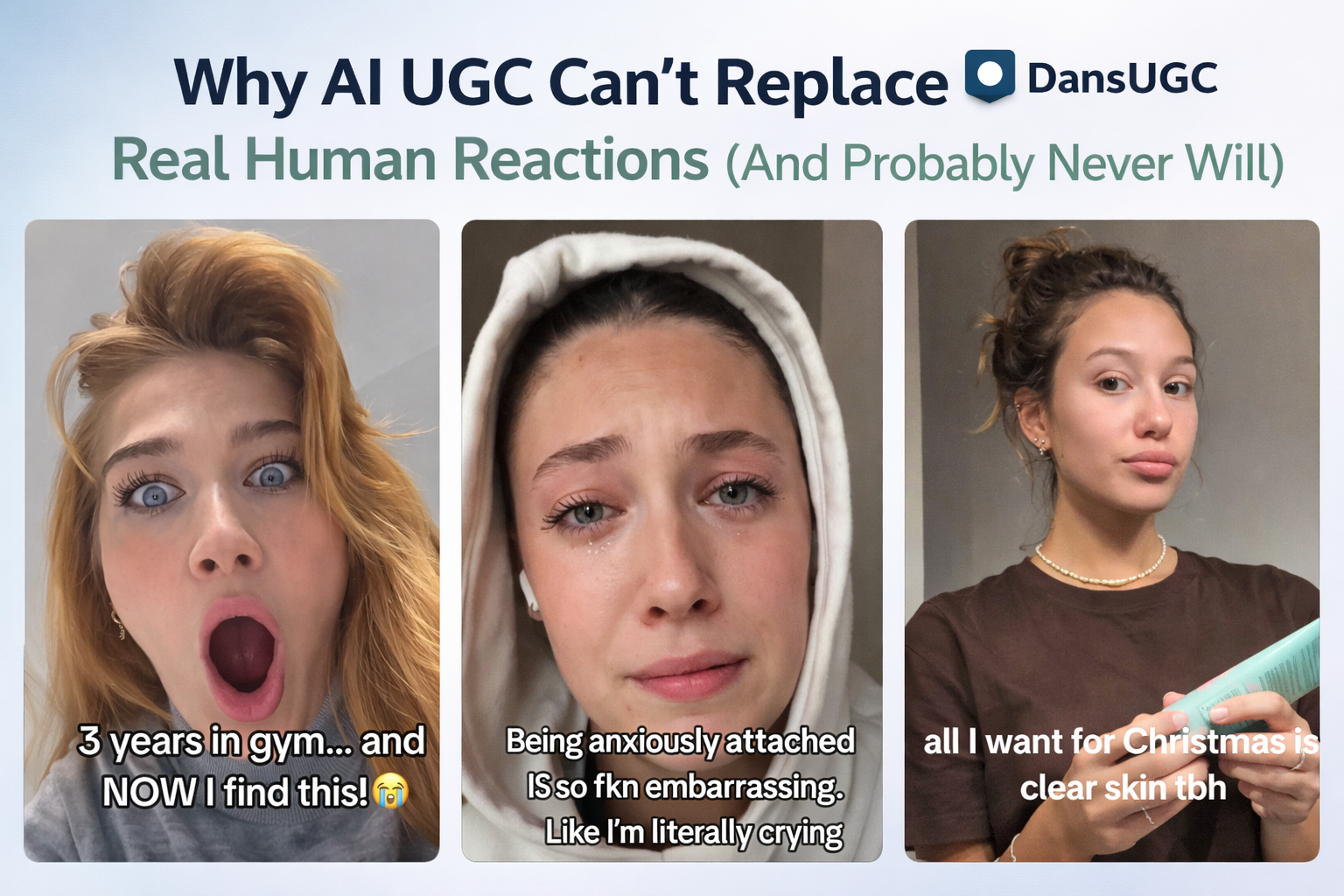
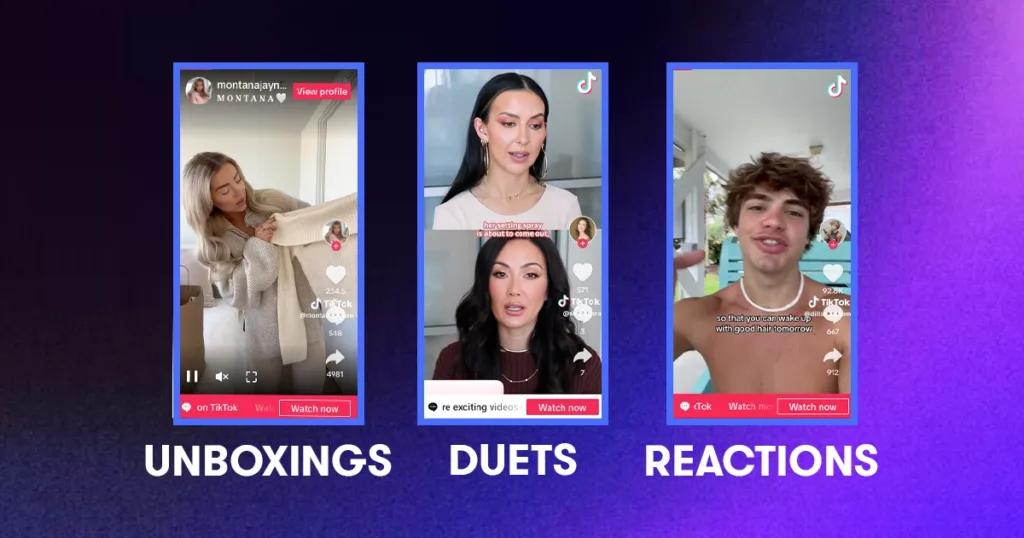
High-production ads are losing to authentic user-generated content across every major platform. Real customers sharing genuine experiences in selfie-style videos consistently outperform studio-shot commercials by significant margins. This shift isn't temporary: consumer psychology, platform algorithms, and measurable ROI all favor authenticity over polish. Brands spending thousands on production are missing the point entirely. The best-performing UGC ads look like they were shot on a phone in under five minutes because that's exactly what resonates with modern consumers who've developed immunity to traditional advertising.

The marketing world has spent the last decade obsessing over 4K resolution, color grading, and professional lighting setups. Meanwhile, a teenager filming a 15-second review on their cracked iPhone screen is generating more sales than your $50,000 commercial campaign.
This isn't an anomaly. It's the new reality of digital advertising, and it's backed by data that should terrify every agency still pitching "premium production values" as their core offering.
The Production Quality Paradox
Here's what nobody wants to admit: the more polished your ad looks, the less your audience trusts it.
We've created a bizarre situation where brands are actively harming their conversion rates by making their content look too good. A skincare company recently ran a split test that perfectly illustrates this phenomenon. They created two video ads for the same product:
Version A: Professional shoot with a model, ring lights, makeup artist, scripted testimonial, and color-corrected footage. Production cost: $8,000.
Version B: Actual customer filming herself in her bathroom mirror, showing real results, stumbling over words, with visible pores and uneven lighting. Production cost: $150.
Version B generated 2.4x more purchases at half the cost per acquisition.
This wasn't a fluke. They ran the test three more times with different products. Authentic content won every single time.
Why Your Brain Rejects Polished Advertising
Consumer psychology has fundamentally shifted in the past five years. We're now exposed to approximately 6,000-10,000 ads daily, and our brains have developed sophisticated defense mechanisms against traditional advertising techniques.
When you see a perfectly lit product shot with a flawless model delivering a scripted line, your brain immediately categorizes it: "This is an ad. This person is being paid. This is not genuine information."
That categorization happens in milliseconds, and it activates your skepticism circuits before the message even registers.
Contrast that with scrolling through your feed and seeing someone who looks like your neighbor, sitting in their car, talking about a product they just bought. Your brain processes this completely differently: "This is content. This is someone like me. This might be useful information."
The psychology here isn't subtle. We're hardwired to trust people who seem like us more than we trust obvious marketing messages. Every element of professional production is a signal that screams "paid advertisement," which triggers immediate distrust.
The Platform Algorithm Advantage
Beyond human psychology, there's a technical reason authentic content dominates: social media algorithms actively penalize overly polished ads.
Facebook, Instagram, TikTok, and YouTube have all stated publicly that they prioritize content that generates genuine engagement. Their systems are designed to detect and reward posts that people actually want to interact with, not just scroll past.
Professional ads typically generate what the industry calls "dead engagement." People might watch because the production quality catches their eye, but they don't comment, they don't share, and they don't save the content. These are passive interactions that algorithms interpret as low-value content.
Authentic UGC, on the other hand, generates active engagement. People comment with questions, tag their friends, share the video to their stories, and save it for later. These signals tell the algorithm: "This content is valuable. Show it to more people."
One e-commerce brand discovered this the hard way. They launched a campaign with beautifully produced ads and couldn't figure out why their reach was so limited despite a healthy budget. When they switched to authentic customer videos, their organic reach increased by 340% with the same ad spend.
The algorithm wasn't broken. It was working exactly as designed, rewarding content that people actually engaged with rather than content that just looked expensive.
The Trust Gap That Production Quality Creates
There's a measurable trust deficit in modern advertising. According to recent consumer research, only 25% of people trust branded content, while 92% trust recommendations from real people, even strangers.
Every production element you add creates distance between your message and your audience. Professional lighting reminds them they're watching an ad. A scripted testimonial reminds them that someone was paid to say those words. Perfect audio mixing reminds them that this was manufactured in a studio.
Authenticity closes that gap instantly. When someone films themselves in natural light with ambient noise and a few awkward pauses, it feels real because it is real. The imperfections aren't flaws; they're proof of authenticity.
A supplement brand tested this directly by creating two testimonial videos from the same customer. In the first version, they had her re-record her testimonial in their studio with proper lighting and a script. In the second version, they used the raw video she'd originally sent them, filmed on her phone while getting ready for work.
The raw version generated 67% higher click-through rates and a 43% better conversion rate. Same person. Same product. Same core message. Completely different results based purely on production quality.
What "Authentic" Actually Means in Practice
There's a critical distinction that many brands miss when they first attempt authentic UGC: authentic doesn't mean amateur, and it definitely doesn't mean sloppy.
Authentic content has clear audio, is shot in decent lighting, frames the subject properly, and delivers a coherent message. What it doesn't have is the artificial perfection that signals "advertisement."
The most effective authentic UGC hits a sweet spot. It looks like someone who cares about creating decent content but isn't trying to win an Oscar. Think: well-lit room with natural light, phone propped up at eye level, person speaking naturally into camera, minimal editing beyond basic cuts.
The goal is "intentionally casual," not actually careless. You want viewers to think "this person took a few minutes to share something they care about," not "this person doesn't respect my time."
Several successful UGC creators have mastered this balance. They've developed a consistent style that feels spontaneous but is actually quite deliberate. They know their angles, they position themselves near windows for good light, and they've practiced speaking to the camera until it feels natural.
That's the level you're aiming for. Not truly amateur, but authentically unprofessional.
The Economics of Authenticity
Let's talk about money, because this is where the authenticity argument becomes impossible to ignore.
Traditional commercial production costs anywhere from $5,000 to $500,000, depending on scale. Even a basic professional ad with decent production values rarely comes in under $10,000 when you factor in concept development, scripting, talent, crew, equipment, location, and post-production.
Authentic UGC creation costs a fraction of that. You're paying a real customer or micro-influencer $100-$500 to film themselves using your product and sharing their honest experience. Many brands work with 10-20 creators for the cost of a single professional commercial.
But the economics go deeper than just production costs. Authentic UGC typically has a much longer useful life than polished ads. Traditional commercials feel dated within months. That perfect lighting setup that looked cutting-edge last year now looks like every other ad from that period.
Authentic content ages better because it was never trying to look trendy in the first place. A genuine customer testimonial from two years ago is still relevant today because human experiences don't expire the way production trends do.
One clothing brand has been running the same set of customer videos for 18 months with minimal performance decline. They occasionally refresh the collection by adding new authentic content, but their best performers from the original batch are still generating sales at nearly the same rate.
Try getting that longevity from a trend-chasing TikTok ad that references last month's viral sound.
When Production Quality Actually Matters
This isn't a manifesto against all professional production. There are specific scenarios where higher production values make strategic sense.
Brand launch videos that need to establish credibility and explain complex value propositions benefit from clear, professional presentation. Product demos that need to show intricate details require proper lighting and camera work. Long-form educational content that positions you as an industry authority should look professionally produced.
The key is matching production level to content purpose. If your goal is to generate immediate response and drive conversions, authentic UGC wins almost every time. If your goal is to build long-term brand equity and establish authority, some level of professional production helps.
The mistake isn't using professional production. The mistake is using professional production for content that would perform better with authentic execution, which includes most paid social advertising.
How Real Brands Are Implementing This
Several companies have completely restructured their content strategy around authentic UGC, and their results provide a roadmap for others.
A skincare company eliminated its entire in-house production team and replaced it with a network of 200 real customers who receive products in exchange for honest video reviews. They spend $15,000 monthly on this program, which replaced a $50,000 monthly production budget. Their content volume increased by 400%, and their average cost per acquisition dropped by 58%.
A fitness equipment brand built its entire paid social strategy around authentic transformation videos from real customers. They provide a simple video guide showing how to film yourself properly, but otherwise leave the content completely in the customers' hands. These videos consistently outperform their professionally produced content by 2-3x on every metric that matters.
A software company replaced their animated explainer videos with screen recordings from actual users showing how they use the product in their daily workflow. No scripts, no voiceover artists, just real people demonstrating real use cases. Their demo request rate increased by 91%.
These aren't small brands experimenting at the margins. These are companies doing millions in annual revenue who've discovered that authenticity isn't just more effective; it's more scalable.
The Creator Selection Process That Actually Works
Finding the right people to create authentic UGC requires a different approach than traditional influencer marketing or commercial casting.
You're not looking for the biggest audience or the most polished presentation. You're looking for people who genuinely use and love your product and can articulate why in a natural, compelling way.
The best UGC creators are often your existing customers who are already talking about your product without being asked. They're posting about it on their personal social media, leaving detailed reviews, or recommending it to friends. These people don't need to be convinced or coached; they just need permission and minimal guidance.
The selection criteria should prioritize authenticity over production skill. Can they speak naturally to the camera? Do they have a clear, relatable communication style? Do they actually use your product in their regular life? Those factors matter far more than whether they know how to color grade footage or have professional lighting equipment.
Many successful brands now have formal programs where they identify enthusiastic customers and invite them to create content. The pitch is simple: keep doing what you're already doing, but film it, and we'll compensate you for your time.
Creating Guidelines Without Killing Authenticity
This is the trickiest balance in authentic UGC: providing enough guidance that the content is usable without being so prescriptive that it loses its genuine feel.
The brands that do this well provide structural guidelines, not creative constraints. They'll specify video length, key points to mention, and basic technical requirements like horizontal orientation and clear audio. But they explicitly avoid scripts, specific phrasing, or suggestions about tone.
One effective framework is to provide a simple outline: start with who you are and your relevant context, show the product in use, explain the specific problem it solved for you, and end with whether you'd recommend it and why. That structure ensures the content is coherent without dictating how it should sound.
The worst thing you can do is send creators a script. The moment someone is reading words off a page, all authenticity evaporates. Even if they're reading words they theoretically believe, the delivery will feel forced, and the viewer will sense it immediately.
Some brands include example videos that demonstrate the style and feel they're looking for, with explicit instructions not to copy them but to use them as inspiration for tone and energy level. This gives creators a reference point without restricting their authentic expression.
Measuring What Actually Matters
Traditional advertising metrics often miss the real value of authentic UGC. Brands get distracted by production quality proxies like view-through rates or brand lift studies that measure recall rather than action.
What matters for UGC is behavioral response. Are people clicking? Are they adding to the cart? Are they completing purchases? Are they commenting with genuine questions rather than generic praise? Are they sharing the content on their own networks?
These engagement signals predict conversion far better than aesthetic metrics. A video that looks rough around the edges but generates 500 comments full of questions about the product is worth infinitely more than a polished video that people scroll past without interaction.
The best measurement framework tracks the entire funnel: scroll-stop rate, watch time, engagement rate, click-through rate, and ultimately conversion rate. Authentic UGC should outperform polished content on every one of these metrics, and if it doesn't, something is wrong with either your creator selection or your guidance process.
Several brands now use holdout testing where they run authentic UGC and professional ads to similar audiences and measure the difference not just in immediate response but in long-term customer value. Repeatedly, they find that customers acquired through authentic UGC have higher lifetime value and better retention rates.
The theory is that customers who convert based on authentic testimonials have more accurate expectations about the product, leading to higher satisfaction and lower returns.
The Future Belongs to Real People
The trajectory here is clear. Every platform update, every algorithm change, and every shift in consumer behavior is moving further toward rewarding authenticity and penalizing obvious advertising.
We're likely heading toward a future where traditional advertising creative becomes almost exclusively the domain of brand building and awareness, while all performance marketing and conversion-focused content is authentic, user-generated, and deliberately unpolished.
This shift isn't about platforms or brands. It's about fundamental changes in how people process and respond to information. We've become so sophisticated at detecting and dismissing marketing messages that only content that doesn't look like marketing can break through.
The brands that recognize this early and restructure their entire content approach around authenticity will dominate their categories. The brands that continue investing heavily in production quality while their competitors build armies of authentic creators will wonder why their cost per acquisition keeps climbing while their market share shrinks.
Making the Transition
For brands currently invested in traditional production, the path forward requires a mindset shift more than a budget shift.
Start by running small tests. Take 20% of your content budget and redirect it toward authentic UGC. Work with 10-15 real customers or micro-creators. Give them simple guidelines and see what they produce. Run those videos alongside your polished content and measure the difference.
The results will make the decision obvious. Once you see authentic content outperforming professional production at a fraction of the cost, the strategic direction becomes clear.
The bigger challenge is internal. Creative teams who built their careers on production excellence will resist this shift. Agencies whose profit margins depend on high production costs will argue that quality matters. Executives who associate brand value with polished presentation will worry about looking "cheap."
These concerns are real, but they're also increasingly irrelevant. The market has spoken clearly: consumers trust authenticity over polish, algorithms reward engagement over production quality, and ROI favors real people over professional actors.
The question isn't whether to embrace authentic UGC. The question is how quickly you can make the transition before your competitors do.
The Bottom Line
Production quality is a liability in modern performance marketing. Every dollar you spend making your ads look more professional is a dollar that makes them less effective. Every element of polish you add creates distance between your message and your audience.
The brands winning in digital advertising right now aren't the ones with the biggest production budgets. They're the ones who've figured out how to activate armies of real customers who can speak authentically about their products.
This isn't a hack or a trend. It's a fundamental realignment of how effective advertising works in an era where consumers have unlimited choices and zero tolerance for being sold to.
Stop trying to make your ads look expensive. Start making them look real. Your conversion rates will thank you.
Ready to get UGC videos for your brand?
Real human creators, 48-hour delivery, full commercial rights. Starting at $9/video.