UGC Platforms vs Creator Marketplaces: Which Gets You Better Videos?
Quick Answer: UGC platforms connect brands with everyday customers who create authentic content, while creator marketplaces feature professional influencers and content creators with established audiences.
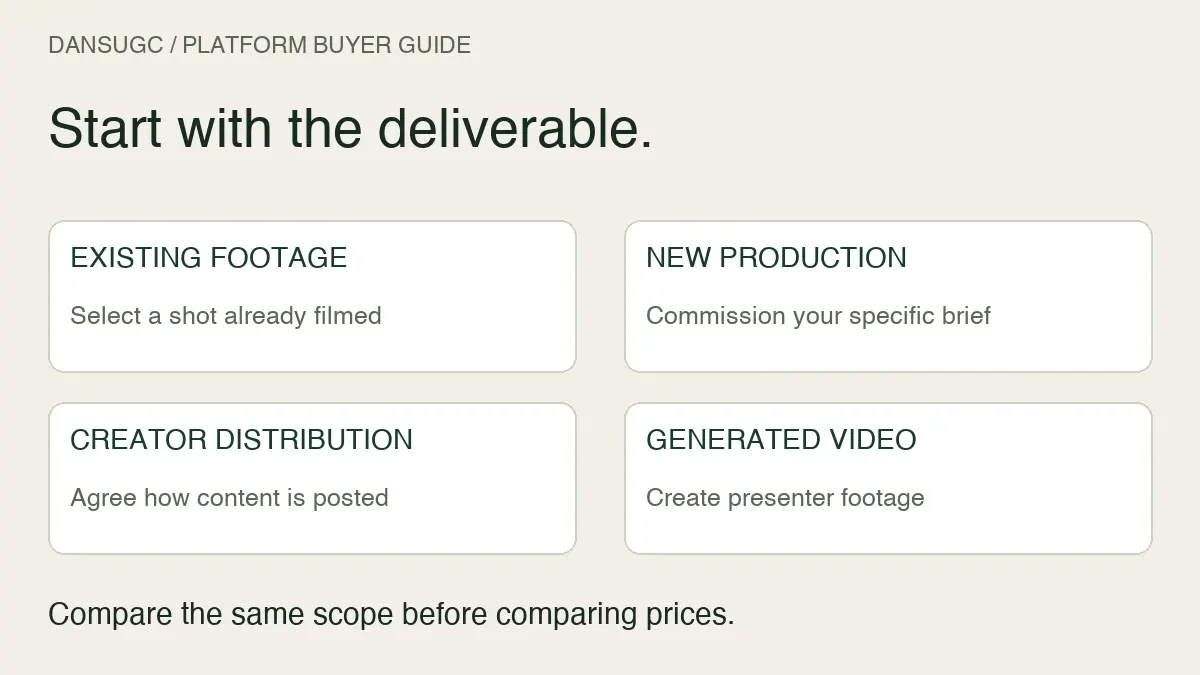
The creator economy has exploded over the past five years, giving brands more options than ever for generating authentic content. But this abundance of choice creates genuine confusion. Should you invest in a UGC platform that connects you with everyday customers? Or does it make more sense to work with professional creators through a marketplace?
I've spent the last eight years helping brands build content strategies, and I can tell you this: most companies are asking the wrong question. It's not about which option is "better." It's about understanding what each tool actually does, where they excel, and how they fit into your broader marketing strategy.
Let's break down the real differences between UGC platforms and creator marketplaces so you can make an informed decision based on your specific needs, not marketing hype.
Understanding UGC Platforms: What They Actually Are
UGC platforms are software tools that connect brands with regular people who are willing to create content featuring your products. These aren't professional influencers or established content creators. They're everyday customers, micro-users, or content enthusiasts who want to try your product and share their genuine experience.
Think of platforms like Billo, Insense, or #paid (on the UGC side). You submit a brief describing what you need, your budget, and creative requirements. The platform matches you with creators from their network who fit your criteria. These creators receive your product, create content according to your guidelines, and submit it for review.
The fundamental value proposition is volume and authenticity. You're not paying for reach or follower counts. You're paying for content assets that look and feel like something a real customer would post, because that's exactly what they are.
What UGC Platform Content Looks Like
UGC content tends to be raw, spontaneous, and unpolished in the best possible way. You'll see creators filming themselves in their kitchens, cars, bedrooms, or wherever they naturally use your product. The lighting isn't perfect. The editing is minimal. There might be kids or pets in the background.
This isn't a flaw. It's the entire point.
Modern consumers have developed sophisticated radar for detecting branded content. They scroll past perfectly lit product shots without a second thought. But that slightly grainy video of someone genuinely excited about your skincare product? That stops the scroll.
UGC platforms generate content designed for performance, not prestige. These are assets you'll use in paid ads, on product pages, in email campaigns, and across organic social. The content converts because it looks like something your target customer might have created themselves.
Creator Marketplaces: A Different Game Entirely
Creator marketplaces like AspireIQ, Grin, Creator.co, or Upfluence operate on completely different principles. These platforms connect brands with professional content creators and influencers who have established audiences, consistent content quality, and often representation or management.
When you work through a creator marketplace, you're not just buying content. You're buying access to an audience. The creator's followers become aware of your brand through sponsored posts, stories, reels, or videos. The content itself is almost secondary to the reach and endorsement.
Professional creators on these platforms typically have 10K to 1M+ followers, though many marketplaces now include micro-influencers (1K-10K followers) as brands recognize their value. These creators understand lighting, editing, storytelling, and platform algorithms. They know how to craft content that performs well with their specific audience.
The Creator Marketplace Value Proposition
What you're really paying for with creator marketplaces is threefold:
First, you get reach. A creator with 100K engaged followers gives you immediate access to an audience you haven't built yet. If you're launching a new product or entering a new market, this accelerated awareness is invaluable.
Second, you receive endorsement credibility. When a trusted creator recommends your product, their audience pays attention in ways they never would to a traditional ad. This social proof can dramatically accelerate purchase decisions.
Third, you acquire high-quality content. Professional creators produce polished assets that enhance your brand image. While this content may not always outperform UGC in direct response advertising, it builds brand equity and gives you premium assets for your own channels.
The Pricing Reality: What You'll Actually Spend
Let's talk numbers, because this is where many brands get caught off guard.
UGC Platform Pricing Models
Most UGC platforms operate on subscription or credit-based models. You might pay $500-$2,000 monthly for a platform subscription that includes a certain number of content pieces. Additional content typically costs $50-$300 per piece, depending on complexity, creator tier, and usage rights.
Some platforms like Billo use a per-video model where you pay $79-$150 per video with no monthly commitment. Others require minimum monthly spends but provide volume discounts as you scale.
The math works favorably for brands that need consistent content volume. If you're running multiple ad variations, testing different hooks, or need fresh creative every week, UGC platforms deliver better cost-per-asset ratios than almost any alternative.
Budget $1,000-$5,000 monthly if you're serious about using UGC at scale. This typically generates 20-100+ content pieces depending on your chosen platform and content requirements.
Creator Marketplace Pricing: More Variable, Often Higher
Creator marketplace pricing varies dramatically based on creator tier, deliverables, usage rights, and campaign scope. A micro-influencer campaign might cost $1,000-$5,000 total. A mid-tier influencer campaign could run $5,000-$25,000. Macro-influencer campaigns often start at $25,000 and can easily exceed $100,000 for celebrities or top-tier creators.
These figures typically include:
- Creator compensation for content creation and posting
- Platform fees (usually 10-30% of creator costs)
- Content usage rights for a specified duration
- Campaign management and reporting
Many brands underestimate the full cost because they focus only on creator fees. Platform fees, content rights negotiations, revision rounds, and campaign management time all add up quickly.
Plan for $3,000-$10,000 minimum per creator campaign when you're starting. As you scale to multiple creators or higher-tier influencers, monthly budgets of $20,000-$100,000+ become standard for brands taking creator partnerships seriously.
Content Rights: Who Owns What You're Paying For
This is one of the most misunderstood aspects of both UGC platforms and creator marketplaces, and it can significantly impact your actual costs and content utility.
UGC Platform Rights Structures
Most UGC platforms build full usage rights into their pricing. When you pay for content, you typically receive perpetual rights to use it across paid advertising, organic social, your website, email marketing, and other owned channels. Some platforms include whitelisting rights, allowing you to run ads directly from the creator's social accounts.
Read the fine print carefully. Some platforms limit usage duration (12-24 months is common) or charge extra for certain usage types like TV commercials or out-of-home advertising. Others restrict geographic usage or require additional fees for exclusivity.
The advantage here is simplicity. You pay once, you own the content, and you can use it however you need within the terms. This makes UGC platforms particularly attractive for brands that want to build content libraries for long-term use.
Creator Marketplace Rights: Everything Is Negotiable
Creator marketplaces typically treat content rights as separate negotiation points. A creator might agree to post content on their channels for one fee, but charge additional amounts for:
- Allowing you to use the content on your own channels
- Whitelisting (running ads from their account)
- Exclusivity (preventing them from working with competitors)
- Extended usage beyond 3-6 months
- Usage in paid advertising versus organic posts only
This complexity means your actual cost per campaign can be significantly higher than initial creator quotes suggest. A $5,000 creator fee might become $8,000-$12,000 once you negotiate the rights you actually need.
Smart brands clarify all usage rights before finalizing creator agreements. Know exactly where and how long you plan to use the content, then negotiate those terms upfront rather than discovering limitations after content delivery.
Performance Differences: What Actually Converts
Theory is interesting, but results matter more. How does content from UGC platforms perform compared to creator marketplace content in real marketing channels?
UGC Performance in Paid Advertising
Multiple studies and countless brand case studies show that UGC consistently outperforms polished brand content in direct response advertising. We're talking about 2-4x higher click-through rates and 20-50% lower cost per acquisition in many verticals.
Why does this happen? Several factors contribute:
Raw, authentic UGC blends into user feeds rather than screaming "advertisement." It doesn't trigger the automatic scroll-past reflex that polished ads often do. The content feels native to the platform because it is native. Real people created it the same way they create non-sponsored content.
UGC also builds trust faster. Seeing a regular person genuinely enjoying your product creates powerful social proof. It answers the question every buyer asks: "Will this actually work for someone like me?"
I've seen brands reduce their cost per acquisition by 40% simply by swapping professionally shot product videos for UGC content in their Facebook and Instagram ads. The creative was objectively "worse" from a production standpoint, but it performed better because it felt real.
Creator Content Performance: Where It Excels
Creator marketplace content serves different purposes and excels in different contexts. When a trusted influencer posts about your product to their engaged audience, you're not just getting content performance. You're getting audience activation.
The best creator partnerships generate:
- Immediate brand awareness among new audiences
- Social proof at scale through comments and engagement
- Halo effects that boost your owned channel performance
- Premium content assets for your brand channels
Creator content tends to perform exceptionally well for:
- Product launches requiring rapid awareness
- Brand repositioning or entering new markets
- Reaching specific demographic or psychographic segments
- Building aspirational brand associations
Where creator content sometimes underperforms is in bottom-funnel conversion. That beautifully lit, professionally edited creator video might not outperform scrappy UGC when you're trying to drive immediate purchases from cold traffic. But it builds the brand equity and awareness that makes future conversion easier.
Strategic Use Cases: When to Use Each Option
The most successful brands I work with don't choose between UGC platforms and creator marketplaces. They use both strategically, based on specific business objectives.
When UGC Platforms Make the Most Sense
Use UGC platforms when you need:
Volume content for testing and optimization. Running effective paid social campaigns requires constant creative testing. You need new hooks, different angles, and various formats. UGC platforms let you generate 20-50+ variations monthly without breaking your budget.
Conversion-focused assets for bottom-funnel marketing. Product pages, retargeting ads, email flows, and post-purchase sequences all benefit from authentic customer content. UGC platforms provide exactly this type of material at scale.
Authentic social proof without massive budgets. If you're a small or medium-sized brand without $50,000 for influencer campaigns, UGC platforms let you access authentic content and real customer voices for a fraction of the cost.
Quick turnaround content. Most UGC platforms deliver first content within 1-2 weeks. When you need fresh, creative, fast, UGC is typically your quickest path.
When Creator Marketplaces Deliver Better Results
Turn to creator marketplaces when you need:
Rapid audience reach in new markets. Launching in a new geographic region or demographic segment? Creator partnerships provide immediate access to established, relevant audiences.
Brand credibility and aspirational positioning. Some brands need to elevate their image and associate with lifestyle aspirations. Professional creators with strong personal brands transfer some of that equity to products they endorse.
Complex storytelling and educational content. Creators excel at explaining complicated products, demonstrating use cases, or telling brand stories in engaging ways. Their audience trusts them to cut through marketing speak.
Ongoing brand ambassadorships. Long-term creator partnerships build authentic relationships that audiences recognize and trust more than one-off sponsored posts. These relationships compound in value over time.
Platform Selection Criteria: Finding the Right Fit
Not all UGC platforms are created equal, and creator marketplaces vary significantly in focus, quality, and user experience. How do you evaluate your options?
Evaluating UGC Platforms
Look for these critical factors:
Creator quality and vetting. Does the platform screen creators for content quality, or do they accept anyone? Review sample content from the platform's creator network. If it looks like the kind of content your audience would create and respond to, that's a good sign.
Category and niche coverage. Some UGC platforms excel in beauty and fashion but struggle with B2B or technical products. Others specialize in specific verticals. Match the platform's creator network to your product category.
Turnaround time and reliability. How quickly do creators typically deliver? What happens if the content doesn't meet your brief? Understanding the platform's revision and quality control processes prevents frustration later.
Rights and licensing clarity. Read the terms carefully. What exactly are you buying? Can you use content in perpetuity or just for 12 months? Are there hidden fees for commercial usage?
Platform interface and workflow. You'll be using this tool regularly. Is the briefing process intuitive? Can you easily review, approve, and download content? Clunky platforms waste your team's time.
Assessing Creator Marketplaces
Creator marketplace evaluation requires different considerations:
Creator network quality and diversity. Does the marketplace have creators in your niche with genuine engagement (not just follower counts)? Quality beats quantity when you're paying premium rates.
Search and discovery tools. Can you easily find creators who match your brand values, target audience, and aesthetic? Advanced filtering by demographics, engagement rates, audience insights, and content style saves enormous time.
Campaign management features. Does the platform handle contracts, payments, content approvals, and reporting? Or are you managing everything manually? Full-service platforms cost more but often deliver better ROI through efficiency.
Pricing transparency. Some marketplaces show creator rates upfront. Others require you to request quotes for everything. Transparent pricing helps you budget accurately and move faster.
Performance tracking and analytics. Can you measure actual campaign results beyond vanity metrics? Look for platforms offering detailed engagement analytics, audience insights, and conversion tracking where possible.
The Hybrid Approach: Using Both Strategically
Here's what sophisticated content strategies look like in 2026: brands use creator marketplaces for awareness and brand building at the top of the funnel, then leverage UGC platforms for conversion-focused content throughout the customer journey.
This hybrid approach recognizes that different content types serve different purposes. Professional creator content builds aspiration and reaches new audiences. UGC content drives conversion and builds trust through authentic social proof.
A practical hybrid strategy might look like this:
Quarter 1: Product Launch
- Invest $30,000 in creator marketplace partnerships with 5-10 mid-tier creators to generate launch buzz and reach 500K+ target audience members
- Simultaneously recruit 20-30 UGC creators through a platform to generate authentic unboxing, usage, and review content
- Use creator content for top-of-funnel awareness campaigns
- Deploy UGC for retargeting ads and product page social proof
Quarter 2-4: Optimization and Scale
- Reduce creator marketplace spending to $10,000/month for ongoing partnerships with top performers from Q1
- Increase UGC platform investment to $3,000-$5,000/month for consistent creative testing and refresh
- Build a content library combining both content types for year-round use
- Analyze performance data to optimize budget allocation between creator partnerships and UGC generation
This approach maximizes the unique strengths of both platforms while managing budget efficiently across different business objectives.
Common Mistakes Brands Make
After years of watching companies navigate this landscape, I've seen the same mistakes repeated constantly. Avoid these pitfalls:
Choosing based on price alone. The cheapest option rarely delivers the best ROI. UGC platforms might look expensive compared to just asking customers for free content, but the volume, quality, and rights clarity justify the investment. Similarly, cheap creator marketplaces often deliver low-quality creators with fake followers.
Expecting UGC to build brand awareness. UGC is not designed for reach. It's designed for conversion. If your primary goal is getting your brand in front of 100,000 new people next month, UGC platforms won't deliver that. You need creators with audiences.
Treating creator partnerships as one-off transactions. The best creator relationships are ongoing. One-time sponsored posts rarely generate meaningful ROI. Plan for 3-6 month partnerships, minimum with creators who deliver results.
Neglecting content rights negotiations. Assuming you can use creator content however you want leads to expensive surprises. Clarify all usage rights before content creation begins.
Not testing and iterating. Whether using UGC platforms or creator marketplaces, your first campaigns probably won't be your best. Build testing and optimization into your strategy from day one.
Making Your Decision: A Practical Framework
Stop trying to decide which option is "better" and start evaluating which option serves your current business objectives.
Ask yourself these questions:
What's my primary goal right now? If it's brand awareness and reaching new audiences, lean toward creator marketplaces. If it's conversion optimization and performance marketing, prioritize UGC platforms.
What's my realistic budget? Be honest. If you have $2,000/month for content, you're not running meaningful creator marketplace campaigns. UGC platforms will deliver better value. If you have $20,000+/month, you can meaningfully invest in both.
Do I need reach or conversion? This fundamental question determines your path. Reach requires audiences, which creators provide. Conversion requires trust and authenticity, which UGC delivers.
How quickly do I need results? Creator campaigns take longer to plan and execute, but deliver faster awareness. UGC generates content faster but requires ad spend to reach audiences.
What's my content production capability? If you have in-house creative teams, you might only need creators for reach. If content production is a bottleneck, UGC platforms solve a real operational problem.
The answers to these questions will point you toward the right investment for your current situation. Remember that "current situation" is key. Your needs will evolve, and your content strategy should evolve with them.
The Future of Brand Content Creation
Both UGC platforms and creator marketplaces are evolving rapidly. Understanding where this industry is heading helps you make forward-thinking decisions.
UGC platforms are becoming more sophisticated in creator matching, using algorithms to pair brands with creators whose content style and audience naturally align with brand needs. We're seeing more built-in testing and analytics features that let brands understand content performance without extensive manual tracking.
Creator marketplaces are expanding beyond simple influencer databases toward full-service creator relationship management. Expect more platforms offering end-to-end campaign management, creative strategy consultation, and advanced performance analytics that connect creator content directly to revenue.
The line between these categories is also blurring. Some UGC platforms now offer creator tiers with small but engaged audiences. Some creator marketplaces include micro-creators who produce more authentic, UGC-style content. This convergence gives brands more flexibility but also requires more careful evaluation.
One thing remains constant: authentic content from real people outperforms polished brand content in most contexts. Whether you source that authenticity through UGC platforms, creator marketplaces, or a combination of both, prioritizing genuine human voices in your content strategy will continue delivering results.
Taking Action: Your Next Steps
You now understand the fundamental differences between UGC platforms and creator marketplaces, their respective strengths, and how to choose between them based on your specific needs.
Here's how to move forward:
Start with your goals. Write down your top three content objectives for the next quarter. Be specific. "Increase brand awareness" is too vague. "Reach 250,000 target customers in the 25-34 age range" or "Reduce cost per acquisition in paid social by 30%" gives you clear direction.
Audit your current content. What's working? What's not? Where are the gaps? Understanding your baseline helps you evaluate whether new platforms will actually improve results.
Set a realistic test budget. Commit $3,000-$5,000 for a three-month test with one platform. This is enough to generate meaningful data without betting your entire budget on an unproven approach.
Choose one platform and go deep. Don't spread yourself thin by testing five platforms simultaneously. Pick the one that best aligns with your goals, learn it thoroughly, and give it a real chance to work.
Measure what matters. Vanity metrics like content volume or follower counts don't pay the bills. Track metrics connected to revenue: conversion rates, cost per acquisition, customer acquisition cost, and return on ad spend.
Most importantly, remember that platforms are tools. They're only as effective as the strategy behind them. A UGC platform won't magically fix poor product-market fit. A creator marketplace won't compensate for confused brand messaging.
Get your fundamentals right first, then leverage these platforms to amplify what's already working. That's how you build a content engine that drives real business results, not just produces content for content's sake.
Ready to get UGC videos for your brand?
Real human creators, 48-hour delivery, full commercial rights. Starting at $8/video.