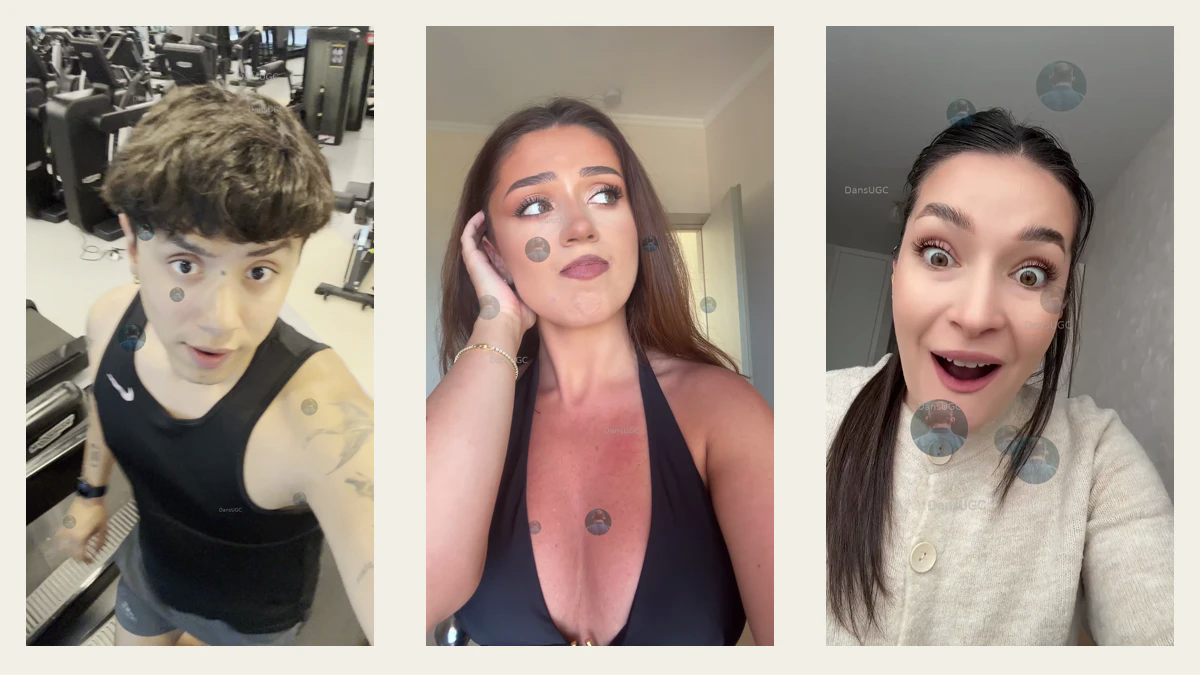
The Psychology Behind UGC Ads: Why Real People Build More Trust
User-generated content (UGC) ads outperform traditional advertising because they tap into fundamental psychological principles: social proof, authenticity bias, parasocial relationships, and reduced reactance. Consumers process UGC differently from branded content, triggering trust responses in the brain rather than skepticism. This article explores the neuroscience and behavioral psychology behind UGC's effectiveness, backed by research and real-world examples. You'll learn why UGC feels more credible, how it bypasses traditional ad resistance, and practical strategies to harness these psychological triggers in your marketing campaigns.

The advertising landscape has fundamentally shifted. While brands spend millions perfecting glossy campaigns, a smartphone video from a regular customer often delivers better results. This isn't a coincidence or a temporary trend. It's rooted in how our brains are wired to process information and determine what we trust.
User-generated content advertising has emerged as one of the most powerful tools in modern marketing, but understanding why it works requires examining the psychological mechanisms driving consumer behavior. The effectiveness of UGC isn't just about appearing authentic. It's about triggering specific cognitive and emotional responses that bypass our natural defenses against advertising.
Understanding the Trust Crisis in Traditional Advertising
Before exploring why UGC works, we need to understand what it's replacing. Traditional advertising faces a credibility problem that's been decades in the making.
Modern consumers have developed sophisticated mental defenses against marketing messages. Every day, the average person encounters between 4,000 and 10,000 ads. This constant bombardment has created what psychologists call "advertising fatigue" and a default stance of skepticism toward branded content.
The trust statistics tell a compelling story. Only 4% of consumers believe brands are honest in advertising. Meanwhile, 92% of consumers trust recommendations from individuals, even strangers, over branded content. This dramatic gap represents a fundamental shift in how trust is established in the digital age.
Traditional advertising triggers what psychologists call "persuasion knowledge." When we recognize content as advertising, our brains automatically activate critical evaluation processes. We become defensive, analytical, and inherently skeptical. We don't just passively receive the message. We actively interrogate it, looking for manipulation, exaggeration, and ulterior motives.
This isn't a conscious choice. It's an evolved response to protect ourselves from being exploited. Our brains have learned that sources with vested interests are less reliable than disinterested parties. When a brand tells us their product is amazing, we instinctively discount that claim because we know they profit from our belief.
The Authenticity Bias: Why Imperfection Signals Credibility
One of the most counterintuitive psychological principles behind UGC's success is what researchers call the "authenticity bias." Our brains use imperfection as a signal of genuineness.
In studies examining consumer perception, content with minor imperfections (slightly shaky camera work, natural lighting variations, unscripted dialogue) was rated as more trustworthy than perfectly produced content. This happens because our brains use production quality as a heuristic for commercial intent.
When we see highly polished content, we immediately recognize that significant resources were invested. This signals corporate involvement, which activates our persuasion knowledge and defensive processing. Conversely, when we see content that looks like something our friends or we could create, our brains classify it differently. It doesn't trigger the same defensive responses.
This principle explains why brands that try to create "UGC-style" content often fail. If the execution is too polished, it violates the authenticity markers our brains are looking for. The content falls into an uncanny valley where it's too good to be real UGC but too casual to be premium branded content.
The most effective UGC maintains what psychologists call "optimal distinctiveness." It's good enough to communicate clearly but retains enough imperfections to signal authenticity. A customer review video shot on a smartphone with natural lighting and casual delivery hits this sweet spot perfectly.
Social Proof: The Power of Observing Others
Social proof is perhaps the most studied psychological principle in marketing, but its application to UGC reveals nuances that many marketers overlook.
Robert Cialdini's groundbreaking research on influence identified social proof as one of the six key principles of persuasion. We look to the actions and behaviors of others to determine what's correct, especially in situations of uncertainty. This tendency is hardwired into our psychology as a survival mechanism.
In our evolutionary past, watching what others did kept us safe. If everyone in the tribe avoided certain berries, you avoided them too. If others found success with certain behaviors, you adopted those behaviors. This instinct remains powerful in modern consumer decisions.
When we see UGC showing real people using and benefiting from a product, we're not just receiving information. We're observing behavior from our peers, which our brains weigh much more heavily than claims from the brand itself. This is why a TikTok video of someone genuinely excited about a product can drive more sales than a million-dollar ad campaign.
The effectiveness of social proof through UGC intensifies when the content creator shares characteristics with the viewer. Psychologists call this "homophily" - the tendency to trust and be influenced by people similar to ourselves. When you see someone who looks like you, lives like you, or faces similar challenges using a product successfully, the social proof effect multiplies.
Research on social proof in digital environments shows this effect is particularly powerful when the endorsement appears spontaneous rather than solicited. UGC that emerges organically carries more weight than incentivized reviews or sponsored content because it signals that the person was motivated to share by genuine enthusiasm rather than external rewards.
Parasocial Relationships and Digital Trust
The rise of influencer marketing and UGC content has created a new dimension to consumer trust: parasocial relationships. These are one-sided relationships where audiences feel personal connections with content creators they've never actually met.
Psychologists Donald Horton and Richard Wohl first identified parasocial interaction in 1956, studying television audiences. They found viewers developed genuine emotional bonds with TV personalities, feeling like they knew them personally, despite the relationship being entirely mediated and one-directional.
In the social media era, parasocial relationships have intensified dramatically. When you follow a content creator, watching their daily life, hearing their thoughts, and observing their experiences over months or years, your brain processes this relationship similarly to actual friendships.
This has profound implications for UGC advertising. When a creator you feel connected to recommends a product, your brain doesn't process this as advertising. It processes it as a friend giving advice. The trust you've built through hundreds of hours of parasocial interaction transfers to their product recommendations.
Neuroimaging studies show that when people view content from creators they feel connected to, their brains activate similar regions as when interacting with actual friends. The medial prefrontal cortex, associated with thinking about people we're close to, shows increased activity. This isn't conscious pretending. At a neural level, these relationships feel real.
This explains why micro-influencers often deliver better ROI than celebrities. The audience size is smaller, but the parasocial relationship quality is higher. Followers of micro-influencers feel a more genuine connection, which translates to higher trust when those creators discuss products.
For businesses, understanding parasocial relationships reveals why long-term partnerships with content creators outperform one-off sponsored posts. The trust that makes UGC effective isn't instant. It's built through consistent, authentic engagement over time.
Reduced Psychological Reactance
Psychological reactance is a fascinating phenomenon that explains much of UGC's effectiveness. When people feel their freedom to choose is being threatened, they experience reactance - a motivational state that drives them to resist and assert their autonomy.
Traditional advertising often triggers strong reactance. When an ad tells you to buy something, part of your brain rebels against being told what to do. This isn't rational decision-making. It's an emotional response to perceived manipulation or control.
Jack Brehm's reactance theory, developed in the 1960s, showed that people value their freedom to choose and will resist attempts to limit that freedom. The more aggressively someone tries to persuade you, the more likely you are to do the opposite, simply to reassert your autonomy.
UGC advertising bypasses reactance through its format and framing. When you watch someone sharing their genuine experience with a product, you're not being told to buy anything. You're observing someone else's choice. This preserves your sense of autonomy.
The psychological distance matters enormously. A brand saying "buy our product" feels like direct pressure. A customer saying, "I bought this product and here's what happened", feels like information sharing. Even though both might influence your decision, only the first triggers reactance.
This is why aggressive calls-to-action can actually harm UGC performance. When UGC content shifts from "sharing my experience" to "you should buy this," it begins triggering the same reactance responses as traditional advertising. The most effective UGC focuses on authentic storytelling, allowing viewers to draw their own conclusions.
Businesses can leverage this understanding by giving content creators freedom to present products naturally within their content rather than requiring specific messaging or hard sells. The authenticity that prevents reactance requires genuine creator autonomy.
Narrative Transportation: The Story Effect
Human brains are fundamentally wired for stories. When we encounter narrative content, something remarkable happens psychologically. We enter a state researchers call "narrative transportation" - a cognitive and emotional state where we become absorbed in the story world.
Melanie Green and Timothy Brock's research on transportation theory revealed that when people are transported into a narrative, their critical thinking decreases and their emotional engagement increases. They temporarily set aside their skepticism and experience the story from the inside.
This has enormous implications for UGC effectiveness. When someone shares their journey with a product through storytelling rather than feature lists, viewers experience transportation. They're not analyzing claims. They're experiencing a narrative arc that includes the product.
Consider the difference between these two approaches:
A traditional ad might list a skincare product's features: "Contains hyaluronic acid, vitamin C, clinically proven results."
A UGC story might show: "For two years, I struggled with my skin. I tried everything. Then last month, I found this product. Here's my skin on day one. Here's week two. This is me today. I literally cried this morning looking in the mirror."
The second approach creates transportation. Viewers aren't evaluating ingredient claims. They're emotionally invested in someone's transformation story. The product becomes part of a meaningful narrative rather than a list of attributes.
Neuroscience research shows that during narrative transportation, brain activity shifts. The areas associated with critical analysis decrease while regions linked to emotion and empathy increase. We're not thinking about whether claims are true. We're feeling what the storyteller feels.
For businesses, this reveals why UGC that tells genuine stories outperforms content that simply demonstrates products. The narrative structure itself is a psychological tool that creates trust by bypassing analytical resistance.
The In-Group Effect and Identity Signaling
Humans are tribal creatures. We organize ourselves into groups and display preferential treatment toward in-group members. This tendency, studied extensively in social psychology, creates powerful effects in consumer behavior and UGC effectiveness.
Henri Tajfel's social identity theory demonstrated that even arbitrary group assignments create in-group bias. People favor, trust, and are influenced more by those they perceive as part of their group, even when group membership is minimal and meaningless.
In UGC contexts, group identity operates on multiple levels. When a content creator shares characteristics with viewers (age, lifestyle, values, interests), they're perceived as in-group members. This immediately increases trust and influence.
This effect explains why niche communities often see explosive UGC impact. A fitness enthusiast trusts product recommendations from other fitness enthusiasts. A parent trusts parenting product reviews from other parents. The shared identity creates an immediate trust foundation that branded content cannot replicate.
Identity signaling through consumption has intensified in digital spaces. Products aren't just functional items. They're expressions of identity and group membership. When someone in your perceived in-group endorses a product, they're signaling "this is something people like us use." This social categorization carries immense persuasive weight.
Research on consumer tribes shows that people make purchasing decisions not just based on product attributes but on what those purchases signal about their identity and group membership. UGC from recognizable in-group members serves as a trusted guide to appropriate consumption patterns.
For businesses, understanding in-group dynamics means partnering with diverse content creators who represent different segments of your target audience. A single influencer can't create an in-group connection with everyone. But a portfolio of creators representing different communities can activate in-group trust across your entire audience.
Cognitive Fluency and Processing Ease
Cognitive fluency - the ease with which our brains process information - significantly impacts trust judgments. Information that's easy to process feels more true, more familiar, and more trustworthy than information requiring mental effort to understand.
This principle, studied by psychologist Rolf Reber and colleagues, reveals a fascinating quirk of human cognition: we mistake processing ease for truthfulness. When something feels easy to understand, we unconsciously interpret that ease as a signal that the information is reliable.
UGC benefits from cognitive fluency in several ways. First, the conversational language used in authentic UGC matches how we naturally think and talk. Unlike corporate marketing speak, which requires translation and interpretation, UGC communicates in familiar patterns that our brains process effortlessly.
Second, UGC often addresses real questions and concerns that viewers already have, making the information immediately relevant and easy to integrate with existing knowledge. When a video answers exactly the question you were wondering about, using language you'd use yourself, the fluency creates a sense of trustworthiness.
The visual aspects of UGC also contribute to cognitive fluency. Familiar settings (someone's home, a recognizable store, everyday locations) require less processing than abstract branded environments. When the context matches our lived experience, our brains process the information more easily, increasing perceived credibility.
This explains why overly complex or jargon-heavy UGC underperforms. When content creators use technical language or present information in complicated ways, they sacrifice cognitive fluency. The processing difficulty creates subtle doubt, even if the information is accurate.
For businesses, this insight suggests providing content creators with clear, simple talking points rather than technical specifications. The goal is information that flows naturally in conversation, not precise corporate messaging that sacrifices fluency for accuracy.
The Halo Effect of Authenticity
The halo effect describes how one positive characteristic influences our perception of other, unrelated characteristics. In UGC contexts, perceived authenticity creates a halo that extends to the product being discussed.
When viewers believe a content creator is genuine and trustworthy, that perception transfers to everything associated with them. If someone is authentic in how they share their life, we assume they're authentic about product recommendations. The halo of authenticity covers the entire interaction.
This psychological phenomenon was first studied by Edward Thorndike in 1920, but its implications for modern UGC are profound. The authenticity markers we discussed earlier don't just make the content itself seem genuine. They create a positive halo that makes the products featured seem more reliable, more effective, and more worthy of purchase.
Research on the halo effect shows it operates largely unconsciously. We're not actively thinking, "this person seems authentic, therefore this product must be good." The association happens automatically, below conscious awareness.
This effect multiplies when multiple pieces of UGC feature the same product. Each authentic endorsement reinforces the others, creating a compound halo effect. If ten different people authentically rave about a product, the accumulated halo becomes extremely powerful.
For businesses, understanding the halo effect means recognizing that brand perception is shaped not just by what's said about your products but by who's saying it and how authentically they're perceived. A single authentic UGC piece can positively influence perception of your entire brand.
Emotional Contagion in Digital Spaces
Emotions are contagious. When we observe others experiencing emotions, mirror neurons in our brains activate, creating similar emotional states in ourselves. This phenomenon, called emotional contagion, is particularly powerful in video content.
Research by Elaine Hatfield and colleagues demonstrated that emotional contagion occurs rapidly and often unconsciously. When you watch someone expressing genuine excitement, your brain mimics that emotional state. You begin feeling excited too, even if you're just observing.
UGC excels at emotional contagion because authentic emotions are clearly visible. When someone is genuinely thrilled about a product, that excitement transfers to viewers. Contrast this with professional actors in traditional ads, where emotional expression is performed rather than felt. Our brains are remarkably good at distinguishing genuine emotion from acted emotion, and only genuine emotion creates effective contagion.
The emotional authenticity in UGC creates what psychologists call "emotional transfer." The positive feelings associated with the content creator's genuine experience become associated with the product itself. This emotional conditioning is far more powerful than rational argumentation.
Neuroscience research shows that emotional experiences are encoded more strongly in memory than purely factual information. When you see someone genuinely moved by a product's impact on their life, that emotional memory persists far longer than remembering product specifications.
For businesses, this reveals why emotional authenticity should be prioritized over perfect messaging. A content creator's genuine reaction to your product will resonate more powerfully than any scripted testimonial, even if the spontaneous reaction is less articulate or comprehensive.
The Mere Exposure Effect and Content Saturation
The mere exposure effect, discovered by Robert Zajonc, shows that repeated exposure to something increases our preference for it. Simply seeing something multiple times makes us like it more, even without conscious awareness of the repetition.
In UGC contexts, this principle operates differently from traditional advertising. When the same traditional ad appears repeatedly, it often triggers annoyance (wear-out effect). But UGC from multiple different creators, each with unique perspectives and styles, leverages mere exposure without triggering wear-out.
Each piece of UGC about a product serves as an exposure event. When you see five different people discussing the same product across different platforms, the accumulated exposure builds familiarity and preference. Because each piece feels distinct and authentic rather than repetitively identical, the positive effects of exposure compound without the negative effects of saturation.
This explains why brands that encourage diverse UGC creation see stronger results than those relying on a single influencer partnership. Multiple authentic voices create the repetition needed for mere exposure while maintaining the novelty that prevents annoyance.
The psychological mechanism behind mere exposure involves fluency again. Familiar things feel easier to process, and processing ease creates positive affect. The more you've seen a product mentioned in authentic contexts, the more familiar and positively valenced it becomes in your mind.
For businesses, this suggests a strategy of encouraging broad UGC participation rather than concentrating resources on a few high-profile creators. The diversity of authentic voices creates optimal mere exposure conditions while maintaining the credibility that makes UGC effective.
Practical Applications: Leveraging Psychology in UGC Strategy
Understanding the psychological mechanisms behind UGC effectiveness allows businesses to develop more strategic approaches to content creation and curation.
First, recognize that authenticity cannot be faked effectively. Rather than trying to create content that appears to be UGC, invest in actually generating genuine user content. Provide exceptional experiences that motivate customers to share voluntarily. The psychological principles we've discussed only work when authenticity is real.
Second, give content creators genuine freedom. The psychological benefits of UGC evaporate when creators are constrained by rigid brand guidelines. Trust that creators understand their audiences better than you do. The parasocial relationships they've built with followers are the source of trust transfer. Protect that authenticity.
Third, prioritize storytelling over feature lists. Narrative transportation creates emotional engagement that bypasses critical resistance. Encourage creators to share their journey with your product rather than listing its attributes. The story structure itself is a psychological tool.
Fourth, embrace imperfection strategically. While you don't want content that's unwatchable, maintaining authentic production values preserves the authenticity signals that build trust. Overly polished content triggers persuasion, knowledge, and defensive processing.
Fifth, cultivate diverse creator relationships that represent different audience segments. In-group effects mean no single creator can build trust with everyone. A portfolio of authentic voices across different communities activates psychological trust mechanisms broadly.
Sixth, focus on long-term creator partnerships rather than one-off campaigns. Parasocial relationships build over time. The trust that makes creator endorsements effective develops through consistent, authentic engagement. Quick transactional partnerships sacrifice the psychological foundation that makes UGC powerful.
Seventh, measure effectiveness beyond immediate conversions. The psychological impacts of UGC include brand familiarity, emotional association, and trust building. These effects accumulate over time and influence future purchase decisions even when immediate attribution is unclear.
The Neuroscience of Trust Formation
Recent neuroscience research provides deeper insight into why UGC creates trust at a biological level. Using fMRI technology, researchers have identified specific brain regions and neurochemicals involved in trust formation during content consumption.
When people view authentic UGC, several key brain regions activate. The ventromedial prefrontal cortex, associated with reward processing and decision-making, shows increased activity. This suggests the brain processes authentic peer recommendations as rewarding, not threatening.
Simultaneously, the amygdala, which activates during fear and threat detection, shows decreased activity when viewing authentic UGC compared to traditional advertising. This neurological signature indicates reduced defensive processing. The brain literally relaxes its guard.
Oxytocin, often called the "trust hormone," plays a crucial role in these processes. Research by Paul Zak showed that authentic, emotional stories trigger oxytocin release, which increases trust, empathy, and willingness to engage. UGC with genuine emotional content creates this neurochemical response in viewers.
The default mode network, a brain system active when we think about ourselves and others, engages more strongly during UGC viewing than during traditional ad exposure. This suggests viewers are mentally simulating the experiences shared in UGC, imagining themselves in similar situations. This cognitive rehearsal creates a sense of anticipated experience that influences decision-making.
Mirror neuron systems, which activate both when we perform actions and when we observe others performing them, fire during UGC viewing. When you watch someone unbox a product, your mirror neurons create a vicarious experience. This neural simulation makes the experience feel partially your own, even though you're just observing.
For businesses, understanding these neurological mechanisms reinforces that UGC effectiveness isn't about tricks or manipulation. It's about creating content that aligns with how brains naturally process information from trusted sources. The goal is to activate trust systems rather than triggering defense mechanisms.
Addressing the Dark Side: When Psychology Becomes Manipulation
Understanding the psychology behind UGC's effectiveness requires acknowledging ethical considerations. The same principles that make authentic UGC powerful can be exploited through deceptive practices.
Fake reviews, paid endorsements without disclosure, and manufactured "authenticity" all attempt to hijack these psychological mechanisms for manipulation rather than genuine trust building. These practices are not only unethical but increasingly ineffective and legally problematic.
Consumers are becoming more sophisticated at detecting inauthentic content. The FTC requires clear disclosure of material connections between brands and endorsers. Beyond legal requirements, maintaining genuine authenticity protects the psychological foundation that makes UGC effective.
When audiences discover that "authentic" UGC was manufactured or incentivized without disclosure, the trust violation creates backlash far worse than if traditional advertising had been used. The psychological betrayal of violated trust damages brand perception more severely than simple skepticism toward obvious advertising.
The most sustainable approach leverages UGC psychology through genuinely authentic practices: creating products worth talking about, building real relationships with customers and creators, and allowing authentic opinions (including critical feedback) to be shared. This approach builds the genuine trust that psychology research shows is most effective in the long term.
The Future of Trust in Digital Marketing
As artificial intelligence and synthetic media become more sophisticated, the psychological principles underlying UGC trust will likely intensify rather than diminish. When deepfakes and AI-generated content become commonplace, audiences will value verified authenticity even more highly.
The brands that succeed will be those that invest in genuine relationships, transparent practices, and authentic community building. Psychological shortcuts that rely on deception will face increasing scrutiny and backlash.
Understanding the psychology behind UGC trust isn't about exploitation. It's about aligning marketing practices with how humans naturally build trust and make decisions. The most effective approach is also the most ethical: create genuine value, empower authentic voices, and let real experiences drive your marketing.
Conclusion
The psychology behind UGC advertising reveals why this approach has transformed modern marketing. By understanding social proof, authenticity bias, parasocial relationships, reduced reactance, narrative transportation, and other psychological principles, businesses can develop more effective content strategies.
But this understanding comes with responsibility. The psychological mechanisms that make UGC effective work because they tap into how humans build genuine trust. Attempts to exploit these principles through manipulation or deception ultimately fail because they violate the authenticity that makes the psychology work.
The most powerful approach combines psychological insight with ethical practice. Create products and experiences worth sharing authentically. Build genuine relationships with customers and creators. Allow real voices to share honest experiences. When you align your marketing with the psychological principles of trust formation through authentic means, you create a sustainable competitive advantage.
In a digital landscape increasingly saturated with content, the brands that win won't be those with the biggest budgets for traditional advertising. They'll be the ones who understand how trust forms in human minds and build marketing strategies that work with psychology rather than against it. That's the true power of user-generated content advertising.
Ready to get UGC videos for your brand?
Real human creators, 48-hour delivery, full commercial rights. Starting at $9/video.