UGC Agency: What It Costs and When to Skip It
nobody searching "ugc agency" needs the definition. they are holding a quote. this is the pricing structure behind it, the questions that expose it, and the honest version of when an agency is the right buy and when it is not.

nobody searching "ugc agency" is asking what a ugc agency is. they are holding a quote, or about to ask for one, and trying to work out whether the number on it is fair.
so this is not an explainer. it is the four pricing structures you will be quoted, the questions that expose what each one hides, and the honest version of when an agency is the right buy.
what the live results say about this search
we pulled the live top 20 for "ugc agency" on 28 august 2026. the term does 1,000 searches a month.
- ranks 1, 7, 8 and 10 are agency homepages
- rank 2 is a reddit thread titled "best ugc agency"
- rank 4 is a competitor's buyer's guide to ugc agencies
- rank 5 is a linkedin post listing the top 12 us agencies
- ranks 6 and 9 are ranked listicles, a top 5 and a top 15
- there is no ai overview on this result
half the page is vendors. the other half is people ranking vendors. google is not answering a definition here, because nobody searching this needs one.
worth saying out loud before you read further: four of those ten results are agencies, the listicles are written by people who want the click, and this page is published by a company that sells reaction clips. so read the pricing section as a vendor explaining the model it competes with. the questions further down work regardless of who you buy from.
the four things an agency actually sells
the anti-agency argument usually gets made badly and falls apart the moment someone has a real brief. an agency is selling four things and all four are real.
- casting. matching a face and a voice to your audience. that is judgement, not search.
- briefing. turning your positioning into something a creator can perform.
- revisions. someone whose job it is to get the reshoot done when take one is flat.
- rights and admin. usage terms, licensing windows, invoicing, one contract instead of twenty.
if your bottleneck is one of those four, hire the agency. a founder who cannot write a brief does not get rescued by cheaper footage.
that is the dividing line, and everything below depends on you being honest about which side of it you are on.
the four ways you will be quoted
almost every proposal is one of these, and each one hides a different number.
monthly retainer. a flat fee for an agreed scope. what it hides is utilisation. you pay the same in the month you ship four videos and the month you ship fourteen, and the quiet months are the ones that pay for the agency.
per video, or per deliverable. priced per finished asset. what it hides is the revision limit and the usage window. the headline price is for take one inside a defined licence, and both of those have a renewal cost you will meet later.
per creator plus usage. you pay the creator rate and a separate licensing fee. what it hides is the clock. a 6 month licence on a winning ad means the ad has an expiry date set by your contract rather than by your data.
performance or hybrid. part fee, part outcome. what it hides is attribution. you are agreeing to a shared definition of a win before you have agreed how it gets measured.
we are not going to print an industry average retainer here. we do not have a measured one, and a number invented to make our own comparison look better is worth nothing to you when you are on the call. what we can do is give you the questions.
seven questions that price an agency faster than a proposal
ask these on the first call. the answers price the deal better than the deck does.
- how many finished videos, not concepts, land in the first 30 days?
- what is the revision limit per video, and what counts as a revision?
- how long is the usage licence, and what does a renewal cost?
- who owns the raw footage when the contract ends?
- how many distinct creators will i actually get, and are they the same names on your last five case studies?
- what happens to the fee in a month where we ship nothing?
- what is your cost per hook tested, not your cost per video?
question five catches the thing buyers complain about most on that reddit thread: the roster in the pitch is wider than the roster you get.
question seven is the one nobody has an answer to, and it is the only one that predicts what your spend actually does.
that is month four of a retainer that is producing competent video and no winners. it is not an agency being bad at its job. it is the model doing exactly what it is built to do.
where the agency model breaks
it breaks on volume.
the agency model is built to produce a small number of well made assets. that was the correct shape when a video cost enough that you only got a few. it is the wrong shape when the winning variable is how many hooks you got to test.
one video buys one hook tested. twenty videos buy twenty hooks tested. nobody, including the agency, can pick the winner in advance, and that is the part every proposal underprices. the hook that works is usually not the one on the moodboard.
dan ran the volume version of this and published the result: one format turned into a thousand videos produced 4m views in four weeks, 60% us, one breakout past 1m and six more past 100k, at roughly $0.75 per finished video.
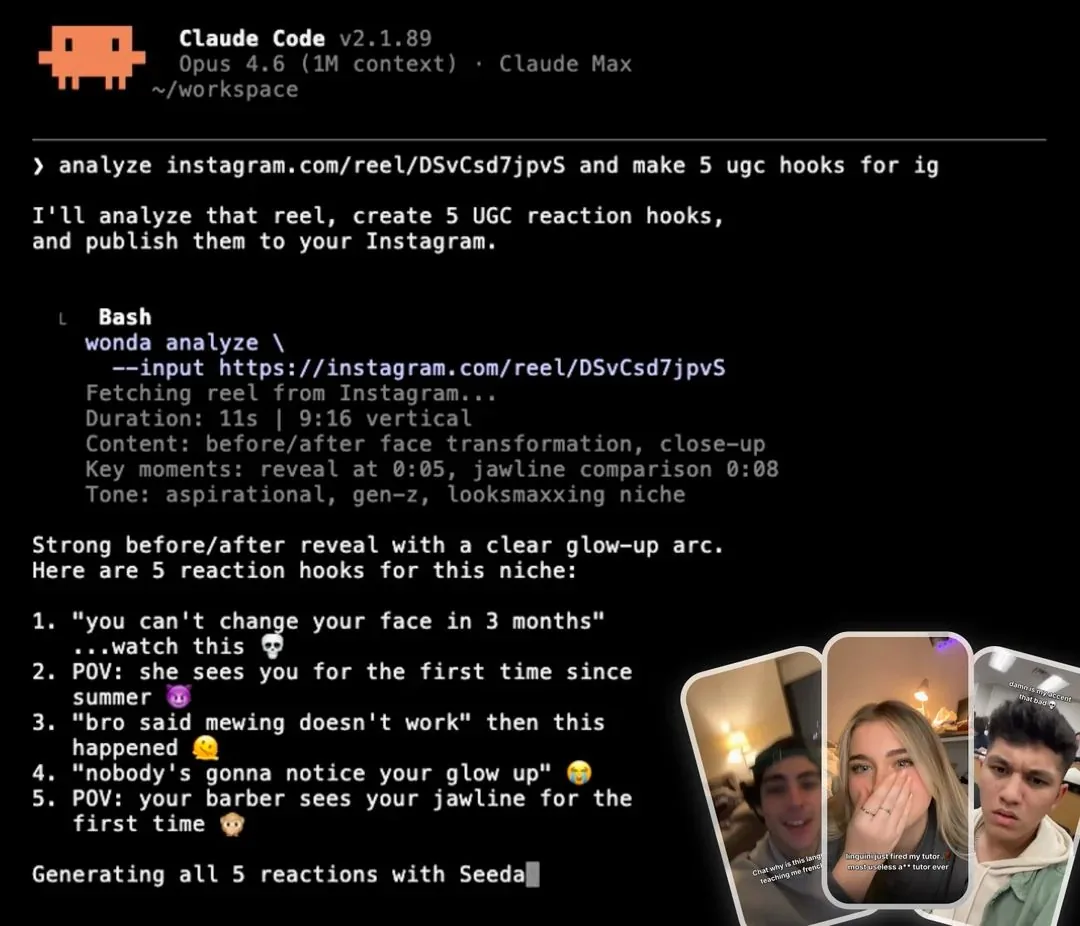
that is not an argument against craft. it is an argument that craft applied to one asset loses to iteration applied to a hundred.
on the input cost, dan's published position is blunt:
but I get real UGC for $4/vid without looking
what the direct route costs
we measured our own library on 28 august 2026, filtered to published, processed video only: 4,973 clips from 38 creators. the filter matters. the raw table holds 5,340 rows and the difference is images and unprocessed uploads, so the site's "5,000+" counter and this number are counting different things.
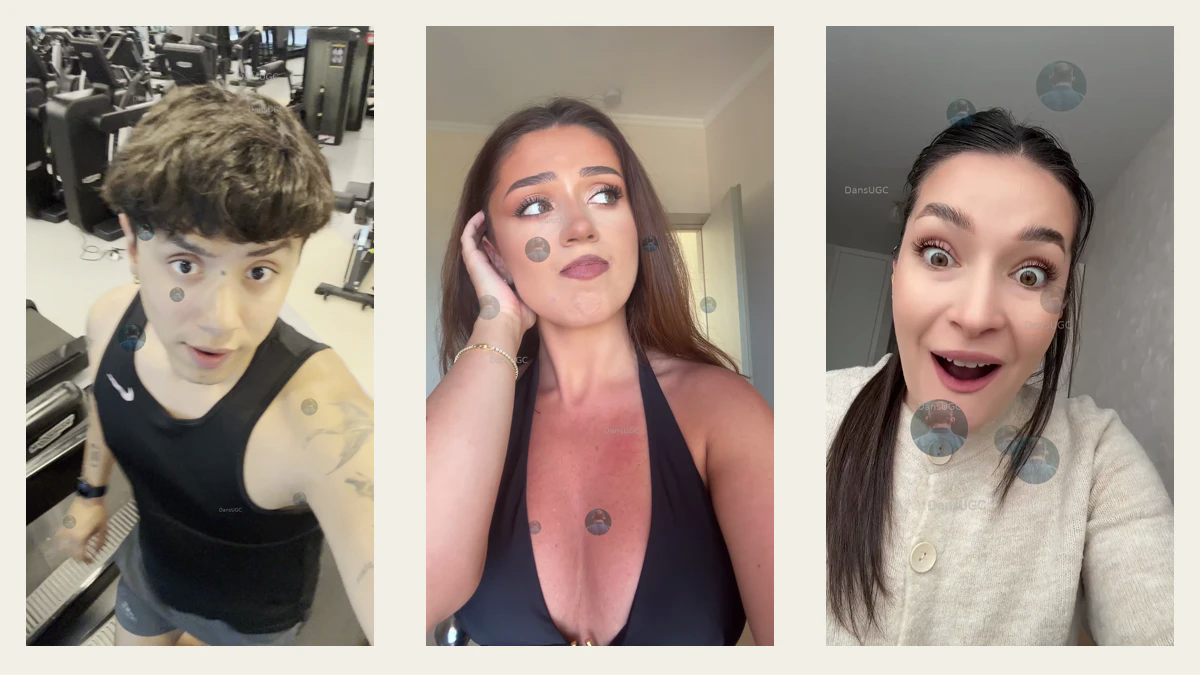
by beat, that is 491 surprised, 336 confused, 210 shocked and 208 laughing clips. you filter by emotion, not by creator, because emotion decides whether the hook lands and demographic only decides whether it matches your audience. doing that in the wrong order is how you end up with a well matched creator delivering a flat reaction.
that clip is thirteen seconds and it is a product demonstration, which is the format an ecommerce brand usually briefs an agency to produce from scratch.
pricing is on the pricing page: the b-roll library starts at $5 a clip with full commercial rights and no subscription, packages group clips by emotion if you would rather not pick individually, and custom orders exist for the case where you genuinely need something shot to a brief.
what you do not get is a brief written for you, a casting call, or someone chasing a reshoot. if you need those, hire the agency.
for what individual creators charge when you go to them directly rather than through anyone, we keep a separate breakdown in the ugc creator rate card, and the fiverr buyer's read covers the marketplace version of the same question.
how to decide
hire an agency when:
- you cannot yet write a one paragraph brief about who your product is for
- you need bespoke scripted scenarios rather than reactions
- your legal or compliance process needs one accountable counterparty
- you are producing a small number of high craft assets for brand rather than performance
buy clips direct when:
- the first two seconds carry the ad
- you already know your positioning and need volume against it
- you are testing hooks rather than testing copy
- your creative budget is smaller than your media budget and has to stay that way
most consumer app and ecommerce teams already spending on ads sit in the second group and are paying for the first.
faq
what does a ugc agency do? it sources and casts creators, writes briefs, manages revisions and handles usage rights, then delivers finished video. the fee is for that management layer, not for the footage itself.
is a ugc agency worth it? it is worth it when creative direction is your bottleneck. it is poor value when creative volume is your bottleneck, because the model is built to produce a small number of assets and the winning hook is found by testing rather than by picking.
how much does a ugc agency cost? it depends which of the four structures above you are quoted, and we do not have a measured industry average to give you. what is measurable is cost per hook tested. at $5 a clip, 20 hooks costs $100, and that is the number to hold any proposal against.
what should i ask before signing? the seven questions above. the two that change deals most often are who owns the raw footage at the end, and how long the usage licence runs before renewal.
can i just use ai generated ugc instead? for localisation, rapid copy iteration and compliance edits, rendered assets are genuinely better. for the first two seconds, the one measured comparison we have is written up in full on ai ugc against real human ugc, including the hook rate a customer reported on their own account.
what about the cheaper vendors that are not agencies? the honest comparison against the best known one is in the billo alternative breakdown, including where billo is the better buy.
what is the smallest useful test? one recording of your product doing one thing, paired against 20 different reaction hooks. that isolates the hook as the variable, which is the only comparison that answers anything.
Ready to get UGC videos for your brand?
Real human creators, 48-hour delivery, full commercial rights. Starting at $9/video.