UGC ads in 2026: what actually converts
search "ugc ads" today and six of the ten organic results are ai video generators selling you the thing that replaces the creator. this is the format that actually works for a consumer app, the metric that decides whether it works, and how to record the half of it that everybody gets wrong.

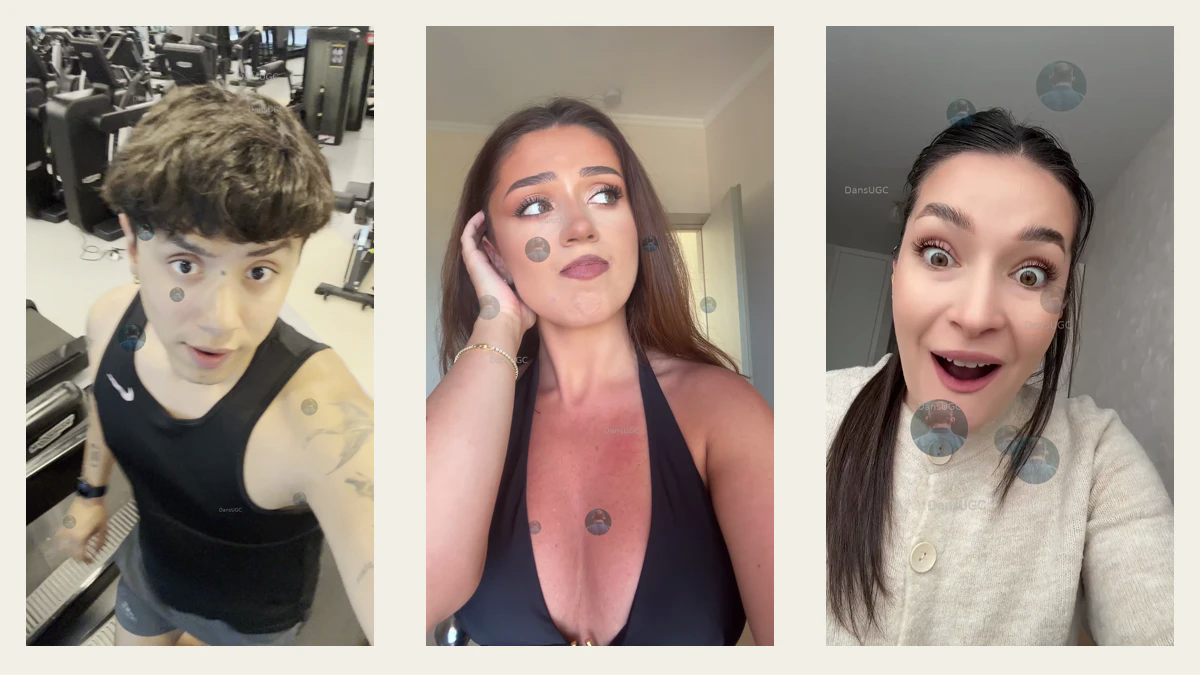
a ugc ad is a paid social ad built from footage that looks like something a real person filmed, not a produced brand video. for consumer apps the working format is narrow: a human reaction in the first 2 seconds, then a screen recording of the product doing one thing.
that is the whole format. the rest of this page is why it works and where it breaks.
the search results are written by the software
search "ugc ads" in google right now.
six of the first ten organic results are ai video generators. counting google's own positions, which interleave the ad and video blocks: invideo at 2, createugc at 3, creatify at 7, bandy at 10, ltx at 11, ugcads.ai at 14. there is an ai overview sitting on top of all of it. checked 26 august 2026.
that is not a conspiracy. software companies can afford seo and creators cannot. but it means the page ranking for the most commercial term in this category is written by the people selling you the thing that replaces the creator, and none of them are going to tell you when it does not work.
dan's version of the complaint, posted 8 october 2025:
feels cheap, even tho you paid $10 for that AI UGC video
worth knowing what the format actually is before you buy from a page that sells one.
the number that decides it is hook rate
hook rate is the share of people who do not scroll in the first 2 to 3 seconds.
it is upstream of everything. if most of the audience leaves before your product appears, your offer, your landing page and your targeting never get a vote. you can have the best funnel in your category and it does not matter, because nobody reached it.
dan pulled the pattern out of a sample rather than a hunch. posted 3 november 2025, from an analysis of 10,114 short form videos: hooks decide the first 3 seconds, and problem-first and contrarian openers are what lift retention.
we have one customer-measured hook rate on real reaction clips against that same account's own average, which is the cleanest comparison we have because it isolates the creative as the only variable. it lives on the page that owns it: ai ugc vs real human ugc. rather than reprint it here, the question this page answers is the one before it. what do you actually buy, and in what shape.
the mechanism is worth stating though, because "real footage converts better" is not an argument on its own.
a hook is not a face. it is a reaction. the half second where someone visibly feels something about your product.
an ai model gives you a face. correctly lit, right ratio, dead eyes. what it does not give you is the involuntary half second, and the involuntary half second is the entire asset. this is also why "the ai videos are getting better" misses the point. the failure was never resolution or lipsync. it is that nothing happened in the clip.
piece 1: the reaction
4 to 14 seconds of a real person responding. confused, shocked, caught off guard. this is the hook and it does the whole job of stopping the scroll.
this is what it looks like. ruta, 10 seconds, indoor, scored 90 out of 100 on internal virality:
watch what actually holds you there. it is not the lighting or the framing, both of which any competent shoot can match. it is that her face changes and you cannot predict the moment it does.
the clips that score highest almost all share that property: something shifts inside the clip. here is the same thing over 13 seconds, surprise resolving into a playful smile. madara, indoor, 88 out of 100:
the flat ones are well lit, competently shot, and hold a single expression start to finish. a brief does not reliably produce the first kind, because the part that makes it work is the part nobody scripted.
piece 2: the demo, which is where most of them die
the reaction gets all the attention and the demo is what actually breaks.
6 to 10 seconds of your app doing one specific thing. not a tour. one thing.
the footage is usually bad before anyone hits record. dan's 3 phase setup, posted 4 august 2026, in order:
- tripod, natural even light. no harsh shadows, no reflections. this is the step everyone rushes.
- screen brightness dialled so the ui reads clean on camera. not blown out, not dim.
- check for glare. you should never see the recording phone reflected back in the demo screen.
- clear the home screen to one blank page with just your app on it. opening from a clean screen reads like a real first open instead of a staged one.
- frame tight so every tap is visible.
- record the full flow, then cut the dead air and speed up loading, scrolling and typing.
a good demo is 80% setup and 20% recording. most people skip the 80% and then blame the algorithm.
then a hook line that sounds like a person talking, not a brand. "this app saved me 4 hours." "i wish i found this sooner." "this feels illegal."
volume beats taste
one reaction plus one demo is a test, not a strategy.
what a templated version of this produces at volume, with the numbers and the screenshot, is written up on our examples page. the short version is that the winners came out of the batch, not out of the plan.
nobody can pick the winning hook in advance. not you, not an agency, not the model. the hook that works is usually not the one on the moodboard, and the only way to find it is to run enough of them that the algorithm tells you which one it was. that is also the argument against the retainer, which we take apart in the ugc agency pricing breakdown.
that is the real argument against the generators ranking above this page, and it is not that they are expensive. it is that they solve the cheap part. footage volume stopped being the bottleneck once real clips cost a few dollars each. the bottleneck is whether the clip holds someone for 2 seconds, and that is the one thing software cannot manufacture.
how to actually build it
1. pick reactions by emotion, not by creator. emotion decides whether the hook lands. demographic decides whether it matches your audience. most people do this backwards and end up with a well matched creator delivering a flat reaction. the b-roll library filters on emotion directly. measured 26 august 2026: 5,264 clips, of which 499 surprised, 345 confused, 205 laughing, 129 amazed.
2. buy in batches, not one at a time. current pricing is per clip with full commercial rights and no subscription, so a batch of reactions costs less than a single day of most teams' ad spend. what a clip costs when an agency and a usage licence sit in the middle is a longer answer, and it is on the rate card. the same batch maths decides a marketplace comparison, which is how billo's pack pricing works out per attempt.
3. record one demo properly and reuse it. the demo is the fixed part. the reaction and the hook line are the variables. that is what makes twenty videos cheap instead of twenty times the work.
4. ship 1 to 2 a day and let the algorithm vote. not one perfect video a week.
5. when a format works, do not get clever. copy it across accounts with fresh hooks.
if you need an emotion the library does not carry, custom orders are filmed to brief by a named creator. worth knowing before you plan: searching the instant library for crying returns zero clips, so that one is custom only.
faq
what is a ugc ad? a paid social ad built from footage that looks like organic content filmed by a real person, instead of a produced brand video. for consumer apps it is usually a reaction clip followed by a screen recording.
do ugc ads still work in 2026? the format does. the honest caveat is that "ugc ad" now describes two different products, one filmed by a person and one generated by a model, and they do not perform the same. the measured comparison is here.
how many should i test? enough that a hook you did not predict gets a chance to win. one video is a test of your taste, not of the market.
are ai generated ugc ads cheaper? per video, sometimes. per result, that is the wrong comparison. real clips are already cheap enough that price is not the deciding variable. hook rate is.
what do i actually need to start? one demo recording of your app doing one thing, and a batch of reaction clips. that is the whole input list.
Ready to get UGC videos for your brand?
Real human creators, 48-hour delivery, full commercial rights. Starting at $9/video.