
ProspectHalo: 7,978 SaaS signups with UGC reactions in 50 days
Signups reported by the founder
Customers reported by DansUGC
Reported acquisition period
About ProspectHalo
ProspectHalo reported 7,978 signups in roughly 50 days using organic Instagram Reels built around human UGC reactions and product demonstrations. DansUGC supplied reaction footage used in the workflow. Daniel Hangan additionally reports that the client reached 100+ customers using one organic Instagram account during this period.
This B2B SaaS UGC case study is based on ProspectHalo's founder-written account and screenshots, plus Daniel's client update. The source's current headline says 7,978; its older URL and funnel screenshot contain 7,908. We preserve both figures with their respective context rather than treating them as one identical snapshot.
ProspectHalo is an AI sales tool. Its founder's published example demonstrates a Claude-and-LinkedIn workflow: a concrete product capability that the intended audience can recognize quickly.
The relevant use case is organic Instagram growth for B2B SaaS. This is not a claim that a licensed reaction clip is a customer testimonial. The footage introduces the idea; the product demonstration explains the value.
Written by Daniel Hangan, founder of DansUGC. This is a supplier-published client case study, not an independent audit of ProspectHalo's analytics or billing records.
The Challenge
A working product still needs distribution
The founder describes a product that was ready to use but had no audience. The initial challenge was getting prospective users to stop, understand one useful capability, and take the next step.
A full software walkthrough asks a cold viewer to invest attention before the benefit is obvious. A reaction-led opening reverses that order: it creates curiosity, then the demonstration needs to justify it.
That distinction matters for SaaS founders. A hook is not the explanation. The screen recording still has to show something relevant, understandable, and real.
Production had to fit around building the product
An organic content system becomes difficult to sustain if every post requires a new shoot, a new script, and a new edit from scratch. Reusable UGC clips let a founder separate the opening footage from the product demonstration.
For this use case, the production unit is a combination of assets rather than a completely new filmed commercial. The brand still owns the work of selecting an angle, creating an accurate demo, editing the post, and reviewing what the final message implies.
How ProspectHalo Used DansUGC
Human reaction first, product evidence next
The founder describes a repeatable structure: a short human reaction, a focused demo, captions, music, and a call to action. He says most of his reaction clips came from DansUGC, rather than claiming every asset in every Reel came from us.
The reaction was the opening asset. ProspectHalo supplied the product, the demonstration, the publishing operation, and the conversion experience. DansUGC's role was to make human footage available for that creative workflow.

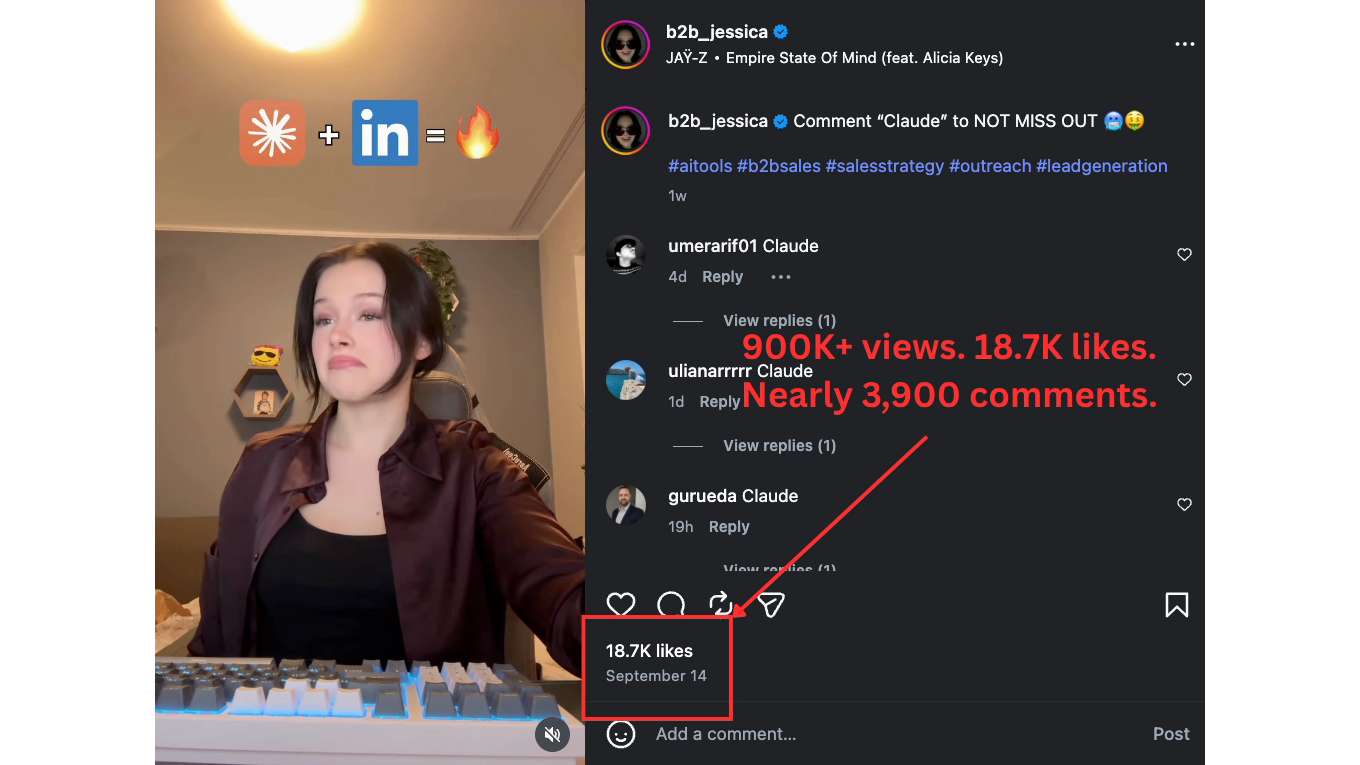
Source image: a reaction-led Claude-and-LinkedIn creative shown in the founder's article. Its visual hook is an editing example, not evidence that the person shown used the product or earned money from it.
Give each component one job
For a founder adapting the format, we recommend reviewing the finished Reel in three parts:
- Opening: Is the situation understandable without pretending the creator is a satisfied customer?
- Demonstration: Does the actual product deliver the capability the opening suggests?
- Next step: Does the destination continue the same promise, rather than switch to an unrelated offer?
This is our practical interpretation of the use case, not an additional experiment measured in ProspectHalo's account. For examples of how to assess the footage itself, see our annotated UGC reaction examples.
Reuse footage without confusing repetition with learning
Keeping a demonstration consistent while changing an opening makes production simpler. It can also make creative comparisons easier to interpret, provided the team records what changed.
Give each finished post its own identifier. Keep the source clip, opening text, demo version, destination, and publication date with it. Otherwise, a successful post becomes difficult to reproduce because nobody remembers which combination actually ran.
Licensed footage also needs to remain within its permitted use. Reuse should follow the terms attached to the asset, not a blanket assumption that every clip can be used in every context forever.
Connect attention to the product
ProspectHalo's founder describes using a comment keyword and ManyChat to send viewers a link. He also worked on the landing page, signup, onboarding, and paywall during the same period.
That is the part a reaction-only brief misses. If the opening attracts curiosity but the next screen does not explain the product, more creative volume does not resolve the mismatch.
For another SaaS, the sensible next step is to map the whole journey before increasing output: Reel, response or click, destination, signup, activation, and purchase. Measure each stage separately. A view, a comment, a registered account, and a customer are not interchangeable outcomes.
Results Achieved with DansUGC
Nearly 8,000 signups, with the source snapshots kept separate
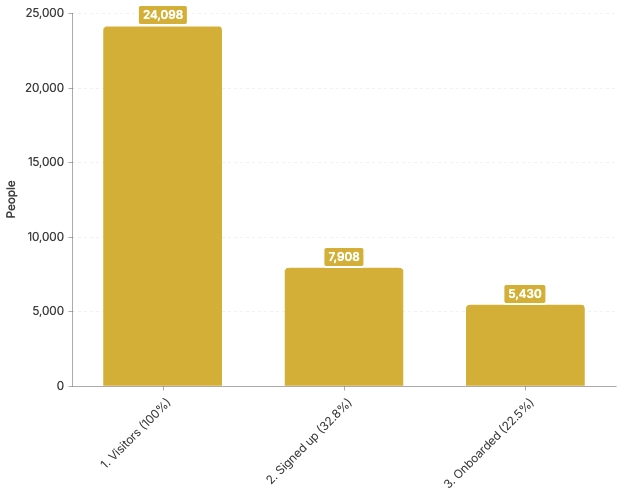
The founder's current written account reports 7,978 signups and 24,317 website visitors over roughly 50 days. Daniel's additional client update reports 100+ customers and one organic Instagram account. The customer count is not displayed in the supplied funnel screenshot and was not independently checked against billing data for this case study.
Open the full-size signup funnel screenshot
Source: the PostHog funnel screenshot embedded in the founder's article, captioned as the last 50 days. It shows 24,098 visitors, 7,908 signups, and 5,430 onboarded users. These are the image's figures, not the newer totals in the article text.
Do not read the final bar as purchases. It represents onboarding completion. We are not calculating a signup-to-paid conversion rate from separate reports with unverified matching cutoffs.
Open the full-size Instagram Insights screenshot
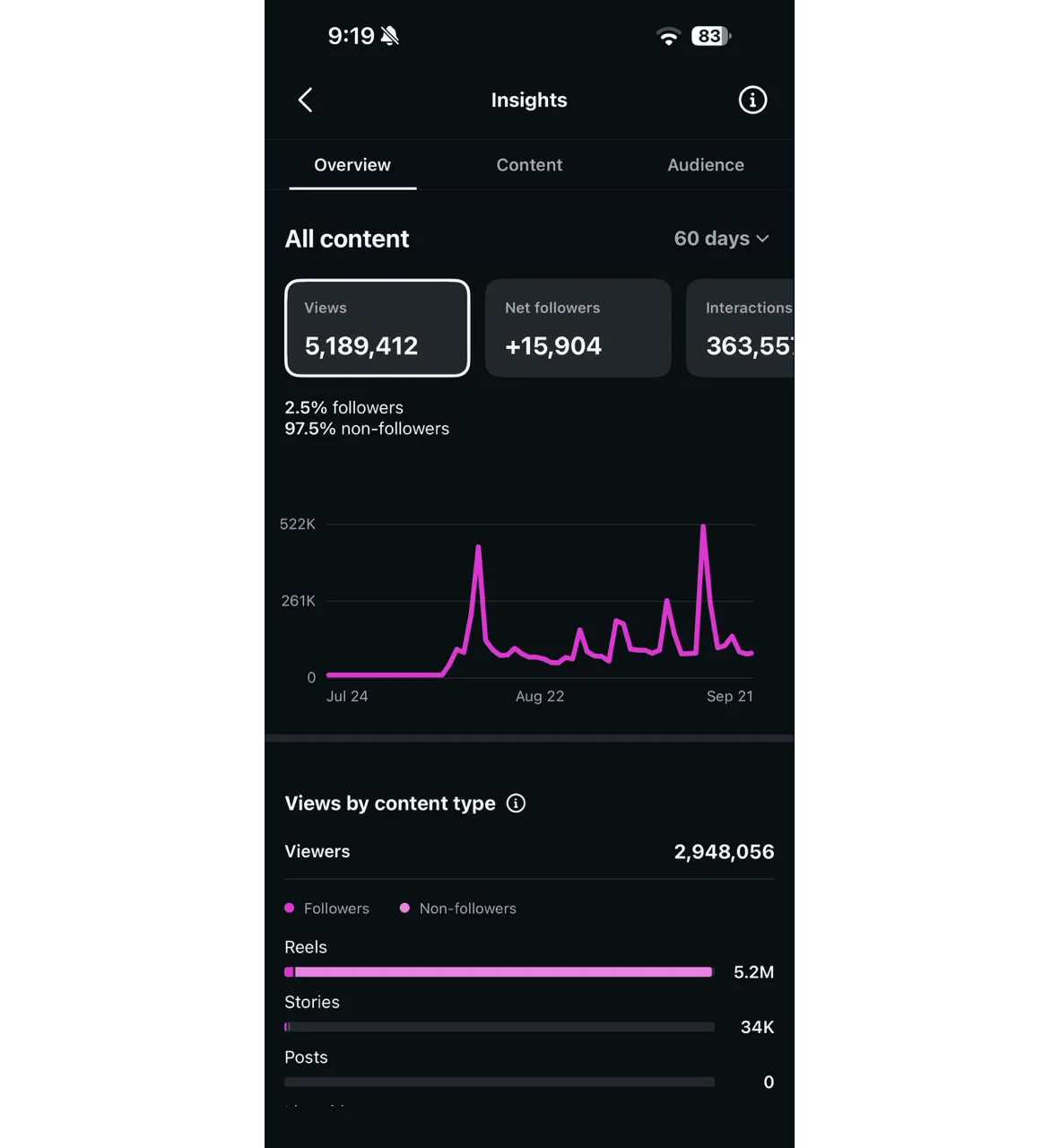
Source: the founder's Instagram Insights screenshot. It shows 5,189,412 views and +15,904 net followers with a visible 60-day filter. This is supporting distribution evidence, not an exactly matched 50-day acquisition report. Views are not unique website visitors.
What the evidence supports, and what it does not
The case demonstrates a real client using DansUGC reaction footage within an organic SaaS content workflow, alongside reported audience and signup growth. It does not isolate the incremental effect of the reaction clips from the demo, account, offer, or website changes.
The founder explicitly acknowledges that traffic and concurrent conversion work contributed together. There is no controlled comparison here proving that a different opening would have produced fewer customers.
That limitation does not make the workflow unhelpful. It tells a founder what to copy: the separation of reusable footage, product evidence, and a measurable next step. It does not justify copying someone else's forecast.
How to apply this UGC use case to your SaaS
Start with one feature a prospective buyer can understand on screen. Choose human footage that fits the situation, then make the demo answer the question raised by the opening. Keep the relationship between creator and product honest.
Before publishing, check the mobile edit, captions, asset permissions, destination, and signup flow. Record the actual outcome rather than assigning every new customer to whichever Reel received the most views.
Our organic UGC guide explains the difference between voluntary customer content and commissioned or licensed content distributed organically. This case belongs to the latter workflow: organic distribution does not mean the footage had no production cost.
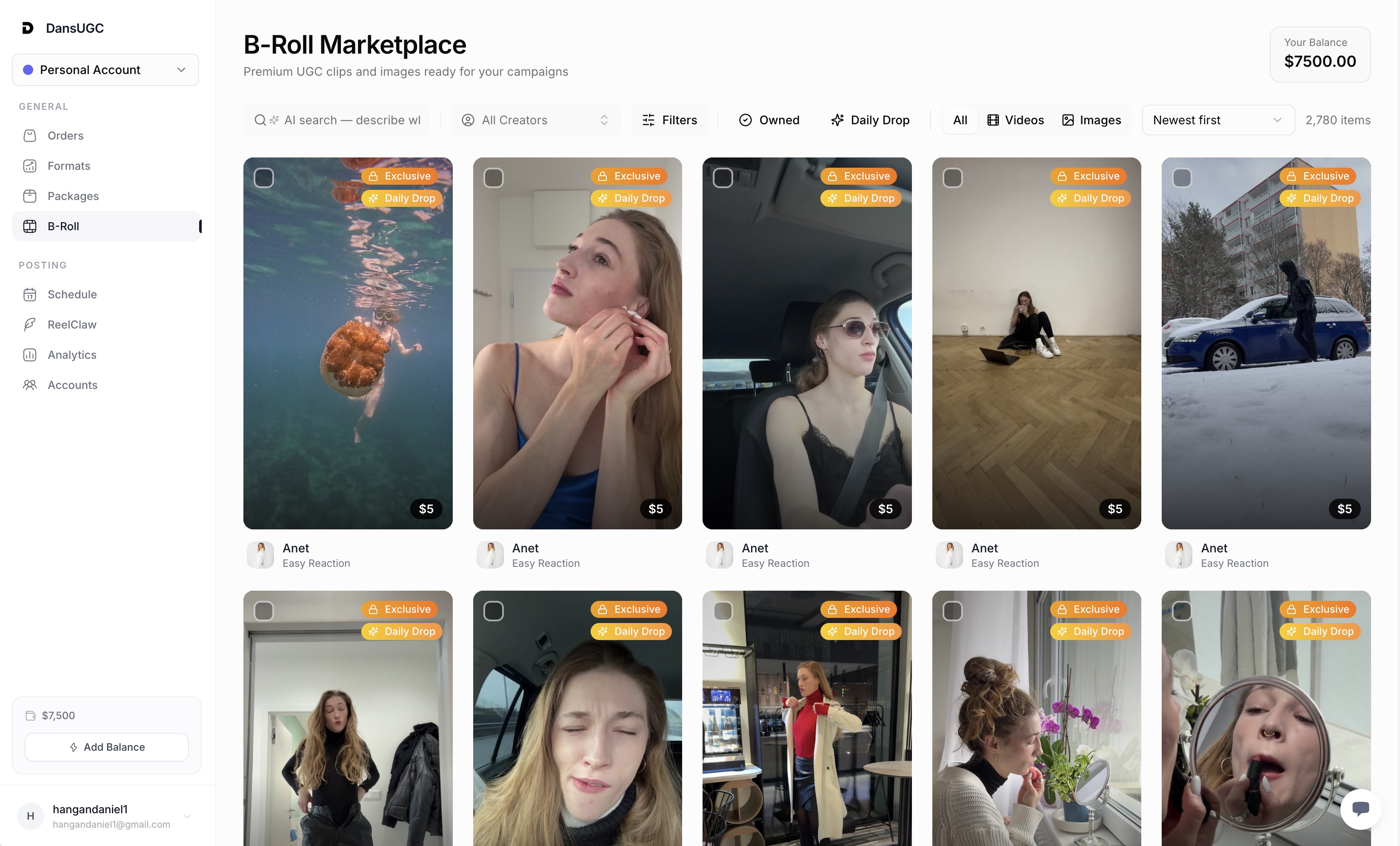
If you already have the demonstration and need human footage for the opening, browse the DansUGC reaction and B-roll library. Check the current license and offer for the assets you choose. Build the post around what your product can actually show.
Source and measurement note: Figures and original images are credited to ProspectHalo's founder-written account, read September 25, 2026; the one-account and 100+ customer details come from Daniel Hangan's client update. Images are reproduced as supplied, without changing their numbers. No revenue, acquisition cost, or guaranteed growth outcome is inferred.
Real Human UGC Ads
FAQ
Get answers to the most asked questions