AI UGC in 2026: What the Tools Actually Solve, and Where They Fail
search "ai ugc" and the first page is the tools themselves, plus one reddit thread from someone who tested ten of them. that gap tells you what people actually want to know. this is the honest version, including where ai ugc genuinely wins.

search "ai ugc" and look at what google returns.
makeugc at 3. heygen at 6. higgsfield at 7. createugc at 8. arcads at 9. creatify at 10. bandy at 13. nextify at 14.
eight of the top fourteen results are the tools themselves.
the number one result is a reddit thread titled "i have tested 10+ ai ugc ad tools." checked 14 august 2026.
that gap is the whole story. every page ranking for this term is either selling the software or is one person who actually used it. nobody in between is doing the honest version, so here it is, including the parts where ai ugc genuinely wins.
what ai ugc actually solves
worth being straight about this, because the pro-human argument gets made badly and loses credibility when it pretends the tools are useless.
ai ugc genuinely fixes four real problems:
- scheduling. no creator to brief, no timezone, no back and forth on a reshoot.
- iteration speed. a script change is a re-render, not a re-shoot.
- language. the same asset in twelve languages is trivial. with humans it is twelve creators.
- compliance edits. legal wants a word changed on day 30 of a flight. with a rendered asset that is minutes.
if your bottleneck is any of those four, the tools are a real answer and the honest recommendation is to use them.
where it fails, and it is one specific place
the first two seconds.
a customer sent these over on $5 real reaction clips, published 7 august 2026:
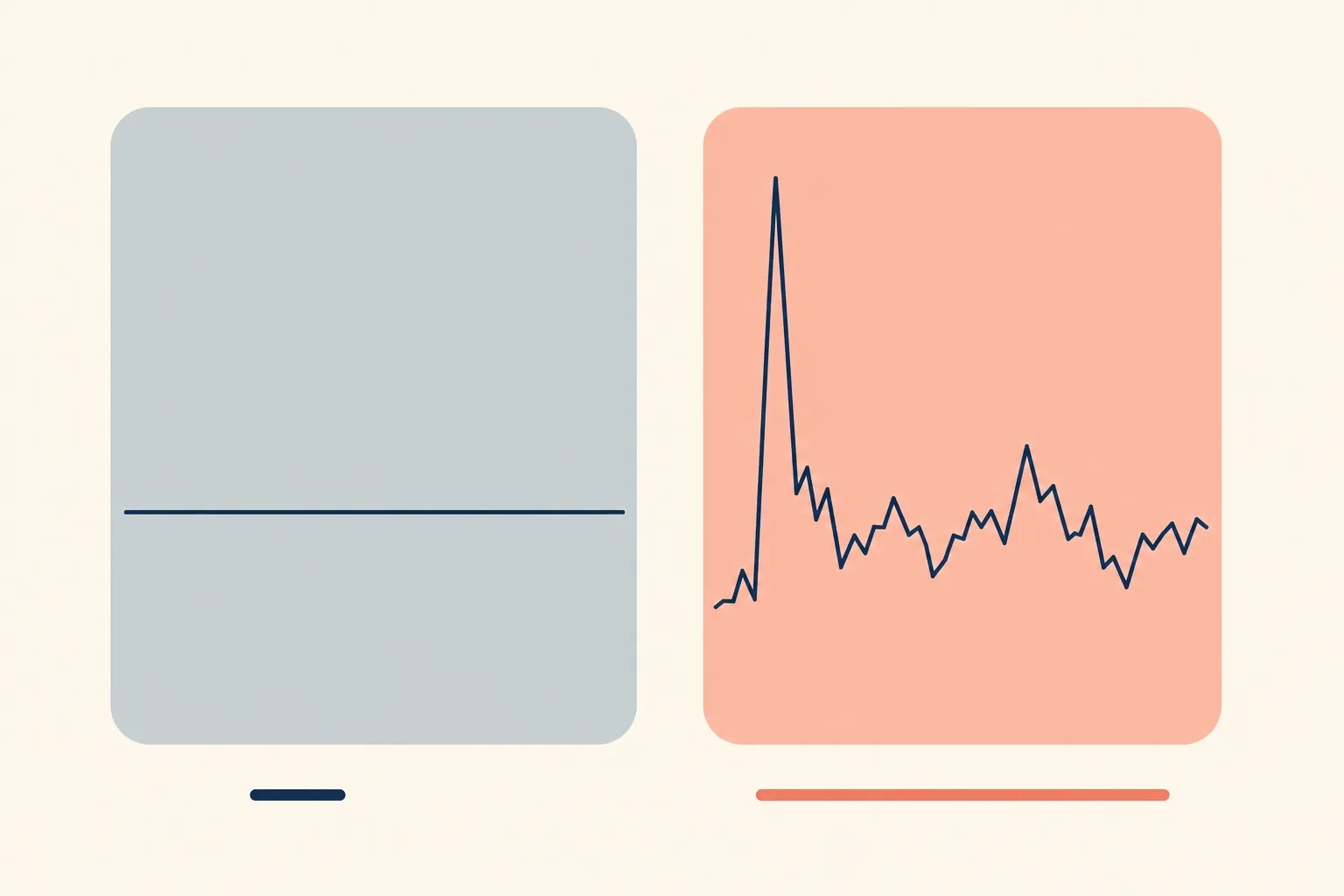
- hook rate on the clips: 40%
- that same account's own average: 21%
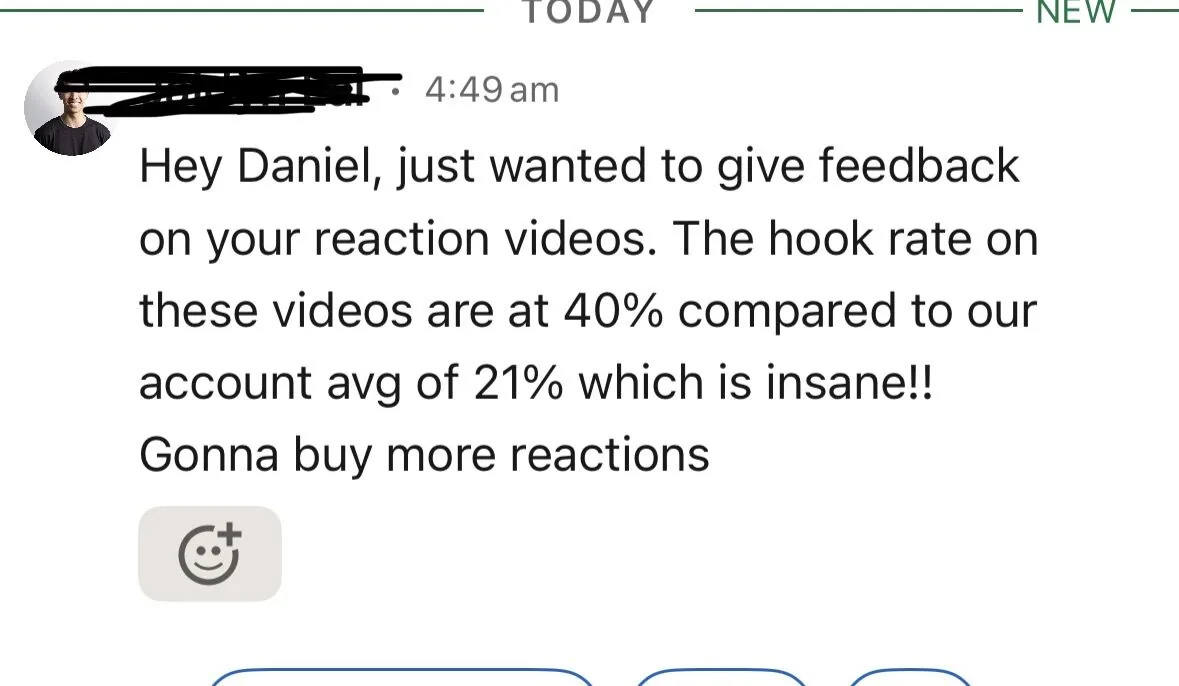
roughly 2x, on the same account, which is what makes it useful. account average is the control. the creative is the only variable that changed.
hook rate is the share of people who do not scroll in the first 2 to 3 seconds. everything downstream is gated on it. if 79% leave before your product appears, your offer, your landing page and your targeting never get a vote.
the mechanism, not the vibe
"ai looks fake" is not an argument. this is:
a hook is not a face, it is a reaction. the half second where someone actually feels something about your app.
a model generates a face. correctly lit, right aspect ratio, plausible skin, dead eyes. what it does not generate is the involuntary half second, because that half second is a response to something real happening.
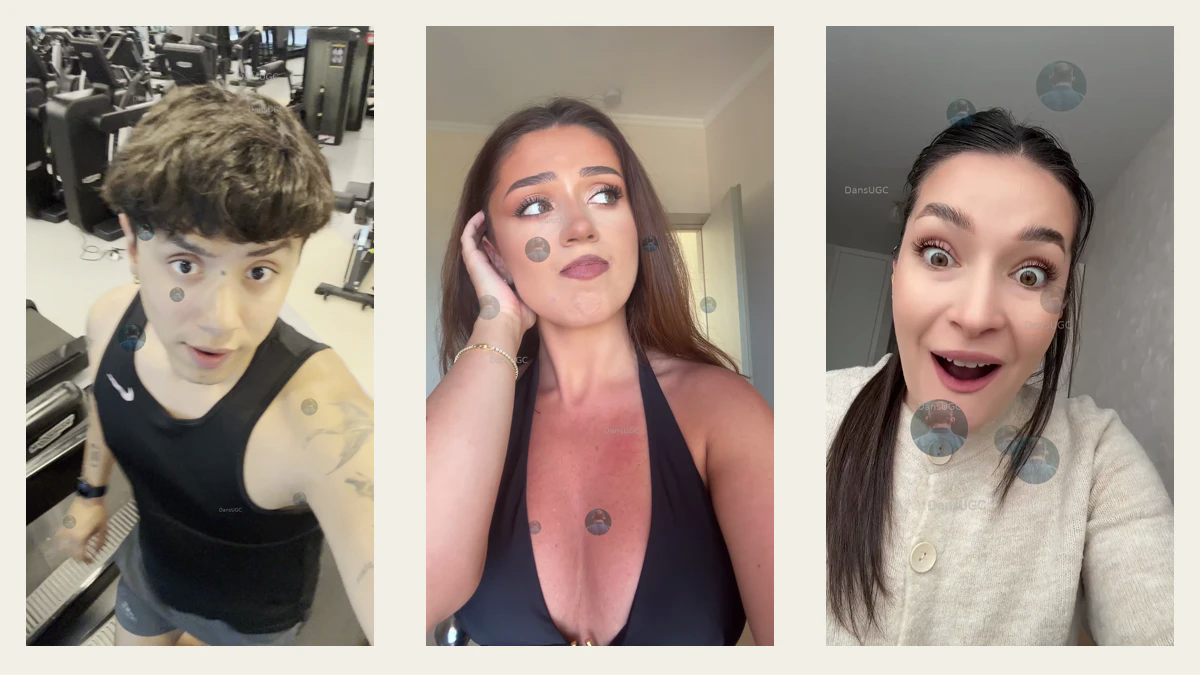
here is what that looks like concretely. sara, 9 seconds, 92 out of 100 on internal virality:
watch what holds you. it is not the lighting or the framing, both of which a model matches easily. it is that her face changes, and you cannot predict the moment it does.
same property, different clip. ana, 14 seconds, 85 out of 100. shock, then a hand over the mouth, then a small smile. three separate beats:
across the DansUGC library the clips that score 85+ almost all share that property: something shifts inside the clip. the flat ones, competent and well lit and single-expression, sit at 45 to 65. that pattern holds whether a human or a model produced them, which is the point. the variable is not the renderer. it is whether anything happened.
this is also why "the models are getting better" misses. resolution and lipsync were never the failure. a perfectly rendered face with nothing happening in it is still a flat hook.
what this article is not
it is not a hands-on tool review.
we have not run makeugc, heygen, arcads, creatify and the rest side by side on the same offer with the same spend, and we are not going to pretend otherwise while eight of them outrank this page. the reddit thread at number one did roughly that and that is exactly why it is at number one.
what would settle it properly:
- same product, same demo footage, same hook lines
- one arm generated, one arm real reaction clips
- same budget, same audience, same placement
- report hook rate, 3 second view rate and CPA, not impressions
until someone runs that, the honest position is: one customer measured 40% against their own 21% on the same account, and the mechanism explaining it is specific and testable. that is stronger than a vibe and weaker than a controlled test. treat it as what it is.
the cost comparison people get wrong
the pitch for ai ugc is cost per asset. that comparison stopped being interesting once real clips hit $5.
- 1 video at $150 buys you 1 hook tested
- 20 videos at $5 buys you 20 hooks tested
at $5, real footage is already in the price band where volume is not the constraint. so the decision is not cheap versus expensive. it is which $100 batch finds the hook you would not have guessed.
the ceiling on a single cheap real clip is higher than the price suggests: 500k views on a $4 ugc video, a 0.008 CPM, posted 30 october 2025. volume and real footage are not opposed. that is the false choice the category is built on.
how to actually decide
use ai ugc when:
- you need the same asset in 12 languages and cannot brief 12 creators
- you are iterating copy daily and the visual is fixed
- the creative is a product demo or screen recording with no human in it at all
- legal changes wording mid-flight
use real reaction clips when:
- the first two seconds carry the ad
- your audience is genz on tiktok or reels
- you are testing hooks rather than testing copy
- you are in a category where trust is the barrier
most consumer app teams need both, and the split is usually cleaner than the debate suggests: real footage for the hook, rendered or recorded assets for everything after it.
if you want to test the hook half, the b-roll library filters by emotion across 5,217 clips, 498 surprised and 343 confused. at $5 a clip with full commercial rights and no subscription, 20 reactions costs less than a single day of most teams' ad spend. that is a small enough test that you do not have to believe any of the above.
faq
does ai ugc work? for some jobs, yes. localisation, rapid copy iteration and compliance edits are genuinely better served by rendered assets. for stopping the scroll in the first two seconds, the one measured comparison available shows real reaction footage at 40% hook rate against a 21% account average.
is ai ugc cheaper than real ugc? per asset it can be. the comparison matters less than it used to, because real reaction clips now start at $5, which is already inside the volume-testing price band.
can people tell the difference? the more useful question is whether they stop scrolling, which is measurable. detection is not the mechanism. a rendered face with no change in it is a flat hook whether or not anyone consciously clocks it as ai.
will ai ugc get good enough? possibly, but the gap is not resolution or lipsync, which are already solved. it is generating an unpredictable involuntary reaction to something that did not happen.
what should i test first? one demo recording of your product doing one thing, paired against 20 different reaction hooks. that isolates the hook as the variable, which is the only comparison that answers anything.
Ready to get UGC videos for your brand?
Real human creators, 48-hour delivery, full commercial rights. Starting at $9/video.