UGC Reaction Videos: How to Make Them Convert for Brands
UGC reaction videos are one of the most in-demand content formats brands are buying in 2026. Here's exactly how to make them, price them, and land repeat clients.
UGC Reaction Videos: How to Make Them Convert for Brands
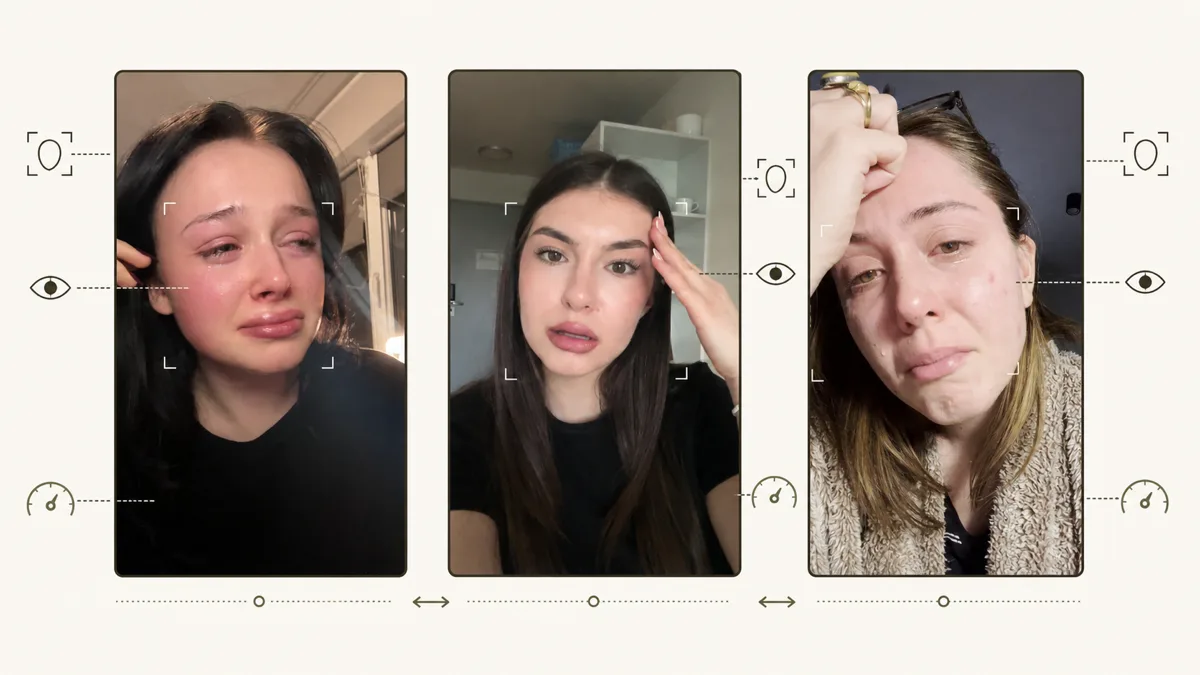
A UGC reaction video is a short, unscripted-feeling clip where a real person reacts authentically to discovering or using a product for the first time. Reaction videos average a 2-3x higher click-through rate than traditional brand ads because viewers see a genuine emotional response -- not a polished pitch. For brands running paid social, that authenticity is exactly what makes them worth paying for.
What Makes a UGC Reaction Video Different from a Regular Review
Standard reviews walk through features. Reaction videos capture the *moment* -- the open, the first use, the visible emotion. That difference is significant:
- Reviews explain what a product does
- Reactions show how a product makes someone *feel*
Brands running TikTok and Meta ads overwhelmingly prefer reaction-style content because it mimics organic content that users don't instinctively scroll past. A polished 30-second brand spot gets swiped away in 0.8 seconds. A genuine reaction holds attention for 6-12 seconds on average, which is enough to deliver the hook and CTA.
The 5-Part Structure That Gets Used in Ads
Every high-converting UGC reaction video brands actually run as an ad follows this structure:
1. The Pattern Interrupt Hook (0-3 seconds)
Start mid-action or mid-emotion. Don't begin with "Hey guys" or a slow product reveal. Examples that work:
- Already holding the opened package with a surprised face
- Mid-sentence: "I did NOT expect this to actually work..."
- Pointing at the camera: "If you've been sleeping on this --"
The first 3 seconds determine whether the algorithm keeps showing your clip. Make them earn it.
2. The Problem Setup (3-8 seconds)
Briefly name the problem the viewer might relate to. Keep it to one sentence:
"I've been trying to find a serum that doesn't just sit on top of my skin for literally two years."
This is where viewers self-select in. If they have the same problem, they stay.
3. The Reveal (8-15 seconds)
Show the product in use -- not a flat lay, not a pack shot. Your face and hands with the product. The camera should see your genuine first reaction: raised eyebrows, a laugh, a visible double-take. Brands look for this because it's what stops the scroll.
4. The Specific Benefit (15-22 seconds)
One concrete result. Not "it's amazing," but:
"I applied this at night and woke up and my skin actually felt different -- not tight, not greasy, just soft."
Numbers help even more: "I've been using it 6 days and my breakout is 70% calmer."
5. The Soft CTA (22-30 seconds)
Avoid hard sells. Brands will overlay their own CTA in post. Your job is to end naturally:
"Genuinely can't believe I waited this long. The link is in my bio if you want to try it."
This is where having a UGC creator storefront on DansUGC matters -- brands want to know you have a professional setup for link-in-bio and deliverables, not just a chaotic DM thread.

Equipment You Actually Need (Not the Expensive List)
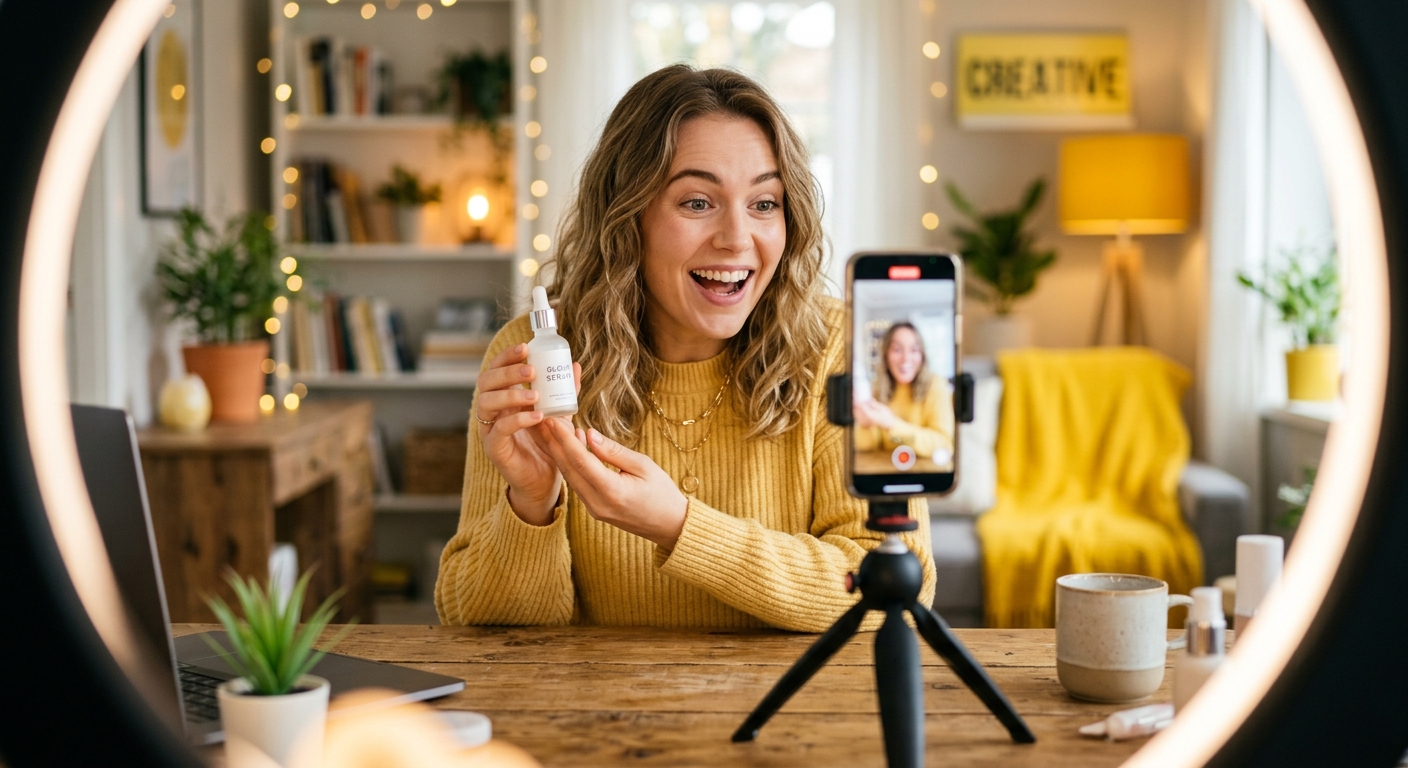
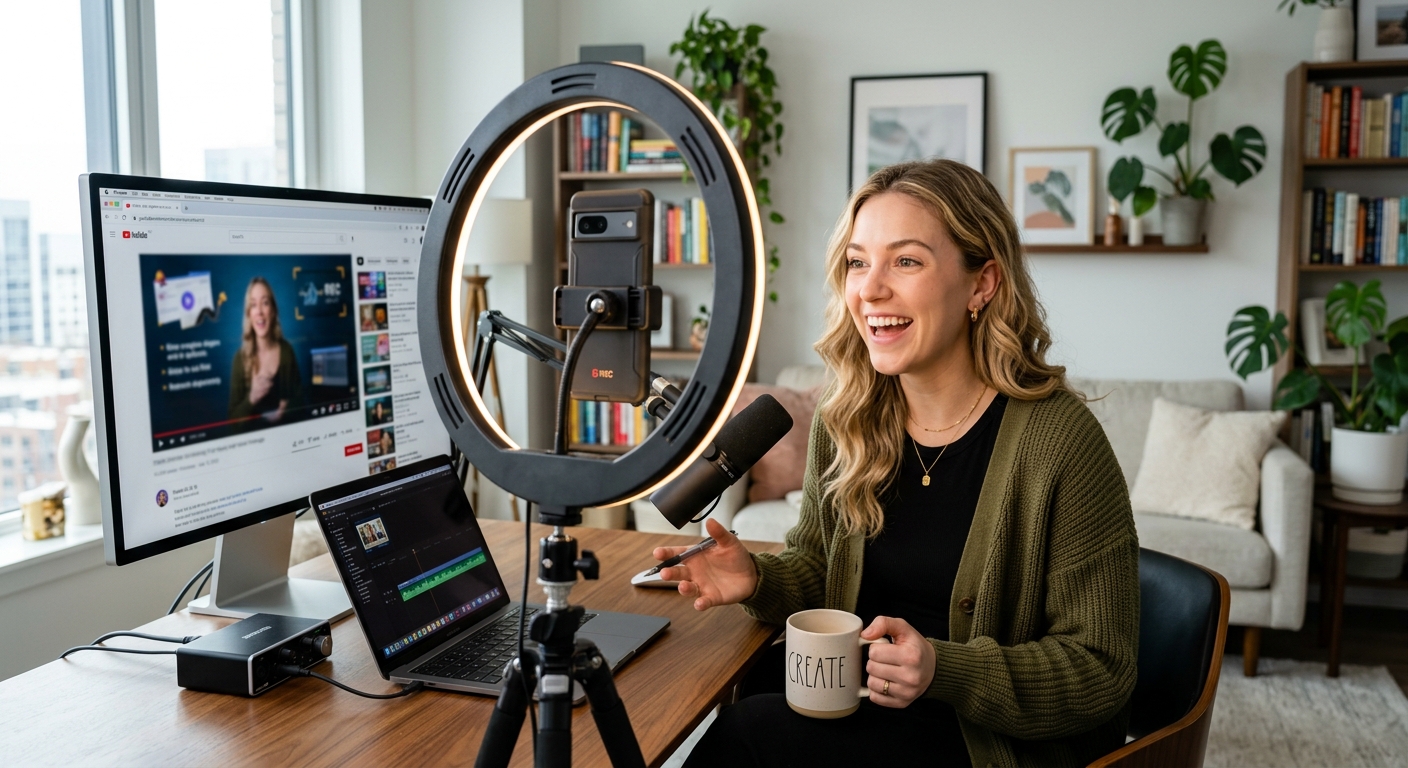
You do not need a cinema camera. Brands buying UGC reaction videos in 2026 want it to look like organic content -- which means your iPhone or Android is often *better* than a DSLR.
Non-negotiables:
- Lighting: A $30-60 ring light eliminates 90% of amateur-looking footage. Natural window light works too if you position it correctly (face the window, don't put it behind you).
- Audio: Your phone mic is fine for reaction videos. Make sure the room isn't echoey -- a soft blanket or pillows behind you absorbs sound.
- Stability: A $15 phone tripod. Handheld works for casual unboxing content but tripod is cleaner for sit-down reactions.
Nice to have:
- A wireless lav mic for cleaner audio ($25-40)
- A simple backdrop or tidied corner of a room
Budget total: Under $100 to produce content brands will pay $150-400 per video for.
How to Price UGC Reaction Videos
Reaction-style videos command a slight premium over standard UGC because they're harder to fake. Here's a realistic rate breakdown for 2026:
Beginner (0-3 months): $100-150 per video | $280-400 for 3-pack
Intermediate (3-12 months): $175-300 per video | $450-750 for 3-pack
Experienced (1+ year, portfolio): $300-500 per video | $800-1,300 for 3-pack
Never go below $100 for a deliverable video. That's the floor where the work becomes unsustainable and brands start to see you as disposable.
Add-ons worth charging for separately:
- Raw files (unedited footage): +$50-75
- Usage rights extension (beyond 90 days): +$75-150
- Rush delivery (under 48 hours): +25-30%
What Brands Look for When Reviewing Reaction Video Creators
Brands -- especially DTC app brands and consumer product companies -- look at three things when hiring UGC reaction creators:
1. Believability. Can you convey genuine emotion on camera without looking like you're acting? Brands will literally watch 10 seconds of your portfolio and know.
2. Production baseline. Not cinematic, but not dark and blurry either. Good lighting and clear audio are non-negotiable for ad use.
3. A clean buying process. Brands hate friction. If your ordering process is a DM thread with no contract and no clear deliverable timeline, many will move on. This is exactly why creators who use DansUGC close brand deals faster -- it's a proper storefront with packages, pricing, and a clear client flow.
Building a Reaction Video Portfolio That Gets Hired
You don't need brand deals to build a portfolio. Create 3-5 spec reaction videos using products you already own:
- Pick products with clear before/after potential (skincare, supplements, a productivity app)
- Film using the 5-part structure above
- Edit minimally -- light captions, no heavy filters
- Host your portfolio on DansUGC where brands can browse, see your packages, and order directly
Spec videos with real emotional range perform just as well in portfolios as videos with brand briefs. What brands are evaluating is you -- your delivery, your energy, your believability.
For more on building your first portfolio, see our guide on UGC creator portfolios and how long it takes to land your first brand deal.
Common Mistakes That Kill Conversion
- Over-rehearsed delivery. If it sounds scripted, it won't perform as an ad. Brands know the difference.
- Starting with your name. Skip the intro entirely or weave it in naturally later.
- Saying the brand name too early. Lead with the problem and emotion, not the product.
- Holding the product awkwardly. Practice natural handling -- like you'd show a friend, not a camera.
- Flat background. Even a simple setup with a plant or bookshelf reads far more authentic than a white wall.
FAQ
What is a UGC reaction video?
A UGC reaction video is a short, authentic-feeling clip of a real person reacting to a product -- typically 15-60 seconds -- used by brands as organic-style paid ads on TikTok, Meta, and YouTube Shorts.
How much do UGC reaction video creators get paid?
Beginners typically earn $100-150 per video. Experienced creators with strong portfolios charge $300-500 per video, with package deals ranging from $450 to $1,300 for 3-video bundles.
Do I need a big social following to sell UGC reaction videos?
No. UGC is sold to brands for ad use, not for organic reach. Follower count is irrelevant -- brands care about your on-camera delivery, production quality, and how easy you are to work with.
What products are best for UGC reaction videos?
Skincare, supplements, food/beverage, fitness products, and consumer apps tend to produce the most emotionally vivid reactions. Anything with a visible or felt before/after result works well.
How do I find brands that buy UGC reaction videos?
Start by pitching DTC brands directly via Instagram or email. Join UGC creator marketplaces and set up a storefront on DansUGC so inbound brand inquiries have somewhere professional to land.
Ready to get UGC videos for your brand?
Real human creators, 48-hour delivery, full commercial rights. Starting at $9/video.