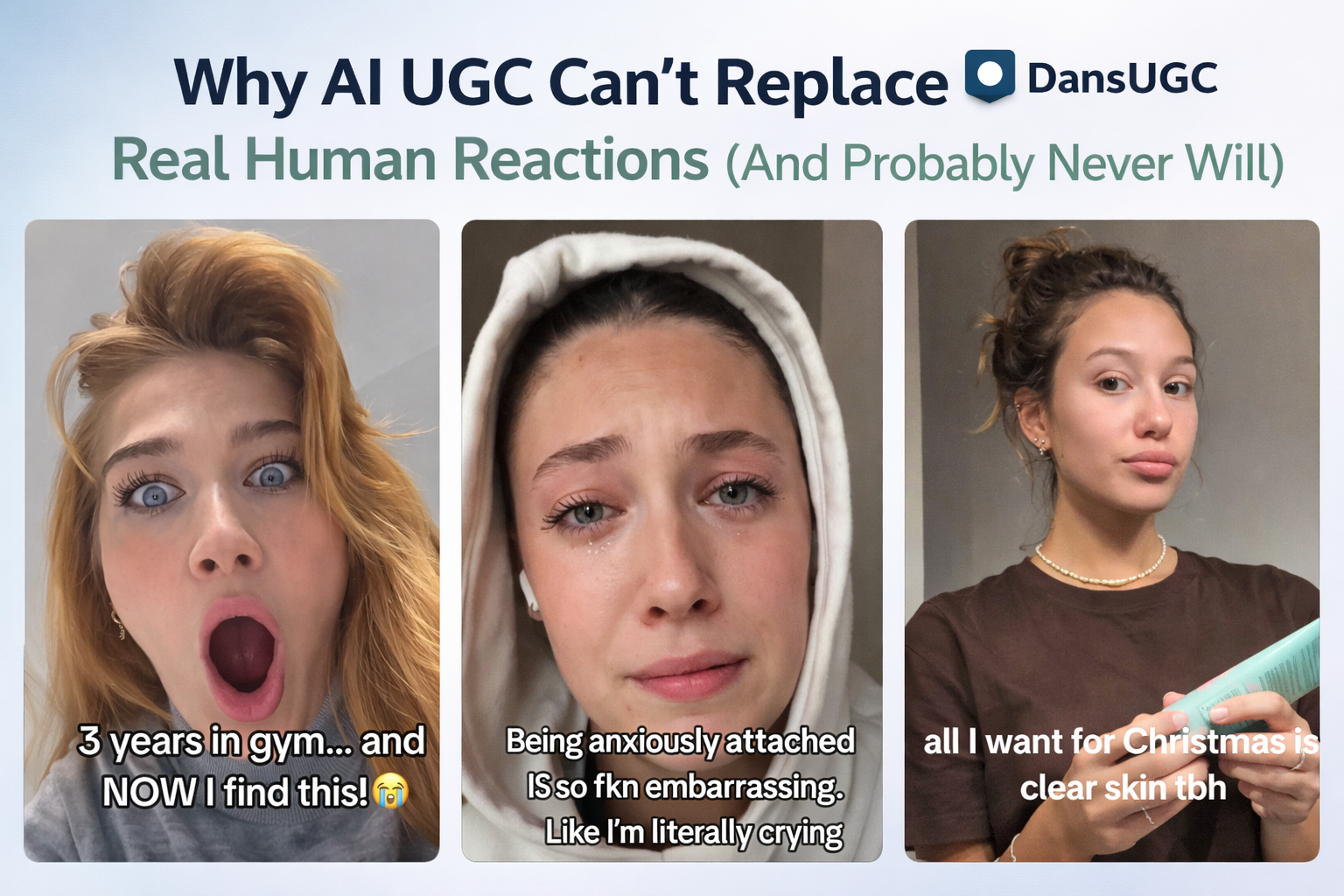
Why AI UGC Ads Are Losing Trust (And Hurting ROAS)
AI-generated UGC looks convincing on the surface, but audiences are catching on — and the performance data proves it. Here's what the numbers say about why real human UGC still wins on trust and ROAS.
Why AI UGC Ads Are Losing Trust (And Hurting ROAS)
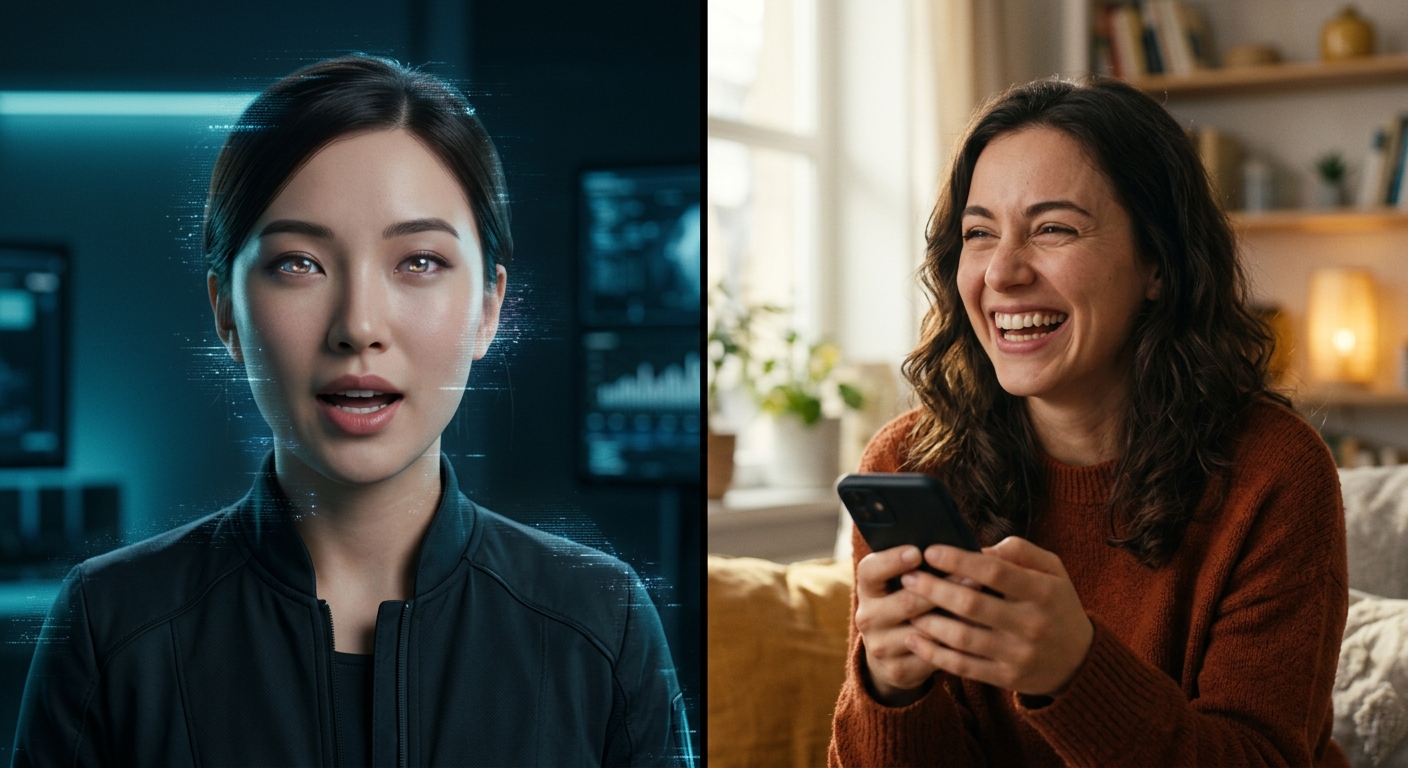
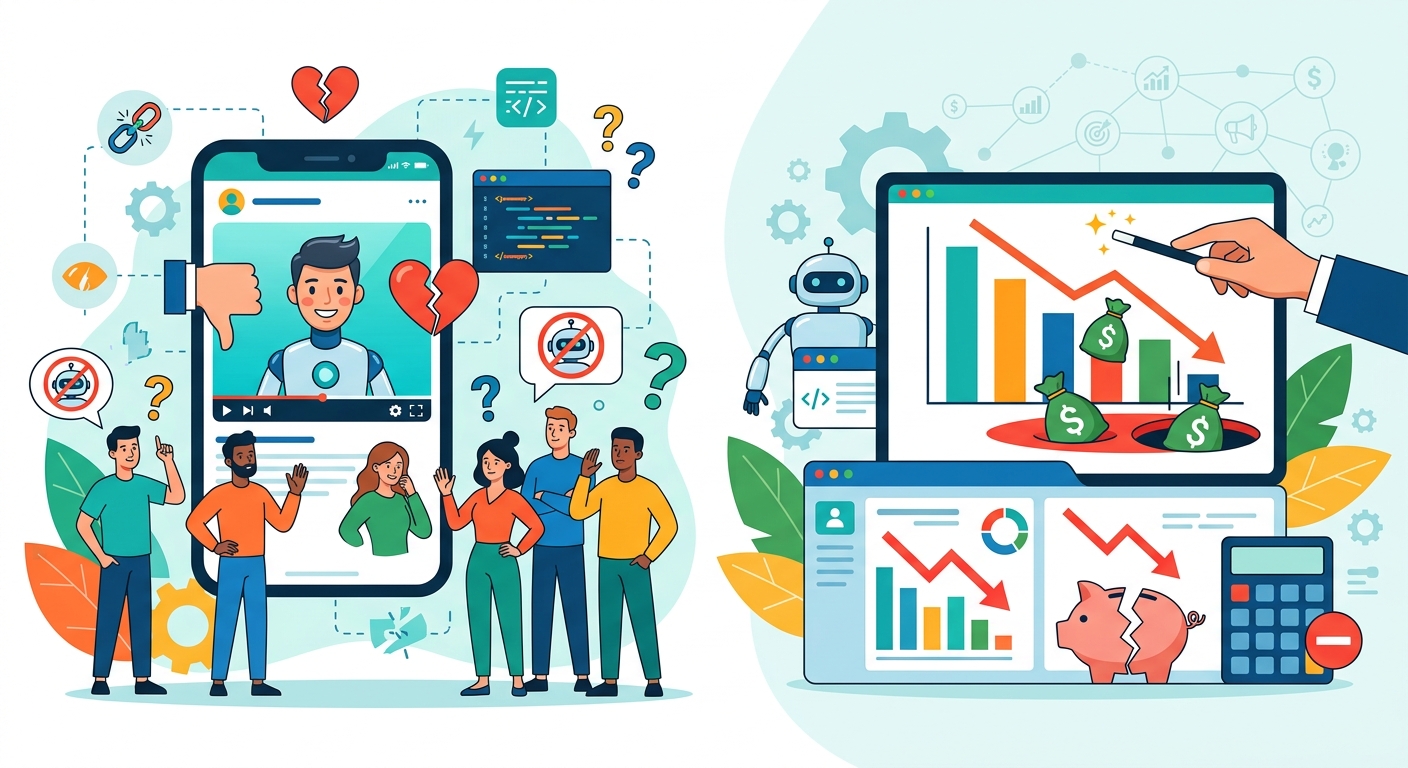
AI UGC is synthetic video content designed to mimic authentic user-generated content. It replicates the look and feel of real creator videos without using a real human. The problem: audiences aren't fooled, engagement drops, and performance data is increasingly pointing in the same direction, AI UGC underperforms when trust matters most.
For app studios and performance marketers spending real money on paid social, this distinction isn't academic. It shows up in your cost-per-install, your ROAS, and your brand perception over time.
What the Data Is Actually Showing
A 2025 Nielsen study found that 63% of consumers say they're less likely to trust an ad if they suspect the content is AI-generated. On TikTok specifically, creator trust is the key conversion signal, users follow real people, not synthetic avatars.
Internal data from app studios running split tests between AI UGC and real human UGC consistently shows:
- CTR: 18–25% lower for AI-generated creative vs. real creator video at comparable production values
- VTR (video through-rate): 30%+ lower, viewers swipe off AI content faster
- CPM creep: Meta's and TikTok's algorithms are beginning to penalise low-engagement creatives, meaning AI UGC gets progressively more expensive to distribute
The upfront cost savings of AI UGC (often cited as 60–80% cheaper per video) are being eroded by worse performance at every stage of the funnel.
Why Audiences Can Tell, Even When They Can't Explain It
Human pattern recognition is tuned for authenticity. Micro-expressions, vocal inflection, eye contact rhythms, and the subtle imperfections of real people on camera, these cues build trust at a subconscious level. AI avatars, no matter how polished, miss some of these.
TikTok's own creator research (2024) found that content featuring real people outperformed AI-avatar content by 2.1x on completed views. The platform rewards genuine engagement, and genuine engagement requires genuine people.
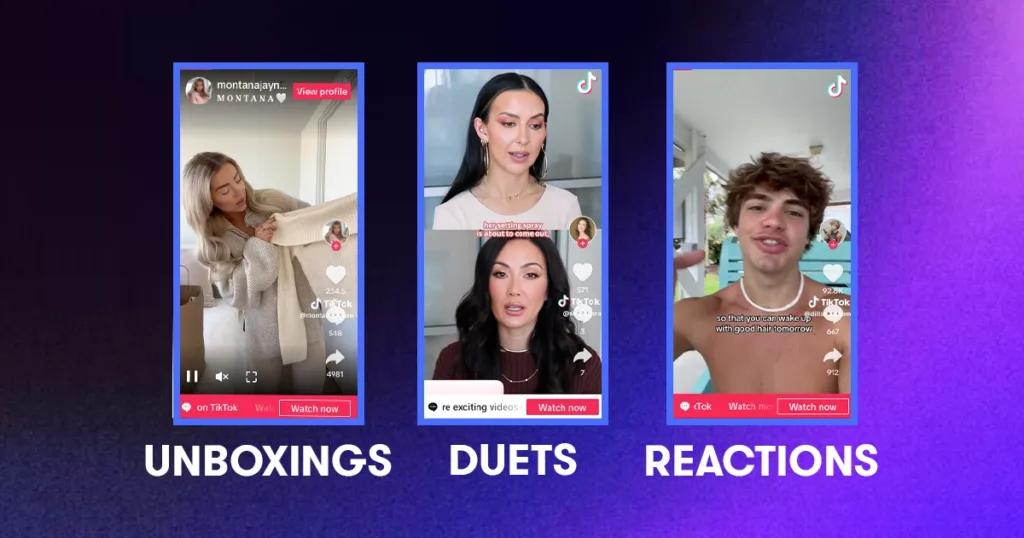
This is particularly brutal for app studios running reaction-style video ads, the format that's driving the most installs right now. Reaction content lives and dies by emotional authenticity. A synthetic reaction is, by definition, not a reaction.
The Trust Problem Compounds Over Time
Single-ad trust erosion is just the start. The real damage from AI UGC is brand-level:
- Audience segments remember, if a user sees multiple AI-feeling ads from your brand, they start filtering your entire creative output
- Retargeting efficiency drops, warm audiences are harder to convert when trust has been damaged at top of funnel
- Review sentiment shifts, some users now specifically call out AI ads in app store reviews and comments, which feeds into App Store and Google Play algorithms
For an app studio spending $50k/month on UA, even a 15% degradation in ROAS from using AI UGC at scale represents $7,500/month in wasted spend.
What Real Human UGC Does Differently
Real creators bring something AI can't synthesise: earned credibility. When a real person says "I've been using this app for 3 weeks and here's what happened," viewers process that differently than identical copy delivered by an AI avatar.
DansUGC was built specifically for app studios and brands that need real human UGC at volume. Instead of AI shortcuts, it connects brands with vetted creators who film genuine reactions and authentic content, the kind that actually converts on TikTok and Meta in 2026.
The model matters: real reactions from real people, delivered at a price point that makes sense for performance marketing budgets. You can see the DansUGC approach here.
The Formats Where AI UGC Fails Hardest
Not all ad formats are equally vulnerable to the AI trust gap, but some are worse than others:
Reaction videos: The highest-risk format. Authenticity is the entire mechanism of the ad. AI reactions are visibly mechanical once you've seen enough of them.
Testimonial-style ads: Second highest risk. Viewers are primed to evaluate sincerity. Synthetic testimonials fail the subconscious truth-test.
Tutorial/how-to content: Lower risk than reactions, but still penalised on platforms that reward watch-time and shares.
Static/image UGC: Lowest risk from AI, though still subject to quality and brand-safety concerns.
For app studios, the reaction format drives the highest ROAS in mobile UA, which means the format most likely to be corrupted by AI is also the one you can least afford to compromise.
What Smart UA Teams Are Doing Instead
The best-performing app studio UA teams in 2026 aren't choosing between cost and quality, they're solving the volume-quality problem differently:
- Subscription UGC models that provide a fixed monthly volume of real human videos at predictable cost
- Creator rosters (5–10 vetted creators per campaign) who can produce iterative variants quickly
- Systematic A/B testing of hooks, formats, and CTAs using real human base content
This approach keeps creative fresh without sacrificing the authenticity that drives performance. DansUGC's platform is built around exactly this workflow, high-volume, real human UGC at prices that work for app studio UA budgets.
For a deeper look at how to set up this kind of pipeline, see our guide on how to build a UGC content factory for brands and why TikTok ads need 20+ fresh creatives every month.
The Bottom Line
AI UGC is not a performance marketing shortcut, it's a trust tax. The upfront cost savings don't hold up against the downstream ROAS penalties, increased CPMs, and brand-level trust erosion that come with synthetic content at scale.
For app studios where UA efficiency is the difference between growth and going dark, real human UGC isn't a luxury. It's the baseline.
---
FAQ: AI UGC vs Real Human UGC Performance
Why do AI UGC ads perform worse than real human UGC?
Audiences subconsciously detect inauthenticity through micro-expressions, vocal patterns, and unnatural pacing in AI-generated video. This reduces trust, lowers view-through rates, and ultimately hurts conversion at every funnel stage.
How much worse is the ROAS on AI UGC ads?
Split test data from app studio campaigns shows AI UGC typically produces 18–25% lower CTR and 30%+ lower video through-rates compared to equivalent real human UGC. Compounded over a full campaign, this can represent a 20–35% ROAS gap.
Are platforms like TikTok and Meta penalising AI UGC?
Not directly with policy enforcement (as of early 2026), but algorithmically yes, both platforms optimise for engagement, and AI UGC consistently generates lower engagement signals, which increases CPMs over time.
Is AI UGC ever acceptable for paid social?
For lower-trust formats like product demos or tutorial overlays with real footage, AI elements can be used more safely. But for reaction-style and testimonial formats — the highest-converting formats for mobile app UA — real human creators consistently outperform.
Where can I get real human UGC at volume without breaking my UA budget?
DansUGC provides real human reaction videos and UGC content for app studios and brands at subscription pricing, designed specifically for performance marketing teams that need consistent creative volume without compromising authenticity.
Ready to get UGC videos for your brand?
Real human creators, 48-hour delivery, full commercial rights. Starting at $9/video.