UGC Creator Taxes in 2026: What You Must Know
Getting paid as a UGC creator means dealing with taxes like a self-employed freelancer — and most beginners miss deductions that could save them hundreds. Here's exactly what you need to know before filing.
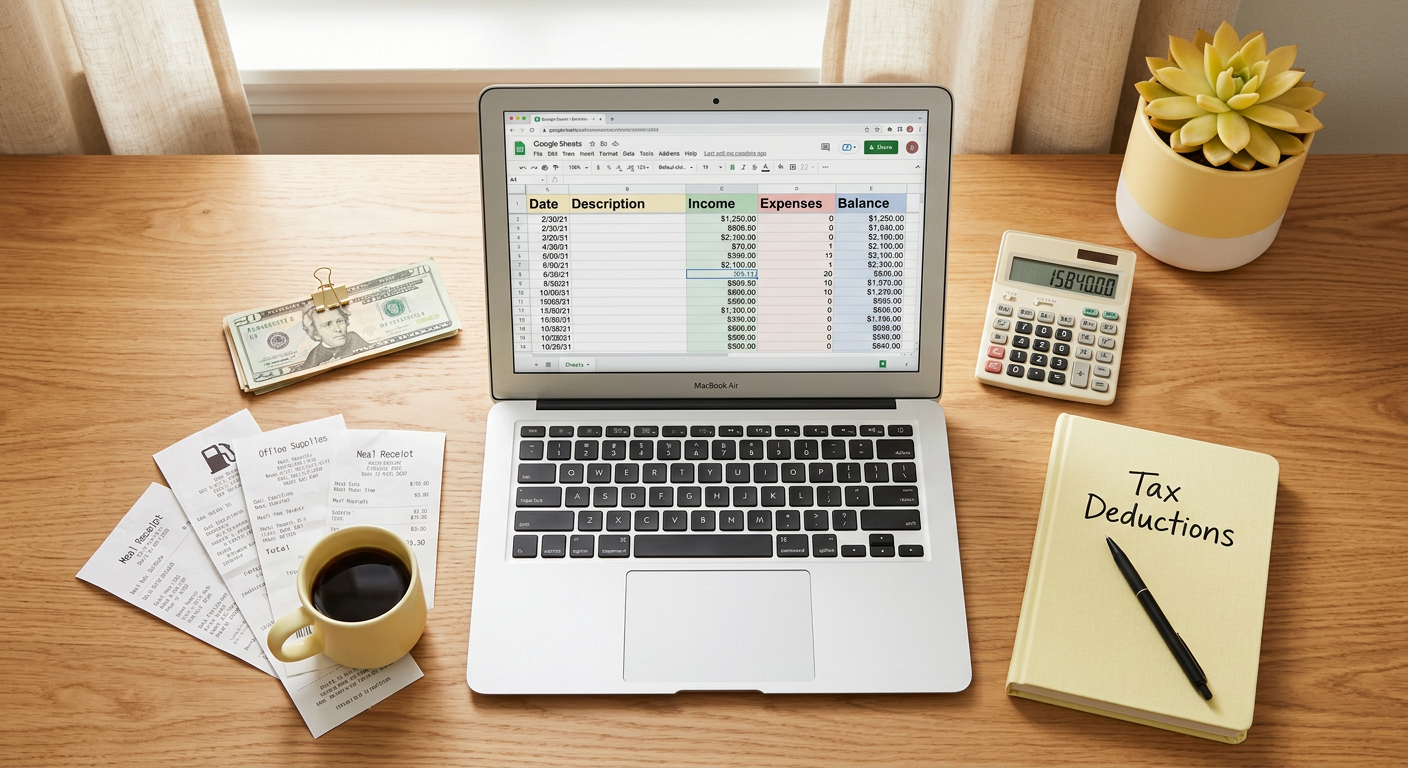
UGC Creator Taxes in 2026: What You Must Know
UGC creator taxes work the same as freelancer taxes: you are self-employed, responsible for both sides of Social Security and Medicare, and required to report all income regardless of whether you receive a 1099. That means a 15.3% self-employment tax on top of your regular income tax rate, but also a long list of deductions most creators never claim. Understanding this early can save you $500–$2,000+ per year.
Are You Actually Self-Employed?
Yes, almost certainly. If you receive payment from brands or agencies for UGC content, whether through direct contracts, marketplaces, or platforms like DansUGC, you are operating as an independent contractor. That means:
- No employer withholding taxes for you
- No W-2 at year end (you'll get 1099-NEC forms instead)
- You must pay both the employee and employer share of FICA taxes (15.3% combined)
- Quarterly estimated tax payments are required once you owe more than $1,000/year
The 1099-NEC Threshold
Brands and platforms are required to send you a 1099-NEC if they pay you $600 or more during the calendar year. But here's the part that trips people up: you owe taxes on every dollar you earn, even if you never receive a 1099. The IRS does not care whether the brand forgot to file paperwork, the income is still taxable.
If you earned $3,400 across seven small brand deals and none of them individually hit $600, you still owe taxes on $3,400.
Self-Employment Tax: The Real Numbers
Here's what UGC creators actually pay in 2026:
| Annual UGC Income | SE Tax (15.3%) | Federal Income Tax (22% bracket) | Total Tax Rate |
|---|---|---|---|
| $15,000 | $2,295 | $0–$1,100 | ~15–22% |
| $30,000 | $4,590 | $2,200–$3,300 | ~22–26% |
| $60,000 | $9,180 | $6,600–$8,800 | ~26–30% |
The good news: You can deduct half of your self-employment tax from your adjusted gross income. On $30,000 of net self-employment income, that's a $2,295 deduction before you even get to business expenses.

Quarterly Estimated Taxes
The IRS expects self-employed earners to pay taxes four times a year, not just in April. For 2026, the deadlines are:
- April 15, Q1 (January–March income)
- June 16, Q2 (April–May income)
- September 15, Q3 (June–August income)
- January 15, 2027, Q4 (September–December income)
Miss these and you'll owe an underpayment penalty (currently ~7–8% annualised on what you underpaid). A simple rule: set aside 25–30% of every payment you receive into a separate savings account immediately. Pay quarterly from that pot.
UGC Creator Tax Deductions You Should Actually Claim
This is where most creators leave money on the table. Every legitimate business expense reduces your taxable income dollar-for-dollar.
Equipment and Gear
Your camera, ring light, tripod, microphone, and phone used for filming are all deductible. Under Section 179, you can deduct the full cost of equipment in the year you buy it rather than depreciating it over several years. A $600 ring light + $200 microphone + $80 tripod = $880 deduction.
Key rule: Only the business-use percentage is deductible. If you use your phone 70% for UGC work and 30% personal, 70% of your phone bill and the device cost is deductible.
Software and Subscriptions
Every subscription directly tied to your UGC business is deductible:
- Video editing software (CapCut Pro, Adobe Premiere, DaVinci Resolve)
- Your DansUGC creator storefront subscription
- Stock music/SFX licences
- Canva Pro or design tools
- Cloud storage (Google Drive, Dropbox) used for client deliverables
- Project management tools (Notion, Trello)
Keep subscription receipts. Most creators are spending $50–$150/month on software they never claim.
Home Office Deduction
If you have a dedicated space in your home used exclusively for filming and editing UGC content, you can claim the home office deduction. The simplified method: $5 per square foot, up to 300 sq ft = up to $1,500 deduction. The regular method calculates the actual percentage of your home used for business (more work, often more valuable for renters in expensive cities).
Props and Supplies
Skin care products, food, clothing, or any physical item you purchase specifically to feature in UGC content is deductible. Keep receipts and note which client/project the item was purchased for. A $40 skincare product bought to film a reaction video for a brand deal = $40 deduction.
Internet and Phone
The business-use portion of your internet and mobile plan is deductible. Most full-time UGC creators claim 50–80% of these costs. At $100/month internet + $80/month phone, a 70% business-use claim = $1,344 deduction annually.
Travel and Location Costs
Driving to a filming location, renting a studio for a shoot, or coworking space used for editing, all deductible. Track mileage with an app like MileIQ (the 2026 standard mileage rate is 70 cents/mile).

Do You Need to Register a Business?
You don't need to form an LLC to deduct expenses or file as self-employed. A sole proprietor (which you are by default) files a Schedule C with their personal 1040 and claims all business income and expenses there.
That said, an LLC offers liability protection and can look more professional to brands. It does not, by default, change how you're taxed, you'd still be a sole proprietor for tax purposes unless you elect S-corp status (worth considering around $60–80k+ in net profit, as it can reduce self-employment tax).
The S-Corp Election: Worth It for Top Earners
If you're earning $70,000+ in net UGC income, talk to a CPA about S-corp election. The basic idea: you pay yourself a reasonable salary (say, $45,000) and take the rest as owner distributions. Self-employment tax only applies to the salary portion, distributions are not subject to SE tax. At $80,000 net income, this can save $3,000–$5,000/year in taxes. But it adds complexity (payroll, separate business bank account, corporate formalities).

Practical Tax Setup for UGC Creators
- Open a separate business bank account, mix personal and business and you'll regret it at tax time
- Get an accounting app, Wave (free) or QuickBooks Self-Employed ($15/month) auto-categorise expenses
- Keep every receipt, photo them immediately, file in a folder by month
- Track your income, every payment, every Venmo, every PayPal transfer
- Set aside 25–30% immediately, pay quarterly, not annually
- Work with a CPA, a good one costs $200–$500/year and typically saves you more than they cost
Many creators using DansUGC already track their brand deal income through the platform — that data makes tax time significantly easier since you have a clean payment history to give your accountant.
Related Posts
- How Much Do UGC Creators Make in 2026?
- How to Price Your UGC Packages Without Underselling Yourself
- UGC Creator Contract: What to Include Before Working With Brands
---
Frequently Asked Questions
Do UGC creators have to pay taxes?
Yes. UGC creators are self-employed independent contractors and must pay income tax and self-employment tax (15.3%) on all earnings. This applies even if you don't receive a 1099 form from a brand.
What can UGC creators write off on taxes?
UGC creators can deduct filming equipment, editing software, phone and internet (business-use percentage), home office space, props purchased for content, travel to shoot locations, and platform subscription costs.
Do I need to file quarterly taxes as a UGC creator?
Yes, if you expect to owe more than $1,000 in taxes for the year. Quarterly estimated tax payments are due April 15, June 16, September 15, and January 15. Missing these deadlines results in underpayment penalties.
What is the self-employment tax rate for UGC creators in 2026?
The self-employment tax rate is 15.3% on net self-employment income (up to the Social Security wage base of $176,100 in 2026, after which it drops to 2.9%). You can deduct half of this tax from your adjusted gross income.
Should UGC creators form an LLC?
An LLC is optional for sole proprietors but can provide liability protection and a more professional appearance to brands. It doesn't change your tax situation by default — you'll still file a Schedule C. The S-corp election (worthwhile at $70k+ net profit) requires more setup but can reduce your self-employment tax bill significantly.
Ready to get UGC videos for your brand?
Real human creators, 48-hour delivery, 12-month commercial license. Starting at $9/video.