How to Get 100 UGC Videos a Month Under $1,000
Getting to 100 UGC videos a month under $1,000 is possible, but only if you stop treating every video like a custom project. This guide breaks down the workflow, pricing math, and production system creators can use to deliver volume without wrecking quality.

How to Get 100 UGC Videos a Month Under $1,000
Getting 100 UGC videos per month under $1,000 is a high-volume content system where creators use templates, batching, lightweight editing, and tightly scoped deliverables to keep the average cost at roughly $10 per video or less. That number is only realistic when the workflow is standardized. It matters because brands want more creative testing volume every month, while creators need a model that scales without turning into unpaid chaos.
A lot of people hear that number and assume one of two things: either the videos must be terrible, or the creators must be getting exploited. Sometimes, yes. But not always. There is a real middle ground where creators build a volume offer that is simple, profitable enough, and genuinely useful to brands that need fresh ad concepts constantly.
First, be honest about what a $10 video actually is
A $10 UGC video is usually not a fully bespoke ad with custom scripting, multiple revisions, premium motion graphics, and unlimited paid usage. If you try to cram all of that into a sub-$10 unit cost, the math falls apart fast.
What a low-cost video usually includes is:
- one simple angle or hook
- 15 to 25 seconds of vertical footage
- basic talking-head or reaction format
- limited or no revision rounds
- standardized editing
- bundled production across large batches
That distinction matters. If you are a UGC creator trying to build a volume offer, the trick is not to undercharge for premium work. The trick is to design a different product entirely.
The math behind 100 videos under $1,000
If the total budget is $1,000, your effective cap is $10 per video. That means every part of the workflow has to stay lean. Here is what a realistic cost structure can look like for a creator collective, small production team, or high-output solo operator using batch systems:
Example monthly budget
- creator payouts: $500 to $650
- editing and assembly: $150 to $200
- project management and briefing time: $75 to $100
- tools, storage, and admin: $50 to $100
- rework buffer: $50 to $100
That lands around $825 to $1,050 depending on how disciplined the process is. So yes, sub-$1,000 is possible, but there is not much room for mess. One vague brief, three rounds of revisions, or constant talent drop-off and you are suddenly at $14 to $18 per asset instead.

Where creators usually lose money
The biggest margin killer is pretending that low-cost volume can coexist with high-touch service. It cannot.
Creators usually wreck the economics in four places:
Revisions
If each video gets even one extra five-minute tweak, across 100 videos that is more than 8 additional hours gone. If the revisions are heavier, it gets ugly fast. Volume work needs strict revision limits, ideally one batch-level correction instead of one correction per clip.
Custom scripting
Writing 100 scripts from scratch is a trap. A better system is building 5 to 10 proven script frameworks, then swapping hooks, pain points, and CTAs. You want modular creative, not bespoke copywriting every time.
Talent matching
Spending 30 minutes hand-picking a perfect creator for every single concept destroys throughput. For low-cost packages, use a tight bench of reliable creators who can each record 10 to 20 clips in one session. Familiarity beats endless sourcing.
Over-editing
Most performance UGC does not need cinema-level polish. It needs a good first frame, clean audio, readable captions, and a clear CTA. Once editing starts getting precious, the per-video cost balloons.
The production model that actually works
If you want to get 100 UGC videos per month under $1,000, batch production is the whole game. That means designing your system around repetition.
1. Batch by creator, not by brand brief
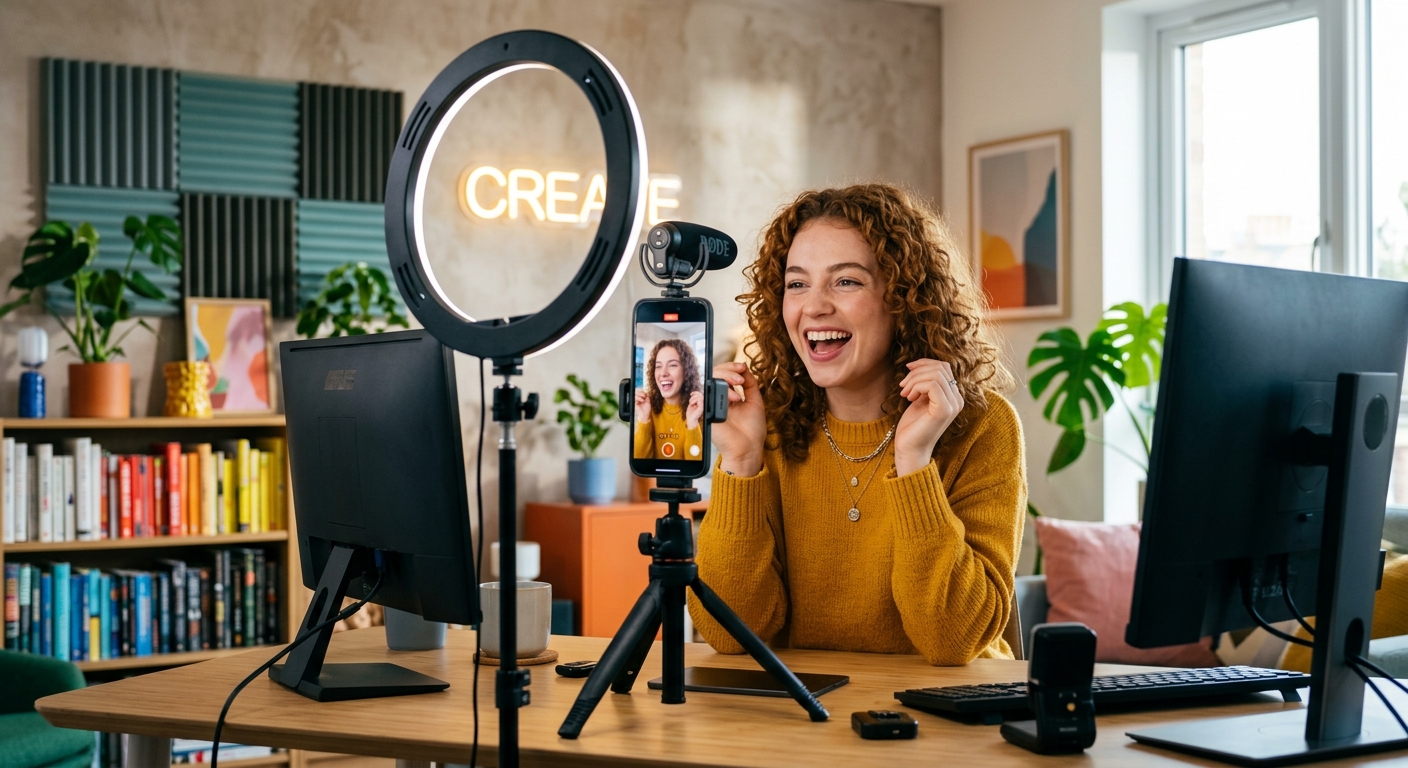
Instead of producing one video from start to finish, group similar concepts and have one creator record a stack of related clips in one sitting. A single 90-minute session can realistically yield 12 to 18 usable videos if the setups are simple and the hooks are pre-approved.
2. Use hook libraries
The easiest efficiency gain is a shared hook bank. Keep 20 to 30 opening lines that already work for your niche, things like problem hooks, surprise hooks, or comparison hooks. Then rotate them across offers. That is faster than reinventing intros all month.
For creators who are still learning pricing and packaging, the UGC creator rate card guide is useful because it forces you to separate premium work from systemized work.
3. Standardize the shot list
A volume-friendly shot list might include:
- one direct-to-camera hook
- one product demo or screen recording
- one reaction or testimonial beat
- one CTA close
That structure covers a surprising amount of ad inventory. And because the sequence repeats, creators get faster with every batch.
4. Keep editing to assembly, not artistry
Think captions, trims, punch-ins, and basic transitions. Nothing more unless the price goes up. An editor working from templates should be able to assemble 20 to 30 simple clips in a day. That is how the economics hold.
What quality level brands should expect
This is important because some creators oversell volume packages, then disappoint clients. A sub-$10 video can absolutely be useful for testing, but it is usually best for:
- hook testing
- angle variation
- audience segment testing
- rapid creative refreshes
- paid social iteration on TikTok and Meta
It is usually not the right format for a hero launch asset, heavy brand storytelling, or premium lifestyle production. The content should feel native, clear, and believable, not luxurious. That is enough for a lot of ad accounts.
This is also why platforms like DansUGC make sense for brands that care about output consistency. When the job is constant creative refresh, a repeatable system beats a beautiful mess.
How UGC creators can make this profitable
The obvious question is, why would any creator agree to work at these numbers? The answer is that they usually are not thinking in single-video terms. They are thinking in session economics.
A creator who records 15 videos in 75 minutes and gets paid $90 to $120 for the batch is not making premium rates, but they may still prefer it to chasing one-off $150 deals that involve calls, reshoots, negotiation, and late payment. Predictable low-friction volume has its own appeal.
The creators who do best with this model tend to have three things:
Reliable delivery
Brands forgive simple production. They do not forgive missed deadlines. If you are building a volume offer, speed and consistency are part of the product.
Strong on-camera instincts
Even simple videos need a believable face, a clean read, and a hook that lands in the first two seconds. Better performance keeps your package useful even when the price is low.
Clear offer boundaries
This matters more than people think. If the package includes bulk testing clips only, say that plainly. If paid usage, raw files, reshoots, or custom scripting cost extra, say that too. The guide to pricing your first UGC package covers this well, especially if you keep getting dragged into underpriced custom work.
A realistic workflow for 100 videos
Here is what a lean monthly workflow can look like:
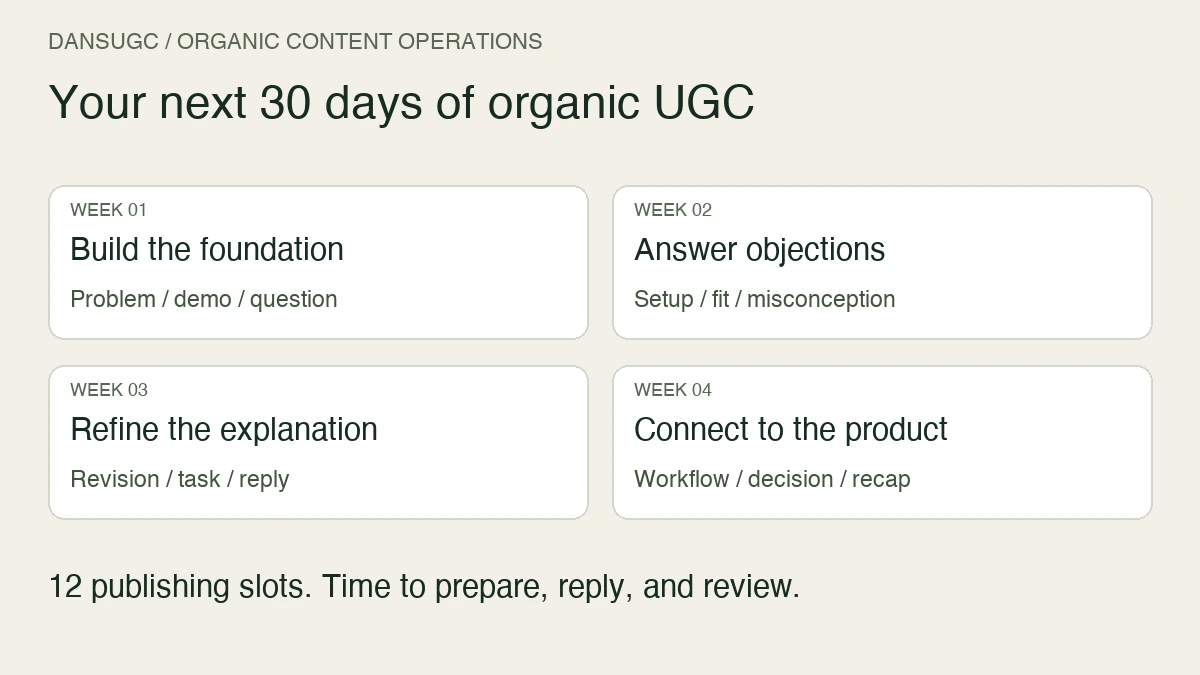
Week 1: briefing and concept selection
Pick 10 concepts and turn each into 10 lightweight variations. That gives you 100 outputs without needing 100 original ideas.
Week 2: creator filming
Use 5 to 8 creators, each filming 12 to 20 clips. Shared shot lists and fixed framing help massively here.
Week 3: editing and QA
Run all clips through the same caption style, pacing template, and export settings. Review at batch level, not asset by asset, unless something is clearly broken.
Week 4: delivery and performance tagging
Label videos by hook, angle, and creator type so the next month's briefs can learn from what actually converted. If you do not tag performance, you are not scaling, you are just producing more files.
When this model stops making sense
Not every creator should chase high volume. If your strength is premium scripting, niche expertise, or polished storytelling, you are probably better off selling fewer, better assets at higher rates.
But if you enjoy systems, repeatability, and low-drama production, the volume model is surprisingly practical. It can also be a good feeder offer. Some brands start with cheap testing clips, find winning angles, then upgrade into bigger retainers or more premium packages later. That is where DansUGC fits neatly, the platform works well when brands want creator-style ads at scale and creators want repeatable demand without rebuilding the process from zero each month.
The real takeaway
Getting 100 UGC videos per month under $1,000 is possible, but only when you treat it like operations, not art therapy. Batch everything. Limit revisions. Reuse frameworks. Protect scope. Measure outcomes.
That is the part people skip. The low price is not magic. It is just system design. And once the system is good, volume stops looking cheap and starts looking efficient.
FAQ
Can you really get 100 UGC videos per month under $1,000?
Yes, but usually only with batch production, simple deliverables, limited revisions, and reusable scripts. At that price point, the videos are built for testing volume, not premium brand campaigns.
What is the average cost per video in this model?
The target is about $10 per video, though strong systems may get a little below that and messy workflows often rise to $12 to $18 per video very quickly.
Is a sub-$10 UGC video too cheap for creators?
It depends on the workflow. For bespoke work, yes. For high-volume batch sessions where one creator records many clips in one go, the economics can still be acceptable if scope is tight and payment is reliable.
What kind of brands benefit most from this approach?
Brands running paid social, especially those testing lots of hooks and creative angles on TikTok or Meta, get the most value because they need constant refreshes more than cinematic polish.
How do creators avoid getting exploited in volume UGC deals?
Set strict package boundaries, charge extra for custom scripting and revisions, define usage clearly, and only offer this model when the workflow is genuinely standardized. Low-cost volume should be a separate product, not your default for everything.
Ready to get UGC videos for your brand?
Real human creators, 48-hour delivery, full commercial rights. Starting at $9/video.