Why Brands Are Switching to UGC Platforms for Ad Testing in 2026
Brands switch to UGC platforms because they enable faster creative testing, more authentic ads, lower production costs, and quicker iteration, all critical for scaling paid social campaigns.

Creative testing has become one of the biggest growth bottlenecks in digital marketing.
Algorithms change quickly. Audiences burn out fast. What worked last month often stops converting today. As a result, brands that rely on slow, traditional content production struggle to keep up.
That’s why more performance-driven teams are switching to UGC platforms to test ads faster, cheaper, and more effectively.
In this article, we’ll explain why brands move to UGC platforms for ad testing, what problems they solve, and how they fit into modern performance marketing workflows.
The Real Problem: Creative Speed, Not Targeting
Most brands don’t fail because of poor targeting or weak products.
They fail because they can’t test enough creatives.
Traditional workflows look like this:
- Write a brief
- Coordinate with an agency or in-house team
- Schedule production
- Edit and revise
- Launch a small number of ads
This process can take weeks. By the time the ads go live, the market has already moved on.
UGC platforms exist to remove this friction.
What Are UGC Platforms (In the Context of Ad Testing)?
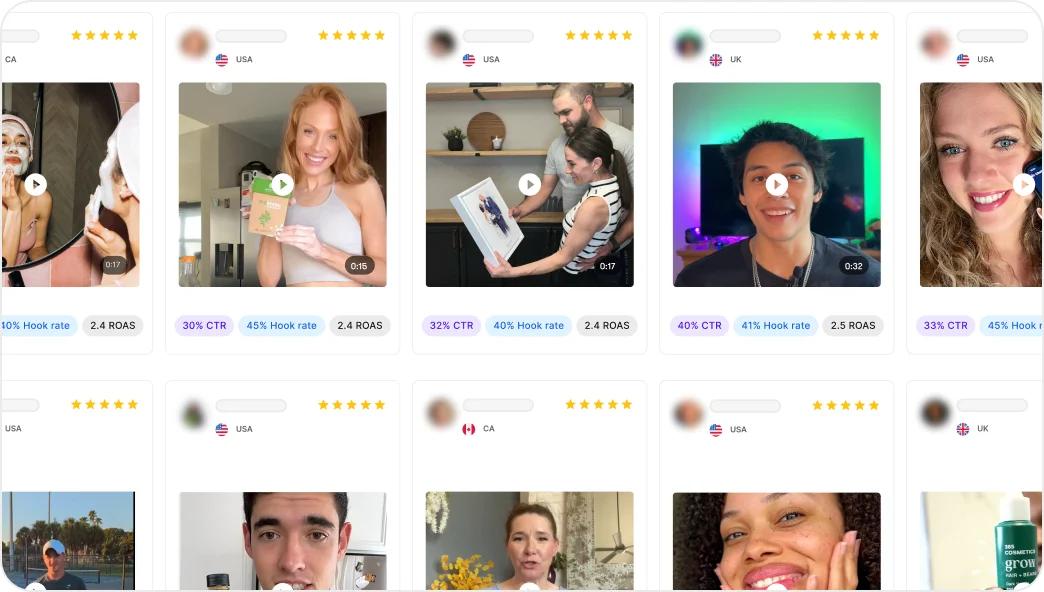
UGC platforms help brands source short-form video content from real human creators, usually optimized for paid ads on platforms like Meta and TikTok.
Instead of producing one “perfect” ad, brands can test:
- Multiple hooks
- Different creators
- Various angles and reactions
- Multiple scripts or openings
The goal isn’t polish.
The goal is speed and signal.
Why Faster Ad Testing Matters More Than Ever
Paid social has shifted from:
“Launch one big campaign”
to
“Test 20 small creatives and scale what works”
Algorithms reward:
- Fresh creatives
- Native-looking content
- High engagement in the first few seconds
UGC platforms are built for this exact reality.
1. UGC Platforms Cut Production Time Dramatically
One of the biggest reasons brands switch is turnaround speed.
With UGC platforms:
- Creatives can be produced in days, not weeks
- No long casting or production cycles
- No heavy post-production required
Some platforms allow brands to brief creators and receive usable ad creatives within 24–72 hours.
For performance teams, this speed is a competitive advantage.
2. UGC Makes Testing Cheaper and Lower-Risk
Traditional video ads are expensive to test:
- High upfront costs
- Risky “all-in” production
- Fewer variations
UGC platforms flip that model.
Instead of spending heavily on one concept, brands can:
- Test many low-cost creatives
- Kill losers early
- Scale winners confidently
This makes experimentation safer and smarter.
3. UGC Ads Generate Clearer Performance Signals
UGC videos are ideal for testing because they’re:
- Short
- Direct
- Focused on a single message
This makes it easier to understand why something works:
- Was it the hook?
- The creator?
- The angle?
- The tone?
Cleaner signals lead to better decisions.
4. Authenticity Improves Early-Stage Metrics
The first 3 seconds of an ad matter more than ever.
UGC content:
- Feels native to social feeds
- Doesn’t look like a traditional ad
- Builds trust faster
As a result, brands often see:
- Higher thumb-stop rates
- Better watch time
- Lower CPMs
These early signals help platforms deliver ads more efficiently—especially during testing.
5. UGC Platforms Enable Rapid Iteration
Testing isn’t just about launching ads; it’s about iterating quickly.
With UGC platforms, brands can:
- Swap hooks without re-shooting entire videos
- Test the same script with different creators
- React quickly to performance data
This agility is difficult to achieve with agencies or in-house production alone.
6. UGC Platforms Fit Modern Performance Teams
Today’s best-performing teams:
- Test weekly (or daily)
- Launch many creatives
- Rely on data, not opinions
UGC platforms support this mindset by making creative testing:
- Systematic
- Repeatable
- Scalable
Instead of treating creatives as a one-off project, it becomes an ongoing process.
Real-World Shift: From Agencies to UGC Platforms
Many brands don’t completely replace agencies; they rebalance.
A common setup looks like this:
- UGC platforms for rapid testing and iteration
- In-house teams for optimization and scaling
- Agencies for larger brand campaigns
This hybrid approach keeps brands fast without sacrificing quality.
Where UGC Platforms Like Dan’s UGC Models Fit In
Platforms such as Dan’s UGC are designed specifically for performance-focused use cases, not influencer branding.
They emphasize:
- Real human creators
- Reaction-style videos
- Ad-ready formats
- Fast turnaround
For brands that care about testing velocity, this focus makes a measurable difference.
Final Thoughts
Brands don’t switch to UGC platforms because they’re trendy.
They switch because they solve real performance problems.
UGC platforms help brands:
- Test faster
- Learn quicker
- Spend smarter
- Scale winning creatives with confidence
In a landscape where creative is the biggest lever for growth, speed matters more than perfection.
And that’s exactly why UGC platforms have become essential tools for modern ad testing.
Ready to get UGC videos for your brand?
Real human creators, 48-hour delivery, full commercial rights. Starting at $9/video.