UGC video quality: a practical pre-publish scorecard
Review UGC openings, delivery, product evidence, readability, and next steps before publishing. A practical editorial checklist—not a promise of performance.

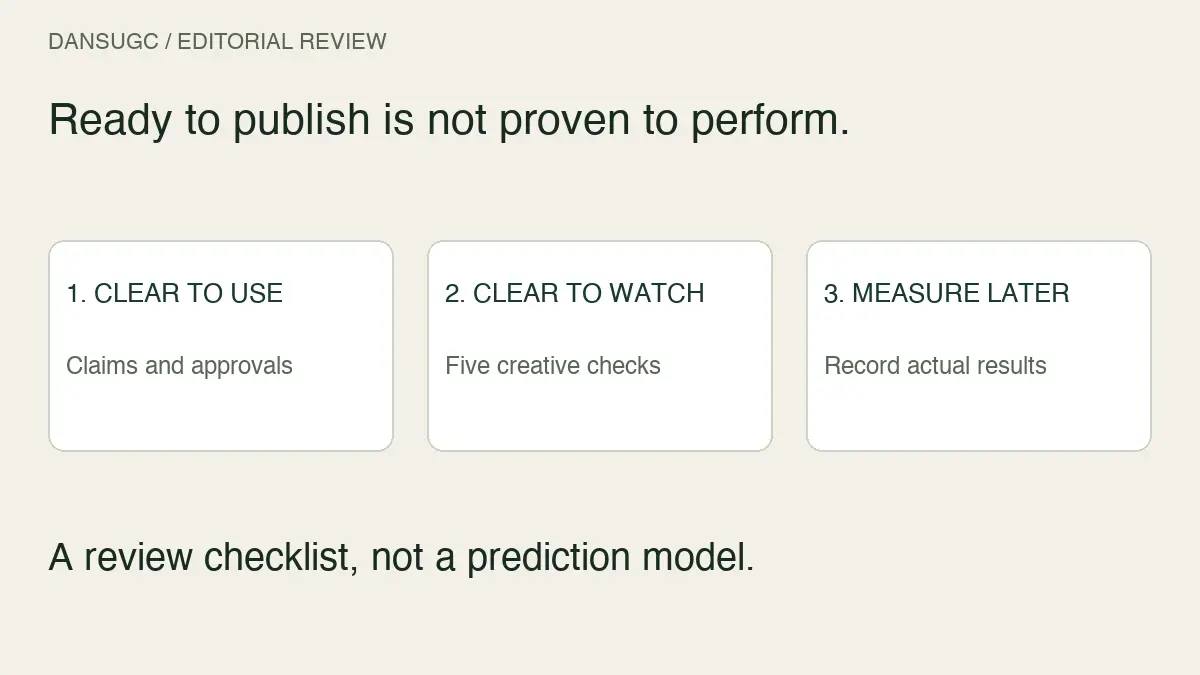
A good UGC video makes its message understandable, shows evidence that fits the claim, and gives the viewer a clear next step. Check those things before publishing. Then measure what happens. A video can pass a production review and still fail to generate signups or sales; visual quality alone does not establish performance.
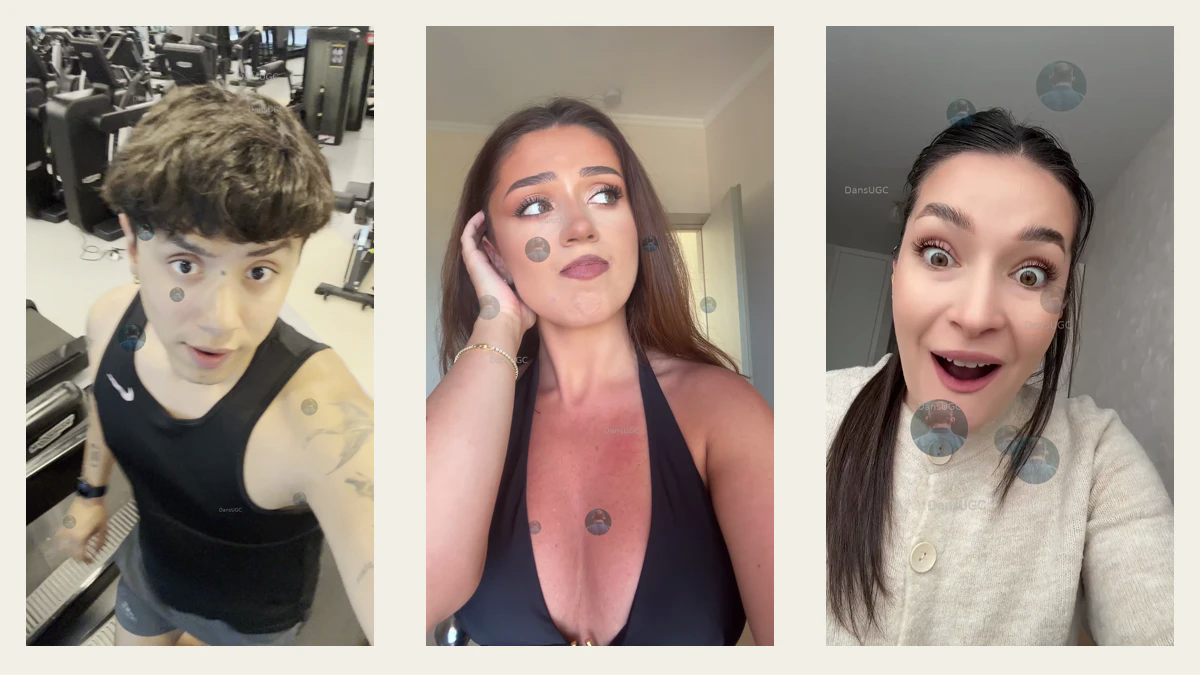
I run DansUGC. When choosing a reaction clip, I start with the job it needs to do in the edit. Is it introducing frustration, showing a response, or connecting two product scenes? An expressive face is an input. The finished sequence still has to make sense.
This guide provides an editorial scorecard for reviewing that sequence. It is not a validated prediction model, an industry benchmark, or a report from testing a sample of videos.
Separate three decisions
Can we use it? Check the agreed use, factual claims, private information, and required approvals. If something important is unresolved, hold the video rather than assigning it a lower score and publishing anyway.
Does the edit communicate? Review the opening, creator delivery, product evidence, readability, and next step. These are things your team can inspect before distribution.
Did it work? Evaluate the outcome after publication using a defined objective, reporting window, and attribution method. Views, clicks, signups, and purchases answer different questions.
Keeping these decisions separate prevents a production checklist from turning into an unsupported promise of conversion.
Run the hard-stop checks first
Do not average a serious factual or approval problem into an otherwise good-looking edit. Resolve it before scoring the creative.
- Use is confirmed: the proposed product, channel, and use match the relevant agreement; unresolved permissions go back to the owner.
- Claims have support: the script and captions do not promise a result your evidence cannot establish.
- The product is accurate: demonstrations show the relevant feature and version, not a different flow presented as current.
- Private information is removed: inspect recordings, notifications, filenames, and visible account details.
- The presentation is honest: a licensed reaction is not presented as proof that the person bought, used, or endorsed your product.
- Approvals are recorded: someone is responsible for clearing the final version and any applicable disclosure requirements.
These are production checks, not legal advice or a substitute for reviewing the actual agreement. If a requirement is unclear, get the right person to resolve it. A polished edit is not a reason to ignore it.
Use this five-part UGC quality scorecard
Score each category from zero to two. Zero means missing or contradictory; one means present but unclear; two means clear enough for the intended viewer and format.
The maximum is ten. The number is only a way to organize editorial feedback. There is no universal passing score, and a ten does not predict reach or revenue. Review the individual weaknesses rather than using the total as a substitute for judgment.
1. Opening: can the viewer identify the point?
Watch the beginning without reading your internal brief. Can you tell what situation, question, or action the video is about?
- 0: the opening is disconnected from the rest of the video.
- 1: there is a recognizable subject, but the intended point takes effort to understand.
- 2: the opening establishes a clear situation that the next scene develops.
A reaction can introduce the scene, but emotion by itself may be ambiguous. Add context that the video can actually support. Do not assume a fixed number of seconds or a particular facial expression guarantees attention.
2. Delivery: does the person fit the scene?
Judge what is visible and audible, not a guess about the creator's personal life or product experience. Check whether the expression, pacing, and spoken delivery match the intended message.
- 0: the delivery contradicts the scene or essential speech is unintelligible.
- 1: the delivery is usable, but timing or context makes its role unclear.
- 2: the performance is understandable and supports the sequence without implying an unsupported endorsement.
For first-party footage to inspect, see the annotated UGC video examples. Treat a clip's visible characteristics as evidence about the footage, not proof that it will outperform another creator.
3. Evidence: does the product scene support the message?
Pause on the scene that is supposed to explain the benefit. What can the viewer actually verify from it?
- 0: the edit makes a product claim without showing relevant support, or shows something contradictory.
- 1: a relevant demonstration is present, but the important action or result is hard to see.
- 2: the demonstration clearly supports the narrow claim being made.
For example, a recording can show where a feature is located and how to use it. It cannot, by itself, establish a broad claim that the app doubles productivity. Keep the caption within the evidence.
The app reaction-video storyboard separates the opening reaction from the product demonstration so one does not have to stand in for the other.
4. Readability: does the exported version hold together?
Review the actual export on a phone, not only a large editing monitor. Check captions, product text, audio, framing, and transitions.
- 0: essential information is cut off, unreadable, or inaudible.
- 1: the information is there but requires pausing, zooming, or guessing to follow.
- 2: the essential message can be followed in the intended viewing conditions.
Watch once with sound and once without it. The silent check is an editorial test, not a claim about how all viewers watch. If sound is essential, make that dependence deliberate rather than accidental.
5. Next step: does the ending match the destination?
Open the destination and compare it with the video's promise. The viewer should not have to hunt for the feature, resource, or offer they were just shown.
- 0: the destination is broken, unrelated, or contradicts the message.
- 1: the destination is relevant, but the next action is vague.
- 2: the requested action and destination match the video's purpose.
Not every post needs a purchase request. A product walkthrough might invite a closer look; an educational post might point to a useful resource. Choose the next step before recording the ending.
Turn scores into actionable feedback
Keep one review record per exported version. Record the file identifier, intended audience, message, destination, reviewer, hard-stop status, five category scores, and the next required change.
Use a timestamp and an observable problem. “Make it more engaging” does not tell an editor what to do. “The caption says the task is complete, but the recording ends before the completion screen; replace the recording or narrow the caption” does.
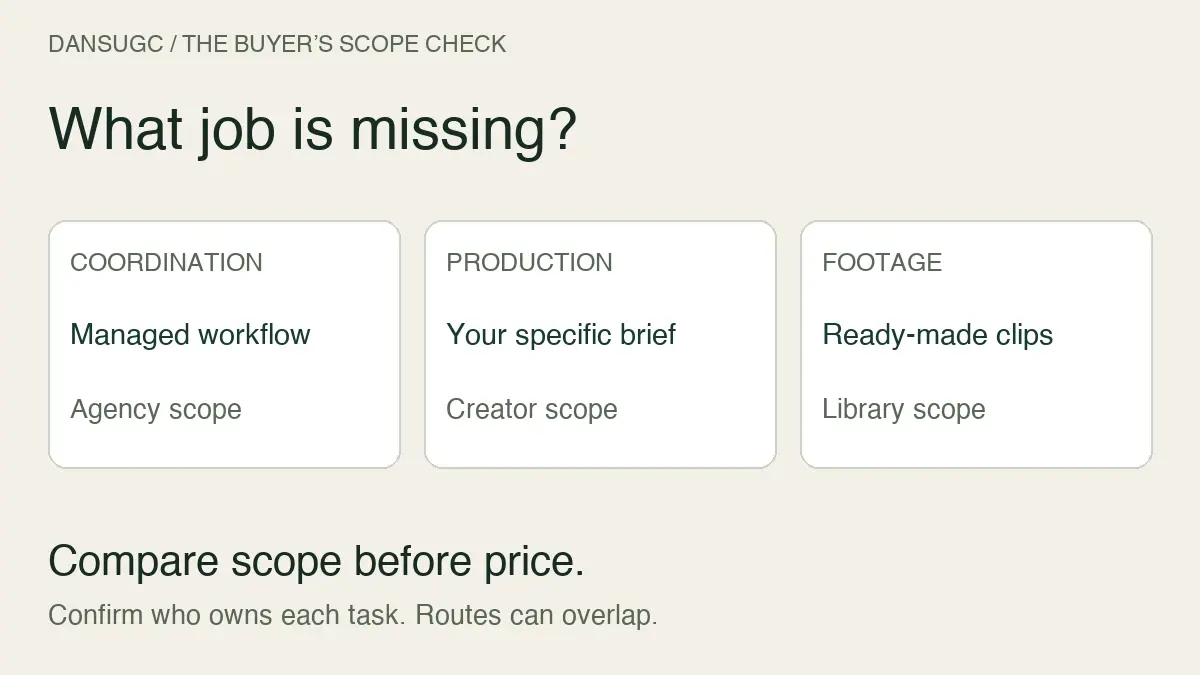
Separate corrections from new scope. Fixing an incorrect subtitle is not the same request as filming a different scene. Agree who combines feedback before it goes to the creator or editor.
Use the UGC drop brief and approval checklist before production so the review is tied to an agreed deliverable rather than an idea introduced after delivery.
An illustrative review: reaction plus product demo
Imagine a study app video that opens with a confused reaction, cuts to a lecture-summary screen, and ends with a link to try the feature. This is an invented teaching example, not a client result.
The opening caption says, “Turn these lecture notes into a review outline.” The product recording shows that specific action. The reaction is used as a scene-setting visual, not as a testimonial.
On review, the outline is too small to read and the destination opens a general homepage with no obvious route to the feature. Those are two concrete problems. The team can crop or rerecord the product scene, then choose a clearer destination or revise the next step.
Now review the new export again. Do not carry forward an approval attached to a different file. Once the checks pass, the team has a publishable candidate—not a proven winner.
For the footage-selection decision, the UGC clips guide explains how source clips fit into a larger edit. You can inspect available footage in the DansUGC B-roll library and choose against the specific missing scene.
Measure outcomes without rewriting the story
Before publishing, write down what success means for this piece. Use the same definition when reviewing it later. Do not start with a signup objective and switch to views solely because views look better.
Record the publication date, post or creative identifier, destination, and reporting window. Keep organic and paid distribution records separate when both exist. Note material changes to the landing page or offer during the period.
If you compare edits, document what changed. A different creator, message, destination, and distribution period all at once make it difficult to attribute the difference to the opening clip. Treat the result as directional evidence rather than a clean causal finding.
Most importantly, leave unknown attribution unknown. This scorecard can help identify production weaknesses; it cannot recover missing tracking or determine why a viewer left.
Frequently asked questions
What makes a UGC video high-performing?
A defined outcome and evidence that it achieved that outcome under the stated conditions. Clear communication and accurate product evidence are useful production checks, but they do not establish performance before publication.
Does a high score guarantee more views or sales?
No. This is an internal editorial checklist, not a tested ranking or conversion model. Use it to make feedback specific and record results separately.
Should we reject a video because its production is simple?
Not automatically. Evaluate whether the actual export communicates, supports its claims, and fits the intended use. Neither a rough appearance nor a polished one proves effectiveness.
Can we score a source clip with the whole checklist?
Only partially. You can inspect delivery and technical usability, but product evidence and the next step may belong to the finished edit. Mark those items not applicable until the full sequence exists rather than giving the clip an artificial total.
Updated October 4, 2026: replaced unsupported universal hook, creator, and reaction-performance claims with an editorial review method. No clip benchmark, experiment, or performance result is claimed.
Ready to get UGC videos for your brand?
Real human creators, 48-hour delivery, full commercial rights. Starting at $9/video.