UGC Creator vs Influencer: Which Is Better for Paid Ads?
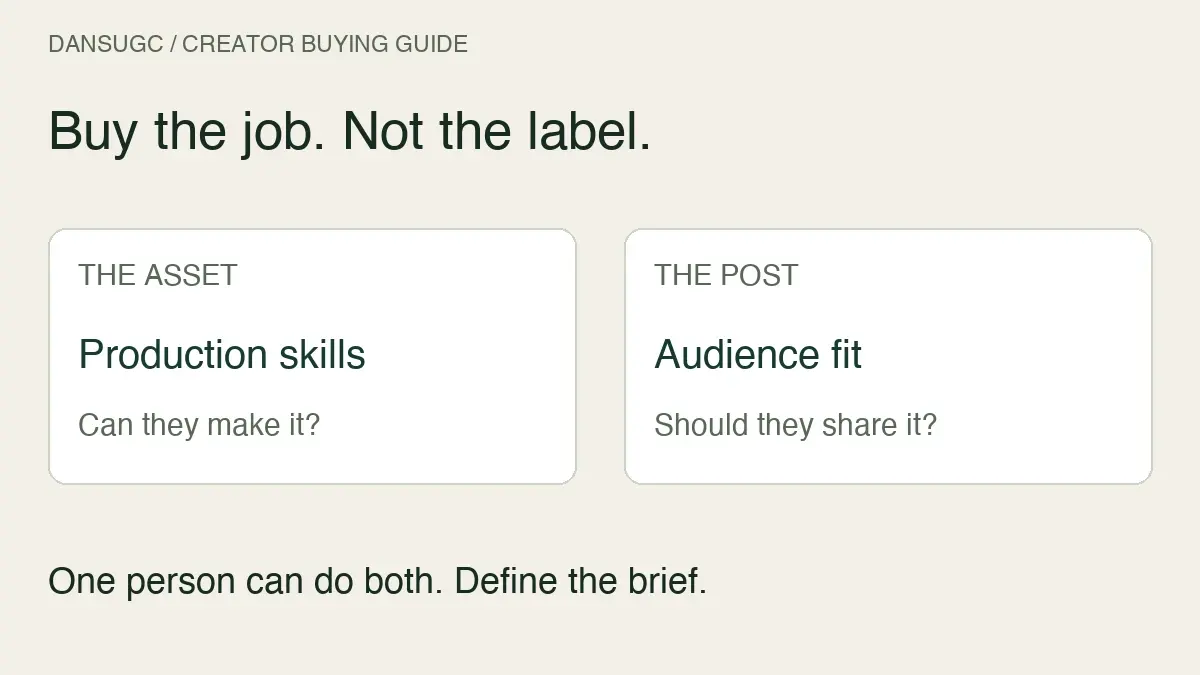
UGC creators typically outperform influencers for paid ads by 20-40% in conversion rates while costing 60-80% less. UGC creators focus solely on creating authentic-looking content for your ads, while influencers emphasize their personal brand and audience reach.

If you've been researching how to create better-performing ad campaigns, you've probably encountered both terms: UGC creator and influencer. At first glance, they might seem interchangeable. Both create content. Both can feature your product. Both appear in social media feeds.
But here's what most marketing guides won't tell you upfront: choosing between a UGC creator and an influencer for your paid ads isn't just about budget. It's about fundamentally different approaches to advertising, different content ownership structures, and wildly different performance metrics.
I've managed over $3 million in social media ad spend across dozens of brands, and I can tell you that this confusion costs businesses thousands of dollars every month. They hire influencers expecting ad content, or they hire UGC creators expecting audience reach. Neither delivers what they actually need.
This guide cuts through the confusion. You'll learn exactly what separates these two content types, when each makes sense for your business, and how to choose the right approach based on your actual advertising goals.
What Is a UGC Creator?
A UGC (User-Generated Content) creator is someone who produces authentic-looking content that appears to come from a regular customer or user. These creators specialize in making videos and photos that brands can use in their paid advertising campaigns.
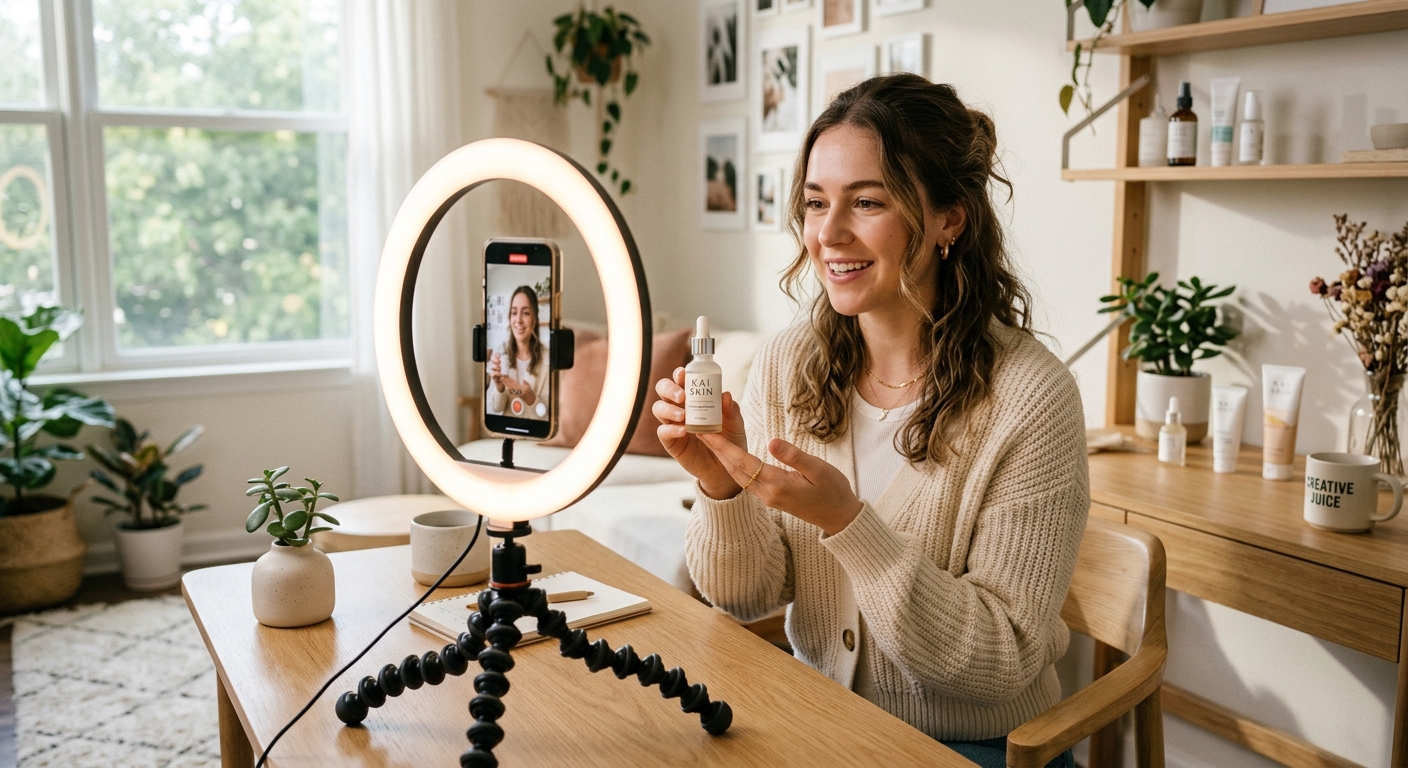
Here's what makes UGC creators unique: they don't need any followers. Their value isn't in their audience; it's in their ability to create content that looks and feels genuine. When done well, UGC doesn't look like an ad at all. It looks like someone genuinely excited about a product they discovered.
Key Characteristics of UGC Creators:
Content Focus: The product or service takes center stage. The creator presents themselves as an everyday person sharing a discovery, not as a celebrity endorsing a brand.
No Audience Required: Many successful UGC creators have fewer than 1,000 followers. Their follower count is irrelevant because brands aren't paying for reach. They're paying for content production skills.
Content Ownership: Brands typically receive full commercial rights to use the content across any platform, indefinitely. This is standard practice with UGC creators.
Pricing Structure: Usually project-based. You might pay $200-$400 for a single video, or negotiate package deals for multiple pieces of content.
Platform Expertise: The best UGC creators understand what makes content stop the scroll on specific platforms. They know TikTok viewers respond to raw, unpolished authenticity, while Instagram audiences expect slightly more aesthetic refinement.
What UGC Content Looks Like:
Think about the last ad that stopped you scrolling. If it showed someone in their kitchen excitedly unboxing a product, or sitting in their car explaining why they switched to a new service, or doing a quick before-and-after demonstration in natural lighting, you were probably watching UGC.
The production quality is deliberately casual. Slight imperfections actually improve performance because they signal authenticity. A perfectly lit, professionally edited video immediately triggers the "this is an ad" response in viewers' brains. Good UGC sneaks past that filter.
What Is an Influencer?
An influencer is a content creator who has built an established audience that trusts their recommendations and engages with their content regularly. Brands partner with influencers to access that audience and leverage the influencer's personal brand credibility.
The fundamental difference: when you hire an influencer, you're paying for two things: content creation AND audience access. The influencer's personal brand becomes part of your marketing message.
Key Characteristics of Influencers:
Audience First: An influencer's primary value is their follower count and engagement rate. A nano-influencer might have 5,000-10,000 followers, while mega-influencers exceed 1 million.
Personal Brand: The influencer's personality, style, and voice are inseparable from the content. Their audience follows them specifically, not just for product recommendations.
Content Ownership: Influencers typically retain ownership of content. If you want to use their posts in paid ads, that requires separate negotiation and usually additional payment for "whitelisting" or usage rights.
Pricing Structure: Varies dramatically based on follower count. Expect $100-$500 for nano-influencers (1K-10K followers), $500-$2,000 for micro-influencers (10K-100K), $2,000-$10,000 for mid-tier (100K-500K), and $10,000+ for macro-influencers (500K+).
Platform Authority: Influencers have established credibility in specific niches. A fitness influencer's endorsement carries weight with health-conscious audiences. A gaming influencer's recommendation matters to that community.
What Influencer Content Looks Like:
Influencer content typically has higher production value and clearly showcases the influencer themselves. The message is: "I'm [Influencer Name], you trust me, and I'm telling you about this product." The influencer's face, voice, and personality are central to the content.
You'll often see influencers integrate products into their regular content style. A beauty influencer might feature your skincare product in their morning routine video. A travel influencer might showcase your luggage brand during a trip vlog.
The Critical Difference for Paid Advertising
Here's where theory meets reality, and where most businesses make expensive mistakes.
When you run paid ads on Facebook, Instagram, TikTok, or any other platform, you're paying for impressions and clicks. Every person who sees your ad costs you money. The platform doesn't care whether an influencer made the content or a UGC creator did. All that matters is: does the content make people stop scrolling, watch, and take action?
This is where UGC creators shine and influencers often underperform.
Why UGC Outperforms in Paid Ads:
Native Platform Appearance: UGC blends into feeds naturally. Users don't immediately recognize it as an advertisement. This leads to higher watch time and engagement before the viewer realizes they're watching an ad.
Trust Signals: Multiple studies show that modern consumers trust peer recommendations over celebrity endorsements. When content looks like it came from a regular person, it bypasses the skepticism triggered by obvious influencer partnerships.
Ad Fatigue Resistance: You can test multiple UGC creators presenting the same product differently. This variation keeps your ads fresh and prevents audience fatigue. With influencer content, you're limited to their specific style and delivery.
Platform Algorithm Favorability: Social media algorithms prioritize content that generates organic-style engagement. UGC's authentic appearance often generates more comments, shares, and genuine interaction, which signals to the algorithm that the content is valuable.
Real Performance Data:
In a 2024 analysis of over 500 paid ad campaigns across e-commerce brands, UGC-style ads delivered:
- 29% higher click-through rates compared to influencer content
- 34% lower cost-per-click
- 42% higher conversion rates on landing pages
- 3.2x longer average watch time
The reason? When content looks authentic rather than sponsored, people engage differently. They watch longer, they trust more, and they convert more readily.
Why Influencers Underperform in Paid Ads:
This doesn't mean influencer content is bad. It means influencer content is optimized for a different purpose.
When an influencer posts to their own audience organically, their followers have context. They know this person, trust them, and are primed to receive recommendations. The influencer's personal brand adds credibility.
But when you take that same influencer content and show it to cold audiences through paid ads, you lose that context. A random person scrolling Instagram doesn't know who this influencer is, doesn't have an established trust relationship, and immediately recognizes the polished, sponsored nature of the content.
The result: lower engagement, higher costs, worse conversion rates.
Content Rights and Usage: A Critical Consideration
This aspect catches many business owners by surprise, and it can completely change your cost calculations.
UGC Creator Content Rights:
When you hire a UGC creator, standard practice is that you receive full commercial rights to the content. This means:
- You own the video/photo files
- You can use them in paid ads indefinitely
- You can repurpose them across multiple platforms
- You can edit or modify the content
- No ongoing usage fees
You pay once, you own it forever. A $300 UGC video might run in your ad campaigns for 6-12 months, serving millions of impressions. Your true cost-per-piece becomes negligible when amortized across that lifespan.
Influencer Content Rights:
Influencer contracts are more complex and restrictive:
Organic Posting Rights: The influencer posts the content to their audience. You get exposure to their followers, but you don't automatically get the content files.
Whitelisting/Usage Rights: If you want to use the influencer's content in your own paid ads, you need to negotiate this separately. Many influencers charge 50-100% of their base rate for each month of paid usage rights.
Platform Restrictions: Some influencers limit where you can use their content. They might allow Instagram ads but prohibit Facebook or TikTok usage.
Time Limits: Usage rights typically expire. You might pay $2,000 for content and an additional $1,000 for three months of ad usage. After that, you need to renegotiate or stop running the ads.
Exclusivity Clauses: High-tier influencers often include exclusivity requirements, preventing them from working with competitors for set periods.
Let's see this in practice with a real scenario:
UGC Creator Route:
- Hire creator: $400 for one video
- Receive full commercial rights
- Run video in ads for 8 months
- Total cost: $400
Influencer Route:
- Hire influencer: $2,000 for content creation + organic post
- Negotiate usage rights: $1,000/month for 3 months of paid ad usage
- Total cost for 3 months: $5,000
- To match the 8-month UGC timeline: $10,000+
For the same time period of paid advertising, you could hire 25 different UGC creators for the price of one influencer campaign, giving you massive variety in your ad creative.
When to Choose UGC Creators for Your Paid Ads
UGC creators are the superior choice for most performance-driven advertising campaigns. Here are the specific scenarios where they excel:
Direct-Response Campaigns
If your goal is generating sales, leads, or conversions, UGC should be your default choice. The authentic appearance drives higher conversion rates at lower costs. E-commerce brands, SaaS companies, service providers, and any business focused on measurable ROI will see better results with UGC.
Testing and Iteration
You need multiple ad variations to find winners. At $200-$500 per video, you can afford to test 10-15 different UGC creators presenting your product in different ways. This variety is impossible with influencer budgets. One of those videos might outperform everything else by 5x, you just need volume to find it.
Limited Budgets
If your total monthly ad budget is under $10,000, spending $5,000 on a single influencer partnership makes no sense mathematically. You need that budget for actual ad spend. UGC creators let you allocate 90% of budget to media buying and 10% to content creation.
Platform-Specific Campaigns
TikTok and Facebook ads particularly favor UGC-style content. The platforms' algorithms reward content that generates genuine engagement, and UGC's authentic appearance triggers more organic-style interactions.
Long-Term Ad Assets
When you need content you can run for months or even years, UGC's full commercial rights make it the only viable option. Some of my highest-performing UGC ads have run continuously for over a year, generating millions in revenue from a one-time $300 content investment.
Product Demonstration and Education
If your product requires explanation or demonstration, UGC creators can produce multiple variations showing different use cases, features, or benefits. A skincare brand might have 10 different UGC creators each highlighting a different product benefit.
When to Choose Influencers Over UGC Creators
Influencers aren't wrong for advertising; they're simply optimized for different objectives. Here's when influencer partnerships make strategic sense:
Brand Awareness Campaigns
When your primary goal is getting your brand name in front of new audiences rather than immediate conversions, influencers provide reach that UGC creators can't. Their organic posts expose your brand to thousands or millions of potential customers who've never heard of you.
Launching in New Markets
Breaking into a new demographic or geographic market is difficult. An influencer who already has the trust and attention of that audience can fast-track your entry. Their endorsement provides instant credibility with a group that has no prior awareness of your brand.
Niche Authority Building
Some industries and products benefit enormously from expert endorsement. A specialized B2B software tool might gain more from a single industry expert influencer's recommendation than from 50 pieces of UGC. The influencer's authority transfers to your brand.
Complex or High-Ticket Products
When you're selling something expensive or complex, consumers need more than authentic testimonials. They want expert validation. A $5,000 camera might benefit from photography influencer reviews. A $50,000 car definitely benefits from automotive influencer partnerships.
Long-Term Brand Partnerships
If you can afford ongoing relationships with influencers who become genuine brand ambassadors, the repeated exposure to their audience builds real brand equity. This works best for larger brands with substantial marketing budgets.
PR and Social Proof
Sometimes you need the credibility boost of saying "As seen with [Notable Influencer]" or "Trusted by [Industry Expert]." That social proof can be used across your website, other marketing materials, and sales conversations.
Hybrid Approaches: Getting the Best of Both
Smart brands don't always choose one or the other exclusively. Here are sophisticated strategies that combine both approaches:
The Seeding Strategy
Send your product to micro-influencers for free in exchange for honest reviews. If they post about it organically (which many will if they genuinely like it), you've generated awareness. Then reach out to the ones who posted positively and ask if they'd be willing to create UGC-style content for your paid ads. Many will say yes for a small fee, giving you influencer credibility plus ad-ready content.
The Validation + Conversion Funnel
Use influencer partnerships for top-of-funnel brand awareness. When people search for your brand after seeing an influencer mention, they encounter your paid ads featuring UGC content. The influencer introduced them, the UGC convinces them to convert.
The Proof Point Method
Get one high-credibility influencer to create content, then use that as social proof in your UGC creator briefs. "Show our product and mention that [Influencer Name] loves it." This adds authority to otherwise peer-style content.
Platform Segmentation
Run influencer partnerships on Instagram and TikTok for organic reach and community building. Run UGC creator content on Facebook and in retargeting ads where conversion focus matters more. Each platform serves its purpose.
How to Brief UGC Creators for Paid Ad Success
Getting good UGC content requires clear communication. Here's what to include in your creator briefs:
Content Specifications
Be specific about format: vertical video (9:16) for TikTok and Reels, square (1:1) for Instagram feed, or both. Specify length: 15-30 seconds for most ads, though some products need 45-60 seconds for proper demonstration.
Hook Requirements
The first 3 seconds determine everything. Tell creators exactly what kind of hook you want: problem-focused ("Are you tired of..."), curiosity-driven ("Nobody talks about this..."), or direct benefits ("This changed how I...").
Key Messages
Provide 3-5 specific points you want covered. Don't write a script, but give clear messaging guidance: "Mention the 30-day guarantee," "Show the before and after results," "Explain why it's better than [competitor approach]."
Style Guidelines
Explain the tone: casual and friendly, professional and informative, enthusiastic and energetic. Share example videos you love (even from other brands) so the creator understands the vibe you're after.
What NOT to Do
This is often more important than what to include. Specify if you don't want: overly salesy language, certain words or phrases, competitor mentions, specific backgrounds or settings, or anything that feels too scripted.
Technical Requirements
Provide details on: lighting preferences (natural light usually works best), sound quality needs (clear audio is non-negotiable), and any branding elements that must appear (logo placement, specific product angles).
How to Find and Vet Quality UGC Creators
The UGC creator market has exploded, which means quality varies dramatically. Here's how to find creators who actually deliver results:
Platform Searches
Instagram and TikTok are full of UGC creators actively seeking brand partnerships. Search hashtags like #ugccreator, #ugcportfolio, or #contentcreator. Review their posted portfolio pieces to assess quality and style match.
UGC Creator Marketplaces
Specialized platforms have emerged: Billo connects brands with vetted UGC creators globally. Trend offers a curated marketplace with quick turnaround times. Insense focuses on creator collaborations with built-in management tools. These platforms handle contracts, payments, and provide some quality assurance.
Creator Agencies
Some agencies specialize in representing UGC creators. You pay a premium, but you get account management, quality control, and faster production. This works well for brands needing consistent content volume.
Portfolio Review Standards
When evaluating creators, look for: natural delivery (not reading from a script obviously), good lighting and sound quality, variety in their past work (showing adaptability), and engagement metrics if they share them (though these matter less for UGC than influencer work).
Test Projects First
Never commit to bulk content orders with untested creators. Start with one video. See their communication style, revision process, turnaround time, and final quality. The best creators will become long-term partners you return to repeatedly.
Cost Comparison: Real Numbers
Let's break down actual costs for a 3-month paid advertising campaign to illustrate the financial difference:
UGC Creator Approach
Content Creation:
- 12 different videos from 12 creators at $350 each: $4,200
- One revision round included in price: $0
- Full commercial rights: $0
- Total content cost: $4,200
Ad Spend:
- Remaining budget available for actual ads: $25,800 (of a $30K total budget)
Results Potential:
- 12 different ad variations to test
- Ability to scale the best performers
- No usage limits or expiration dates
- Can continue running winning ads beyond 3 months at no additional content cost
Influencer Approach
Content Creation:
- 2 mid-tier influencers at $5,000 each: $10,000
- Organic posting included: $0
- Usage rights for paid ads (3 months): $6,000 ($1,000/month per influencer)
- Total content cost: $16,000
Ad Spend:
- Remaining budget for actual ads: $14,000
Results Potential:
- Only 2 ad variations to test
- Must renegotiate and pay more after 3 months to continue using content
- Influencer's organic post provides additional reach, but it's hard to track direct conversions
The UGC approach leaves you with 84% more money for actual ad spend, 6x more creative variations to test, and permanent usage rights. For performance-driven campaigns, this difference is decisive.
Platform-Specific Recommendations
Different advertising platforms favor different content styles. Here's where each type performs best:
TikTok Ads
Advantage: UGC Creators
TikTok's entire culture revolves around authentic, unpolished content. UGC creators who understand TikTok's native style dramatically outperform obvious ads. The platform's algorithm actively suppresses content that looks too "produced" or promotional. Your best performing TikTok ads will look almost indistinguishable from organic TikTok videos.
Facebook and Instagram Feed Ads
Advantage: UGC Creators
These platforms show the highest conversion rate improvements with UGC-style content. Users scroll through friends' posts, then see your UGC ad, and it blends seamlessly. The natural appearance reduces ad blindness and generates higher engagement rates. Facebook's algorithm also tends to favor content that generates genuine comments and shares, which authentic-looking UGC attracts more readily.
Instagram Stories Ads
Advantage: UGC Creators (slight edge)
Stories ads work well with both approaches, but UGC maintains a small advantage. The vertical, full-screen format favors authentic, personal-feeling content. However, influencer content can work here if it matches the casual, in-the-moment feel of Stories.
YouTube Ads
Advantage: Influencers (for specific contexts)
YouTube's longer format and lean-back viewing experience can support influencer-style content better than other platforms. Educational product reviews or detailed demonstrations from credible voices can perform well. That said, UGC creators who can produce compelling 30-60 second ads still often win on pure conversion metrics.
LinkedIn Ads
Advantage: Depends on product
B2B products on LinkedIn can benefit from either approach depending on what you're selling. Thought leader influencers in specific industries can provide enormous credibility. But authentic testimonials from users (essentially B2B UGC) often convert better for software and services.
Measuring Success: Different Metrics for Different Approaches
You can't evaluate UGC creators and influencers using the same success criteria. They serve different functions.
UGC Creator Metrics (Performance Focus)
Track these KPIs:
- Click-through rate (CTR) on the ad
- Cost per click (CPC)
- Conversion rate on landing page
- Cost per acquisition (CPA)
- Return on ad spend (ROAS)
- Average watch time on video ads
These are direct-response metrics. If a UGC video isn't driving conversions at an acceptable cost, it's not working regardless of how many people watched it.
Influencer Metrics (Awareness Focus)
Track these KPIs:
- Reach and impressions on organic post
- Engagement rate (likes, comments, shares)
- Brand mention increase
- Traffic spike to your website
- Social media follower growth
- Branded search increase
These are top-of-funnel metrics. An influencer partnership might not generate immediate sales but could introduce thousands of people to your brand who later convert through other channels.
Common Mistakes to Avoid
After managing hundreds of creator partnerships, I've seen the same mistakes repeatedly. Here's what to avoid:
Mistake 1: Hiring Influencers When You Need UGC
This is the most expensive error. You pay influencer rates, get content optimized for their audience, then wonder why your paid ads underperform. Remember: if your goal is running paid ads to cold audiences, you need UGC creator content, not influencer content.
Mistake 2: Expecting Influencers to Grant Free Usage Rights
Many businesses assume that paying an influencer includes the right to use their content in ads. It doesn't. Always clarify usage rights upfront and budget separately for them if needed.
Mistake 3: Over-Scripting UGC Creators
The worst UGC content happens when brands provide word-for-word scripts. It sounds robotic and fake. Give creators messaging guidelines and let them use their natural voice. That authenticity is what you're paying for.
Mistake 4: Judging UGC Creators by Follower Count
A UGC creator with 500 followers might produce better ad content than one with 50,000 followers. Follower count is irrelevant for UGC. Judge them solely on their portfolio quality and style match with your brand.
Mistake 5: Failing to Test Multiple Creators
Even the best UGC creator's style might not resonate with your specific audience. You need to test multiple creators to find what works. Brands that test 5-10 different creators always find significant performance differences between them.
Mistake 6: Choosing Based on Price Alone
The cheapest UGC creator often delivers unusable content that sits unused on your hard drive. A $150 video that you never run is more expensive than a $400 video that becomes your best-performing ad for 6 months. Invest in quality.
Making Your Decision: A Framework
Here's a practical decision tree to guide your choice:
Start with your primary objective:
If it's direct sales/conversions:
- Choose UGC creators
- Allocate majority of budget to ad spend, not content creation
- Test multiple creators and scale winners
If it's brand awareness:
- Consider influencers for organic reach
- Use UGC creators for supplemental paid amplification
- Measure success in reach and recognition, not immediate ROI
Consider your budget:
If total budget is under $10,000/month:
- UGC creators almost always make more sense
- You need more money for ad spend than content creation
- Can't afford both influencer fees AND adequate testing budget
If total budget is $10,000-$50,000/month:
- Hybrid approach becomes viable
- Can afford some influencer partnerships for awareness
- Still focus majority of ad content on UGC
If total budget is $50,000+/month:
- Can execute sophisticated multi-channel strategies
- Mix influencer partnerships with robust UGC testing
- Segment by platform and funnel stage
Evaluate your product type:
Low-ticket items ($5-$100):
- UGC creators excel
- Need high volume conversions
- Direct-response advertising focus
Mid-ticket items ($100-$1,000):
- Hybrid approach often works best
- Influencers for consideration, UGC for conversion
- Longer customer journey
High-ticket items ($1,000+):
- Influencers may provide needed credibility
- UGC still valuable for testimonials and social proof
- Multi-touch attribution matters more
The Future of Creator Marketing for Paid Ads
The landscape continues evolving rapidly. Here are the trends shaping where this industry is headed:
Increasing Platform Sophistication
Ad platforms are getting better at identifying authentic-looking content and rewarding it with lower costs and better delivery. This trend favors UGC-style content increasingly over time.
Audience Ad Blindness
Consumers grow more sophisticated about identifying sponsored content. Anything that looks like an obvious ad performs worse each year. The premium on authentic-looking content continues rising.
Creator Specialization
We're seeing UGC creators specialize by platform, niche, or content type. Soon you'll hire specific creators for TikTok ads versus Facebook ads, or creators who specialize in unboxing versus tutorials. This specialization improves quality but requires more sophisticated creator management.
Hybrid Creator Roles
Some influencers now offer UGC creation services separate from their influencer work. They understand their content creation skills have value independent from their audience. This creates interesting opportunities for brands who want influencer quality with UGC flexibility.
In-House Creator Teams
Larger brands are bringing UGC creation in-house, hiring creators as contractors or employees to produce content continuously. This ensures consistent quality and fast turnaround but requires management infrastructure.
Final Recommendation
For the vast majority of businesses reading this article, UGC creators will deliver better results for your paid advertising campaigns. The performance data is clear, the cost advantages are substantial, and the flexibility is unmatched.
That doesn't mean influencers have no place in your marketing strategy. They absolutely do. But that place is typically in brand building, audience development, and social proof rather than in your primary paid advertising creative.
The winning approach for most businesses:
Use UGC creators as the foundation of your paid advertising content strategy. Test multiple creators, find what works, scale the winners. This is where you'll generate the most revenue per dollar spent.
Use influencers strategically for specific brand building initiatives, market expansion, or when their unique authority provides value that general UGC can't. Budget these as separate initiatives with different success metrics.
The brands winning with paid social advertising in 2026 aren't choosing between UGC creators and influencers. They're using each for what it does best, with UGC creators handling the heavy lifting of performance-driven conversion campaigns while influencers contribute to longer-term brand equity building.
Start with one or two UGC creators. Test their content in your ads. Measure the results against whatever you're running now. The performance difference will make your next steps obvious.
Ready to get UGC videos for your brand?
Real human creators, 48-hour delivery, full commercial rights. Starting at $8/video.